




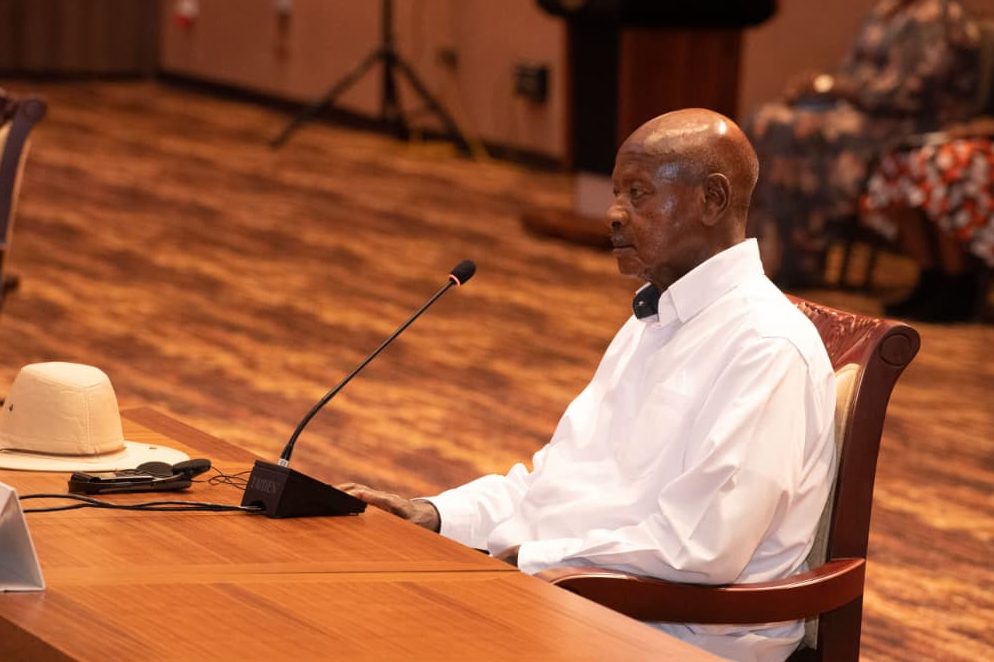






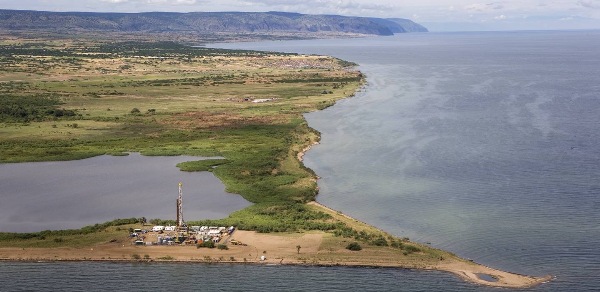
Uganda may be sitting on considerably more oil than its already substantial confirmed reserves suggest, and the numbers are hard to ignore. Speaking at the CNOOC-operated Kingfisher development in Kikuube District, President Yoweri Museveni revealed that the 6.5 billion barrels of oil already confirmed beneath and around Lake Albert were discovered from just 40 percent of the lake’s prospective exploration area. The other 60 percent, he noted plainly, remains untouched by any serious geological examination. For a country that has spent years trying to get its first barrel of crude to market, that is a statement worth sitting with.
What the Numbers Actually Mean
Of the 6.5 billion barrels confirmed so far, around 1.4 billion barrels are considered commercially recoverable. That distinction matters enormously in the oil business. Oil in place is a geological figure; recoverable oil is the economic one. The ratio between the two depends on reservoir quality, extraction technology, and commercial conditions at the time of production.
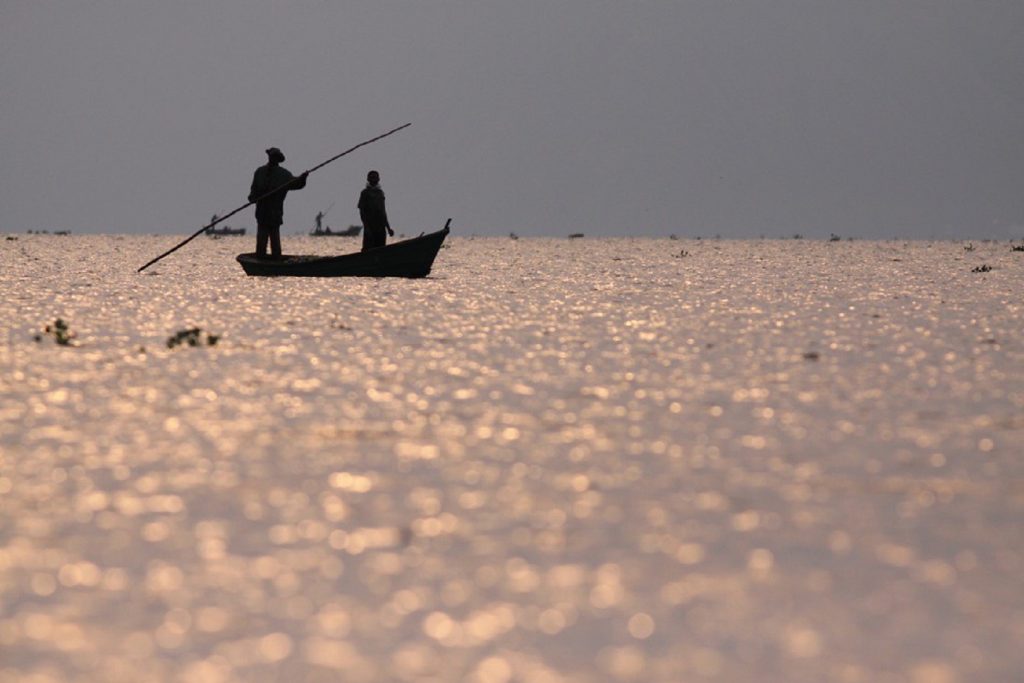
But the more striking figure is the exploration gap. According to the Ugandan government, less than 20 percent of the broader Albertine Graben, the country’s primary petroleum-bearing region, has been explored to any meaningful depth. Lake Albert sits within this graben, a rift valley structure that geologists have long identified as highly prospective for hydrocarbons. If the confirmed 6.5 billion barrels came from 40 percent of the lake alone, the arithmetic of what might lie in the remaining acreage is the kind that attracts serious investor attention.
As Chimpreports reported, Museveni made these remarks during a visit to the Kingfisher field, where the Central Processing Facility has now reached mechanical completion. That facility is designed to produce up to 40,000 barrels per day once operations are fully underway.
The Kingfisher Field as a Starting Point
The Kingfisher development, operated by China National Offshore Oil Corporation, represents one of the most advanced upstream oil projects in Uganda’s portfolio. Reaching mechanical completion on the Central Processing Facility is a significant operational milestone. It means the physical infrastructure capable of receiving, separating, and processing crude is in place. What follows involves commissioning, testing, and eventually ramping up to that 40,000 barrels per day target.
That figure, while modest by global standards, is meaningful for a landlocked country with no prior oil production history. It signals that Uganda is moving from a nation with oil in the ground to one that can actually extract and process it. The journey from discovery to production has been a long one, complicated by infrastructure challenges, financing negotiations, and the sheer complexity of building a petroleum industry from the ground up in a country with no coastline.
The Pipeline Question
Getting oil out of Uganda remains the central logistical challenge. The East African Crude Oil Pipeline, a proposed 1,443-kilometre route running from Hoima in Uganda to the Tanzanian port of Tanga, has been in development planning for years. Any expansion of reserves through new exploration would add urgency and commercial rationale to completing that infrastructure. More oil in the ground means a longer production horizon, which makes the economics of a long-distance pipeline more attractive to lenders and equity investors alike.
A planned domestic refinery also factors into this equation. Uganda has discussed building a refinery capable of processing local crude into petroleum products for domestic consumption and regional export. More reserves discovered through further exploration of Lake Albert and the wider Albertine Graben would give such a facility a longer operational life and a stronger investment case.
What Future Exploration Looks Like
Converting that untapped 60 percent of Lake Albert from a promising geological concept into confirmed reserves requires a disciplined sequence of steps. Geological surveys come first, using seismic data to identify structures where hydrocarbons are likely to have accumulated. Exploratory drilling follows, with wells designed to test whether oil or gas is actually present in commercial quantities. Even then, appraisal drilling is needed to understand the size and producibility of any discovery before a final investment decision can be made.
Each stage takes time and money. Attracting companies willing to spend that money in a frontier exploration environment requires competitive licensing terms, political stability, and a regulatory environment that gives investors confidence their interests will be protected. Uganda has been working to develop its petroleum legal framework, but competition for exploration capital is fierce globally, and investors have many options.
Future petroleum licensing rounds would be the mechanism through which new acreage gets allocated to oil companies. If the government can demonstrate that the unexplored portions of Lake Albert carry genuine geological potential, and if infrastructure progress continues to reduce the perceived risk of doing business in the country, those rounds could draw meaningful interest from international operators.
The Broader East African Context
Uganda does not exist in an energy vacuum. Tanzania has its own natural gas resources. Kenya has been developing its Turkana oil fields. South Sudan has been producing crude for years despite significant political instability. The entire region is threading the same needle: how to convert subsurface resources into economic development without repeating the resource curse patterns seen elsewhere on the continent.
For Uganda, the potential scale of what lies beneath Lake Albert and the Albertine Graben gives the country a longer runway than many of its neighbors. A discovery in the unexplored 60 percent of the lake that approaches the scale of what has already been confirmed would be a transformative event for the national economy, fiscal revenues, and Uganda’s standing as an energy producer in the region.
None of that is guaranteed. Exploration is inherently uncertain. Not every prospective area yields commercial discoveries. But the geological setting of the Albertine Graben has already proven itself once. That track record is exactly the kind of thing that keeps exploration companies and their geologists interested.
As Uganda builds its production infrastructure and looks toward first oil, the conversation about what else might be waiting beneath the western rift is only going to get louder. The question worth asking is this: if 40 percent of Lake Albert already holds billions of barrels, what kind of energy future does the remaining 60 percent have the potential to unlock, and who will be first to find out?