








Rural students in Uganda’s Acholi sub-region are waking up to a different kind of classroom. The government, channelling resources through the National Information Technology Authority (NITA) Uganda, recently handed over 220 laptop computers to schools spread across the sub-region, bringing a slice of the digital world to communities that have long operated on the margins of Uganda’s technology story.
A Handover With Weight Behind It
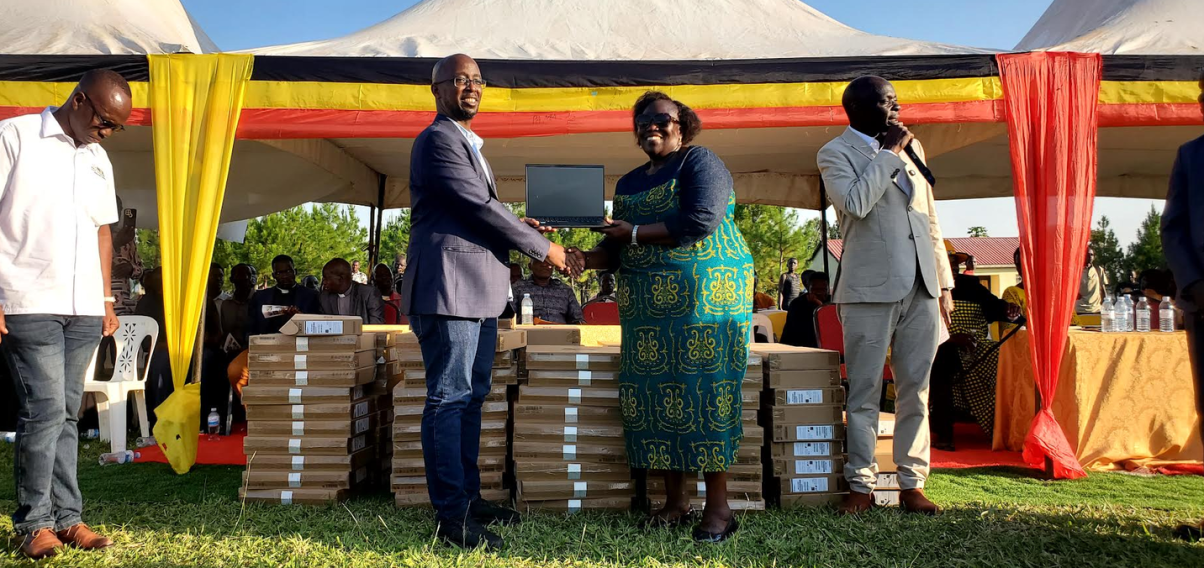
The ceremony took place at the Opit S.S. Playground over the weekend, and it carried the kind of symbolism that goes beyond ribbons and applause. State Minister for National Guidance Hon. Alioni Yoke Odria presided over the handover, transferring the laptops to Acholi MPs who would then distribute them to schools within their respective districts. NITA Uganda Executive Director Dr. Hatwib Mugasa was also present, adding institutional weight to what is clearly a national-level commitment.
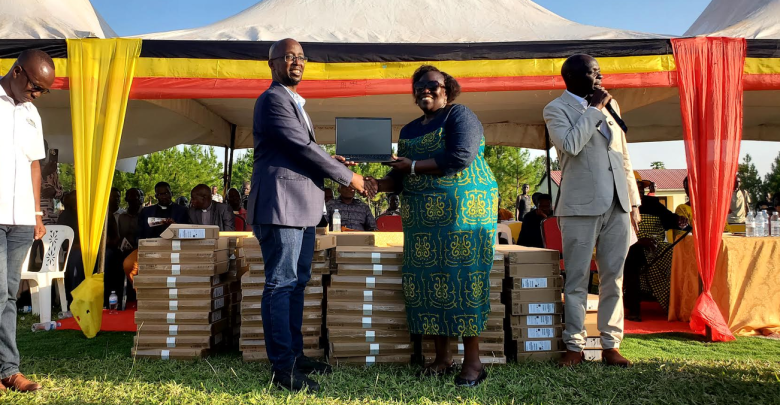
Hon. Odria made his expectations clear at the ceremony. The computers, he said, should translate directly into better learning outcomes for students in northern Uganda’s rural schools. He urged recipients to treat the devices as tools for growth rather than mere trophies of political goodwill. It was a pointed message, and a necessary one.
The Man Who Lobbied for the Laptops
Credit for this donation sits largely with Omoro County MP Hon. Ojok Andrew Oulanya, who pushed for the government to direct these resources toward his sub-region. At a time when digital infrastructure remains thin across much of rural Uganda, lobbying for hardware is only half the battle. Hon. Ojok acknowledged as much, applauding the government’s gesture while immediately flagging the next pressing challenge: connectivity.
He called on the government to improve network infrastructure in Omoro district, pointing out that laptops without reliable internet access are tools with clipped wings. It is a fair concern. Uganda’s digital ambitions will ring hollow if the country’s more remote communities cannot actually get online. Hardware is a start. Connectivity is the bridge.
How the Laptops Were Distributed
The distribution model kept things straightforward. Each district within the Acholi sub-region received 20 laptops, handed directly to the relevant member of parliament to manage local allocation. Omoro district Woman MP Hon. Catherine Lamwaka, for instance, directed her 20 units to students at Onono Memorial, Koro, Ongako, St. Thomas S.S., and other government-aided schools in the area. It is a practical approach that puts local representatives in the driver’s seat, though it also places the responsibility for fair and effective distribution squarely on their shoulders.
Why This Matters Beyond the Numbers
Two hundred and twenty laptops may sound modest against the scale of Uganda’s education system, but in communities where a single working computer can draw a crowd of students, the impact is anything but small. Northern Uganda has historically lagged behind the country’s south in terms of educational infrastructure, a gap shaped by decades of conflict and underinvestment. Initiatives like this one signal a gradual shift in that dynamic.
Digital literacy is no longer optional. Job markets, university applications, government services and everyday commerce are increasingly mediated through screens and data. Students who grow up without access to technology face a compounding disadvantage that follows them long after they leave school. A laptop in a rural classroom is not just a learning aid. It is a door.
The Broader Digital Education Challenge
Uganda has made meaningful strides in expanding its technology footprint in recent years, but rolling out devices without addressing the surrounding ecosystem has been a persistent stumbling block across the continent. Teachers need training. Power supply needs to be reliable. Maintenance and repair systems need to exist. And yes, internet access, as Hon. Ojok rightly noted, is non-negotiable if these tools are to deliver their full potential.
NITA Uganda’s involvement in this initiative points to a coordinated government strategy rather than a one-off political gesture, which is encouraging. The authority has been central to Uganda’s wider digital transformation agenda, and its presence at this handover suggests the donation is part of a larger, ongoing programme rather than an isolated act ahead of an election cycle.
What Comes Next
The real test of this initiative will not be measured at the handover ceremony. It will show up in classroom attendance figures, in students who discover coding or research for the first time, in teachers who find new ways to explain difficult concepts using a screen instead of chalk. It will show up, or it will not, depending on whether the follow-through matches the fanfare.
Local leaders, school administrators and parents in the Acholi sub-region now carry part of that responsibility. Getting 220 laptops into the hands of students is an achievement. Getting those students to use them well, safely and consistently is the harder work that lies ahead.
So here is the question worth sitting with: as Uganda continues to push its digital education agenda into rural communities, what structures and investments need to accompany every laptop donation to ensure these devices actually change outcomes rather than simply gathering dust in a school storeroom?