









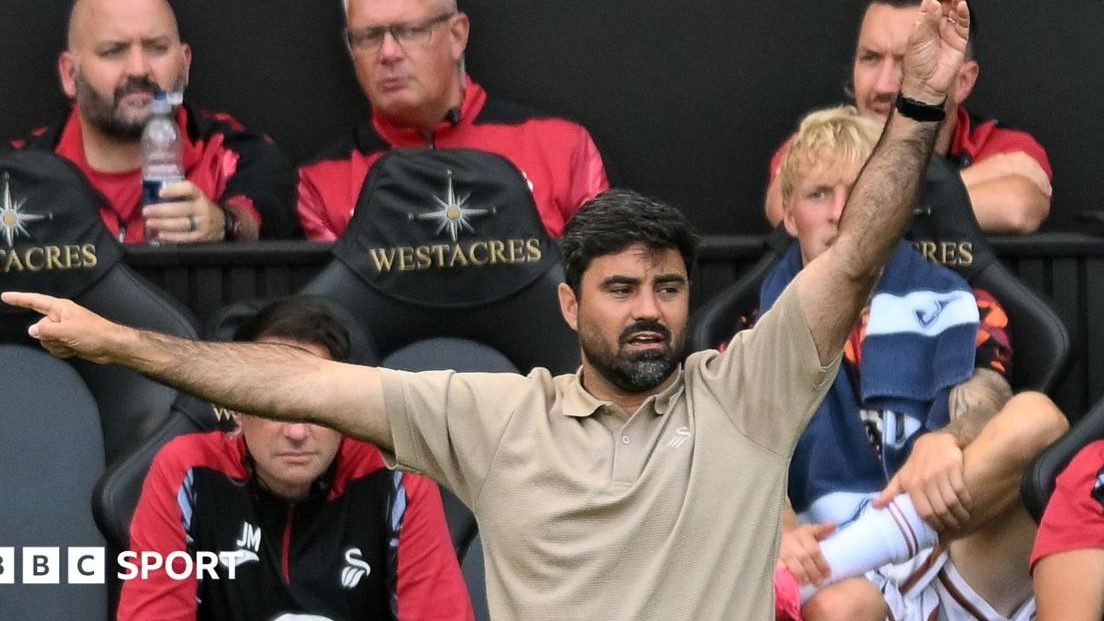
Vitor Matos has put his signature on a contract extension that ties him to Swansea City until 2030, and he has wasted no time in naming the destination he is building toward: the Premier League. But if you are expecting a thumping table declaration or a promotion guarantee, Matos is not playing that game. He is much more measured than that, and possibly more dangerous for it.

A New Chapter, A Long Runway
The Swansea head coach took charge at the Swansea.com Stadium last November and immediately steadied a club that had been sliding uncomfortably close to a second relegation in eight years. By the end of the 2025-26 season, the Swans had climbed to 11th place in the Championship, a finish that felt comfortable compared to where the club had been when Matos first walked through the door.
Now, with a fresh contract locking him in for four full campaigns, Matos has the kind of long-term security that most Championship managers can only dream about. The Welsh club and its ownership have made a clear statement of intent with this deal, and Matos has responded by articulating a vision that is both ambitious and grounded in reality.
Speaking ahead of the new season, Matos was direct about where he wants this club to end up, telling reporters that when the club, the owners, the manager, and the players all share ambition, a Premier League return is always the goal. But he was equally direct about the work required to get there.
The Art of Saying Everything Without Overpromising
There is a particular kind of pressure that comes with publicly declaring a Premier League target when your club has spent nine consecutive seasons in the second tier. Matos clearly understands this. Rather than issuing bold predictions, he framed the goal in the context of daily behaviour and collective mentality.
His logic is straightforward: saying the Premier League is the destination means very little if the work ethic and intensity required to reach it are not present in training every single morning. It is an old coaching philosophy delivered with modern clarity, and it suggests someone who has thought carefully about how to manage expectations without dampening ambition.
Swansea were last in the top flight in the 2017-18 season, when they were relegated after a difficult campaign. Since then, the club has cycled through managers and near-misses, never quite recapturing the form that once made them a genuine Premier League presence under earlier coaching regimes. Nine years is a long time in football. For a club of Swansea’s stature and history, it is a wound that has never fully closed.
Pre-Season Signals and Championship Competition
Swansea rounded off their pre-season schedule on Saturday with a victory over Spanish side Leganes, a positive note heading into what Matos hopes will be a year of genuine progress. Pre-season results carry only so much weight, but the manner and confidence of performances at this stage can tell you a great deal about how a squad is responding to a coach’s methods.
Matos has been clear that his short-term focus is not promotion itself but rather competing with the Championship’s leading sides. That is a subtle but important distinction. Rather than measuring success by where his team finishes in May, he wants Swansea to be in conversations with the best clubs in the division on a week-to-week basis. Over time, consistent competition at that level tends to produce results.
What the Championship Looks Like Heading Into the Season
The second tier of English football remains one of the most physically demanding and unpredictable leagues in world football. Clubs with parachute payments from recent Premier League relegations, as well as ambitious ownership groups spending heavily on recruitment, make the Championship a brutally competitive environment. For Swansea to close the gap on the top six, they will need recruitment that matches the vision Matos has laid out.
The contract extension through to 2030 gives the club continuity in a league that often chews through managers at an alarming rate. Stability at the top of a football club filters down through the playing squad and the wider organisation. Players commit more readily when they know the person signing them plans to be around beyond a single season. That structural benefit alone makes the long-term deal a sensible piece of business from Swansea’s ownership.
Patience, Process, and the Long Game
What makes Matos an interesting figure in this context is his refusal to be drawn into short-termism. He took over a club under pressure, steadied the ship without dramatic spending or sweeping changes, and has now earned the trust of the ownership to pursue a longer project. That kind of relationship between a coach and a club is increasingly rare and genuinely valuable.
The path back to the Premier League for Swansea will require more than one good season. It will require sustained investment in the right players, a clear footballing identity, and the resilience to compete across a gruelling 46-game schedule while other well-funded rivals are doing the same. Matos seems to understand this better than anyone. He is not selling a quick fix. He is selling a process.
Whether four seasons is enough to complete that journey remains to be seen. But the fact that Swansea are heading into 2026-27 with a settled head coach, a defined philosophy, and clear ambition at every level of the club is already more than the club could say at several points in the past decade.
As the Welsh city’s most storied football club kicks off a new season, the question worth sitting with is this: can Vitor Matos turn quiet, daily ambition into something loud enough to finally break a nine-year absence from English football’s top table, or will the Championship once again prove that wanting the Premier League and reaching it are two entirely different things?