






Tomorrow, Mbale City becomes the cultural heartbeat of Uganda. The Bamasaba community will officially open the 2026 Imbalu circumcision season at the Mutoto Cultural Centre, with organisers bracing for a crowd of more than 50,000 people converging on a single site to witness one of East Africa’s most respected and emotionally charged cultural rituals.
What Is Imbalu and Why Does It Matter?
For the uninitiated, Imbalu is not simply a rite of passage. It is a declaration. A young man who undergoes Imbalu is not merely circumcised; he is reborn into the full responsibilities of Bamasaba manhood, answerable to his clan, his ancestors, and his community. The ceremony is performed without anaesthesia, and flinching is considered deeply shameful, not just for the initiate but for his entire family. That single fact tells you everything about the weight this tradition carries.
The practice is rooted deep in the identity of the Bamasaba people, who occupy the slopes of Mount Elgon in Uganda’s Bugisu sub-region. Unlike many cultural practices that have quietly retreated under the pressure of urbanisation and shifting values, Imbalu has held its ground with a tenacity that commands respect across the country and far beyond its borders.
The Launch: Five Boys, One Historic Moment
The formal start of the season will see five boys circumcised at the Mutoto Cultural Centre, a symbolic act that sets the season in motion before the rite fans out across the 26 clans of the Bugisu sub-region. From there, the ceremonies will run through December, with initiates across the region going through the process in their respective communities, each one supported by a web of song, ritual, family, and clan pride that has been woven together over centuries.
According to NTV Uganda’s reporting on the event, organisers are expecting well over 50,000 attendees at the launch alone, a figure that underscores just how massive this cultural moment really is. Visitors travel from Kampala, from the diaspora, from neighbouring Kenya and beyond, all drawn by the spectacle, the community spirit, and an authenticity that is increasingly rare in a world that tends to flatten everything into content.
A Funding Shortfall Threatens the Celebrations
For all the excitement building around the launch, not everything is in order. Organisers have raised serious concerns about a funding shortfall that could limit the scale and quality of the celebrations. Cultural events of this magnitude require significant logistical investment: security, public health support, infrastructure, and coordination across dozens of clan sites spread throughout the sub-region. When the money does not match the ambition, cracks start to show.
This is not a new problem. Cultural institutions across Africa routinely struggle to secure the kind of financial backing that keeps traditions alive and properly celebrated. Government promises often fall short of actual disbursements, and private sponsorship for cultural events, while growing, remains inconsistent. The Bamasaba community finds itself navigating that familiar tension between the richness of what they are preserving and the practical reality of what it costs to preserve it.
The Responsibility of the State
There is a broader conversation to be had here. Uganda has invested considerable effort in promoting cultural tourism as a pillar of its wider tourism economy. Imbalu, as one of the continent’s most distinctive and visually powerful cultural events, is exactly the kind of experience that draws visitors and generates economic activity for Mbale and the surrounding region. Failing to properly fund the infrastructure around it is, in economic terms alone, a short-sighted move.
Beyond the economics, there is the question of national identity. If a country’s cultural institutions have to beg for resources to keep generational traditions alive, something has gone wrong in how the state values its own heritage.
The Crowd That Will Show Up Anyway
Whatever the funding situation looks like behind the scenes, the people will come. They always do. Fifty thousand is a staggering number for any single cultural event anywhere in the world, and the fact that Imbalu draws this kind of attendance every two years speaks to the unbreakable bond between the Bamasaba and their traditions. Families plan for this. Young men prepare for this. Communities orient entire seasons of life around it.
The atmosphere in Mbale in the days leading up to an Imbalu launch is electric. Markets fill up, guesthouses book out, and the streets carry a particular kind of anticipatory energy that you cannot manufacture. It builds organically, community by community, household by household, drum by drum.
What Comes After the Launch
Once the five initiates at Mutoto Cultural Centre set the 2026 season in motion, the ceremonies will ripple outward across all 26 Bugisu clans through the end of December. Each clan’s ceremonies carry their own local flavour while remaining tied to the same central tradition. It is a months-long cultural festival, really, one that plays out not on a stage but in yards, hillside clearings, and family compounds across a wide stretch of eastern Uganda.
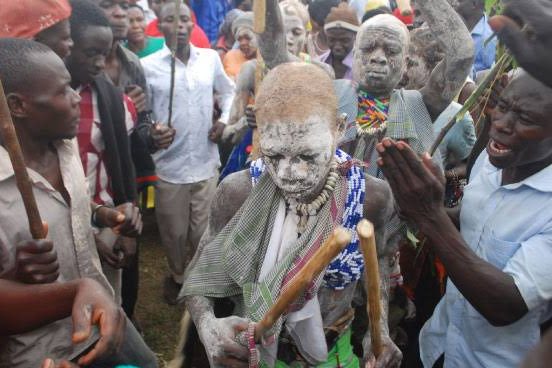
For the initiates themselves, the journey ahead is both deeply personal and intensely communal. They will be painted with millet flour, accompanied by song, and watched by everyone they have ever known. The expectation is total composure. The reward is lifelong respect.
A Living Tradition in a Changing World
What makes Imbalu particularly striking in the current moment is that it refuses to be a museum piece. It is not performed for tourists in a controlled environment, stripped of its edges. It happens in real communities, with real stakes, involving real young men whose standing in their world genuinely depends on how they carry themselves through the experience. That rawness is exactly why it resonates so deeply, both for those inside the tradition and for the thousands of outsiders who travel to witness it.
As Mbale prepares to host one of its biggest days in recent memory, the question worth sitting with is this: what would it take for Uganda to treat Imbalu with the same financial seriousness that it treats other national priorities, and what does the funding shortfall say about how African governments value the cultural wealth sitting right in their own backyards?