
Uganda’s most expensive and most dramatic infrastructure project has just gained a fresh plot twist. Gen Muhoozi Kainerugaba, the country’s Chief of Defence Forces, has publicly endorsed Turkish construction company Yapi Merkezi to build the Malaba–Kampala Standard Gauge Railway, a project he himself declared cancelled less than five months ago. The announcement arrived not through a formal government press release or ministerial briefing, but through a post on X, Uganda’s preferred arena for infrastructure policy.
A U-Turn Delivered in a Tweet
On November 6, 2026, Muhoozi posted a statement that would have seemed impossible to predict given the headlines of mid-June. “Under the direction and instructions of Mzee Museveni, I approve the Turkish company Yapi Merkezi to implement the 1st Phase of the SGR. From Malaba to Kampala,” he wrote. He added that all government departments were instructed to move quickly on the directive.
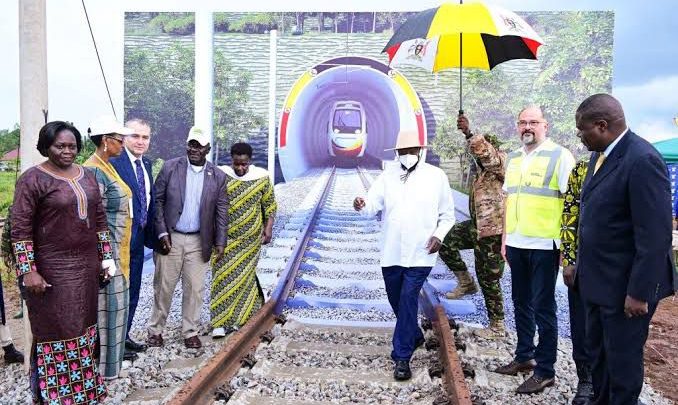
The post credits President Yoweri Museveni as the authority behind the decision, framing Muhoozi’s public statement as an act of execution rather than origination. That framing matters, because it places the final word on this high-stakes project squarely in State House rather than within the defence establishment.
What it does not provide is equally significant. There is no mention of a revised contract, no updated financial terms, no fresh construction schedule, and no explanation of what changed between June and November to bring Yapi Merkezi back into favour.
The June Cancellation That Wasn’t
To understand the whiplash here, you have to go back to June 16, 2026. On that day, Muhoozi posted a blunt message: the government had terminated the contract with the Turkish firm and would look for another contractor. The statement sent shockwaves through East African infrastructure circles, given the scale of what was at stake.
Yet the aftermath was puzzling. Uganda’s Ministry of Works never issued a formal confirmation of the termination. Yapi Merkezi itself stayed quiet. No replacement contractor was named, no tender process was announced, and the original agreement never received an official death notice. The June post, it turned out, may have been less of a policy announcement and more of a pressure tactic, or simply a moment of public frustration that the machinery of government quietly stepped around.
What the Project Actually Involves
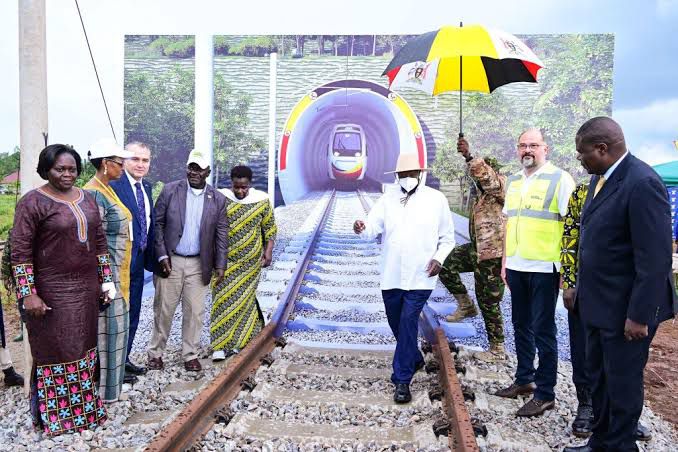
The Malaba–Kampala SGR is not a small undertaking. Yapi Merkezi signed a construction agreement with Uganda worth approximately €2.7 billion in October 2024. At the time, the Ugandan government placed the project’s value at around UShs10.8 trillion. President Museveni formally launched proceedings the following month, casting the railway as a cornerstone of Uganda’s economic future.
The strategic logic is straightforward. Uganda is landlocked. Getting goods to international markets means crossing Kenya and reaching the port of Mombasa. A modern standard gauge railway between Malaba, the border crossing point, and Kampala, the capital and commercial hub, would dramatically cut transit times and costs compared to road freight. For Ugandan exporters and importers alike, the difference between a functional SGR and the current road-heavy system is the difference between competitiveness and chronic disadvantage.
Kenya has already made headway on its own SGR corridor, and Uganda has watched that progress with a mixture of ambition and anxiety. Falling behind on connectivity infrastructure has real economic consequences, and that urgency has never gone away regardless of the contractual drama playing out in Kampala.
Yapi Merkezi: Who Are They?
Yapi Merkezi is one of Turkey’s most prominent engineering and construction firms, with a track record that stretches across railway, metro, and tunnel projects across multiple continents. The company has completed major rail infrastructure in Africa before, which made it an attractive partner for Uganda’s ambitions. Securing a €2.7 billion contract in East Africa was a significant milestone for the firm, and the June cancellation announcement would have rattled investor confidence in the project considerably.
The fact that no formal termination ever materialised, and that Muhoozi’s latest statement brings the company back without explanation, suggests that whatever friction existed behind the scenes was resolved, or at least set aside, without public acknowledgement.
What Happens Now?
That is the question that matters most. A social media endorsement, however senior its author, is not a construction contract. The directive to government departments to “quickly implement” the project still needs to translate into actual machinery: land acquisition, financing arrangements, environmental clearances, and the kind of detailed planning that gets steel in the ground.
Uganda’s SGR has been discussed, announced, celebrated, and apparently cancelled before, all without a single kilometre of track being laid. The country’s infrastructure ambitions are real and the need is urgent, but ambition and urgency alone do not build railways. What they need is consistent political will, transparent governance, and a process that does not reverse itself publicly every few months.
International investors and development partners watching this episode will note the lack of formal documentation accompanying either the June cancellation or the November reinstatement. That kind of institutional uncertainty is precisely what makes infrastructure financing in developing markets complicated and expensive.
The workers who would build this line, the traders who would use it, and the Ugandan taxpayers who would ultimately underwrite it deserve more than a series of competing announcements on social media. They deserve a clear, binding, and credible plan.
So here is the question worth sitting with: can Uganda’s Malaba–Kampala railway actually get built if its progress continues to be managed through posts on X rather than through transparent, accountable government process? Leave your thoughts below.