



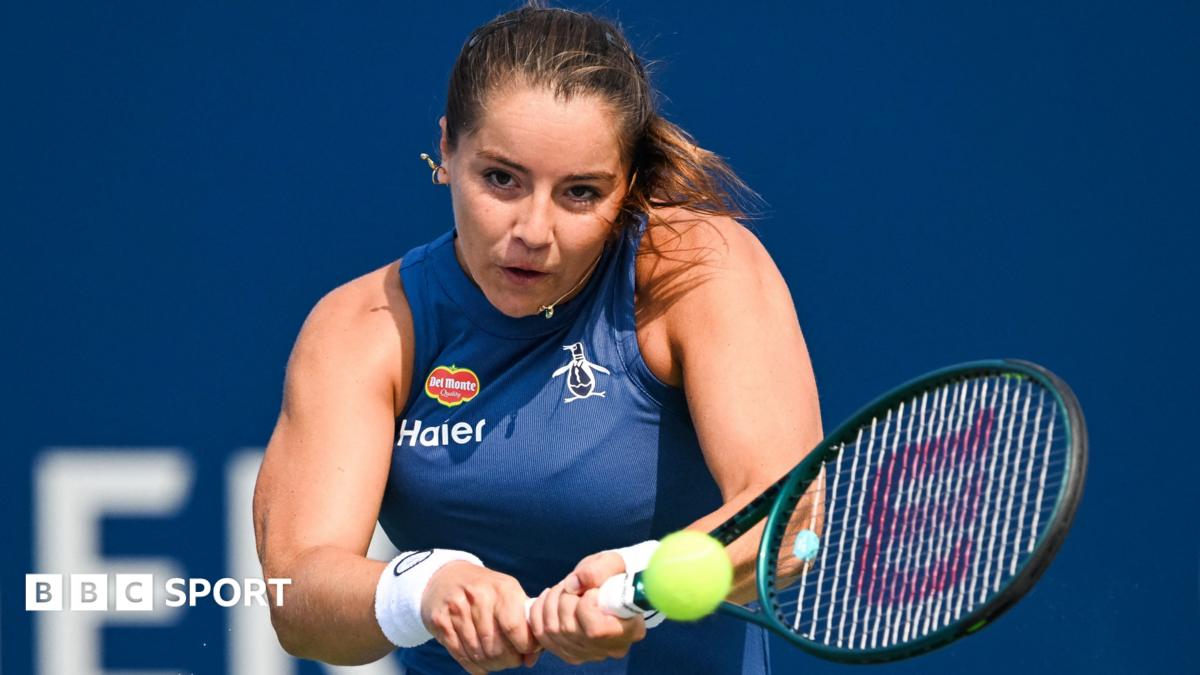
She had just played through a blood pressure scare, lost a gruelling three-set match, and sought medical attention on the same evening. And yet, when Jodie Burrage finally picked up her phone after her defeat in Chennai, the death threats waiting on her social media feed barely registered as a surprise. That, right there, is the real story.
The 27-year-old British tennis player, who has represented Great Britain at the Billie Jean King Cup, lost 3-6 6-3 7-5 to Indian wildcard Vaishnavi Adkar at the WTA Tour event in Chennai. By the time she had seen a doctor and a physiotherapist about her blood pressure dropping sharply near the end of the match, the online mob had already assembled. Threats promising punishment. Messages wishing her harm. All because she lost a tennis match.

“We’re So Used to It”, And That’s the Problem
Speaking to BBC Sport from Chennai, where she continued competing in the doubles event, Burrage was composed but clear-eyed about what she faces. “Because we are so used to it, I don’t fear for my safety,” she said. Then, almost immediately, she acknowledged the twisted logic buried in that statement: “Which is really quite sad.”
She tries not to read the specific messages. She knows they exist. She knows they come after every match, win or lose, because she has tracked the pattern herself. When she played in Wrexham on the World Tennis Tour last month, she won three matches and lost one. Abuse arrived after all four. Victory offers no protection from the keyboard brigade.
“It happens every match, whether it’s win or lose,” she said. That single sentence carries more weight than any statistic. Online harassment of athletes is not a reaction to bad performance. It is a constant, indiscriminate assault driven almost entirely by gambling losses and misplaced fury.
The Physical and the Digital, Colliding at the Worst Moment
What makes Burrage’s situation particularly striking is the timing. Her blood pressure, she said, “tanked” towards the end of the Adkar match, forcing her to seek medical attention immediately after leaving the court. She was physically vulnerable, already dealing with a health concern in the middle of a professional tournament far from home, when the threats arrived.
That collision of physical stress and online hostility is something most people will never experience. For professional tennis players, particularly women competing on the WTA Tour, it is a routine occurrence. The tour is demanding enough without factoring in the psychological weight of waking up to messages about your safety. As Burrage put it plainly: “This tour is tricky enough as it is.”
She added that the impact varies depending on her mental state at the time. “Sometimes it hurts more than others. If you’ve already got other stuff going on, or you’re not in a great place, and that is put on top of everything else…” She did not need to finish the sentence. Anyone who has ever been at a low point and then received cruelty online will understand exactly what she means.
Going Public: Screenshots as a Statement
Rather than absorbing the abuse quietly, as so many athletes feel pressured to do, Burrage chose to share screenshots of the messages on Instagram. It was a deliberate act of visibility. She wanted people to understand that this is not an occasional, edge-case problem. It is an everyday feature of professional sport in the digital age, normalised to the point where players build “thick skin” not as a choice but as a survival mechanism.
That phrase, thick skin, gets thrown around a lot in sport. It is used to dismiss complaints, to suggest that professional athletes should simply absorb whatever the public throws at them because fame comes with a cost. But Burrage’s willingness to publicly document the abuse flips that narrative. Thick skin should not be a job requirement. And the fact that it has become one says far more about the culture around sports betting and online anonymity than it does about any individual player’s resilience.
Gambling Culture and the Real Source of the Rage
It is worth being direct about where most of this abuse originates. The pattern Burrage describes, attacks arriving after wins and losses alike, points squarely at betting-related anger. Gamblers who lose money on a match outcome frequently direct their frustration at the athletes involved, as if a professional player on a foreign court has any obligation to protect a stranger’s wager. The anonymity of social media removes the social consequences of that behaviour, turning what might once have been a muttered complaint into a death threat sent directly to the person responsible for the “loss.”
Women athletes, studies and player testimonies have consistently shown, receive a disproportionate volume of this abuse compared to their male counterparts. The misogyny layered into sports betting culture amplifies already troubling behaviour, and platforms have been slow to build systems capable of addressing the volume and velocity of the problem.
A Conversation That Needs to Get Louder
Burrage is not the first player to speak out, and she almost certainly will not be the last. But her account carries a specific, chilling quality because of its ordinariness. She is not describing a one-off viral moment of mob fury. She is describing Tuesday. And Wednesday. And the match in Wrexham she won, and the one she lost, and the identical abuse that followed both.
She remains composed, continues competing, and tries not to read the worst of it. That composure is admirable. But it should not be necessary. The responsibility to fix this sits with the platforms that profit from engagement, the governing bodies that set the conditions for professional competition, and the betting industry that generates the frustration so often converted into threats.
Burrage has done her part by making the invisible visible. The question now is whether the sport, and the wider digital ecosystem around it, is willing to treat this as the serious, structural problem it clearly is. Or will the next player who speaks out be told, once again, to simply grow a thicker skin?