







Uganda is quietly losing hundreds of billions of shillings every year to a crisis that most people brush off, literally, without a second thought. Oral health, long treated as a secondary concern in the country’s broader public health conversation, is now costing the nation an estimated 240 billion shillings annually in direct treatment costs alone, with a further 64 billion shillings hemorrhaging away through reduced workplace productivity linked to oral diseases. That is a combined hit of over 304 billion shillings, year after year, from a problem that remains almost entirely out of reach for the majority of the population.
The Scale of a Problem Hidden in Plain Sight
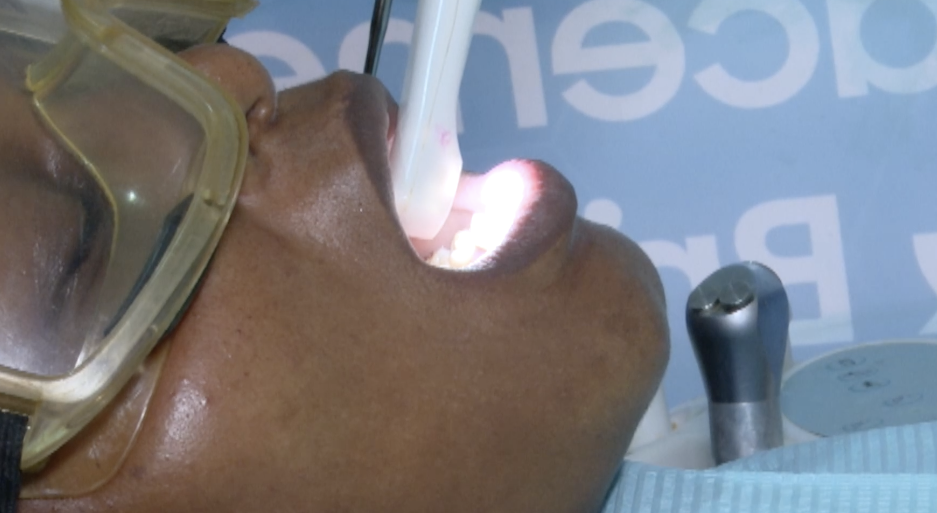
More than a third of all Ugandans are currently living with some form of oral health condition. Toothaches, gum disease, dental infections, these are not minor inconveniences. Left untreated, they translate into missed workdays, reduced concentration, chronic pain, and in severe cases, serious systemic health complications. The mouth, as any clinician will tell you, is not separate from the rest of the body. What happens there affects everything else.
Yet despite how widespread the problem clearly is, access to dental services in Uganda sits below four percent of the population. Put simply, for every hundred people suffering from a dental or oral condition, fewer than four of them will ever make it into a clinic to be seen by a qualified professional. The rest endure the pain, self-medicate, or rely on remedies far removed from clinical care.
Too Few Hands, Too Many Mouths
The Ministry of Health has pointed directly at the shortage of skilled oral health workers as a key force worsening this situation. Uganda simply does not have enough trained dental professionals to serve a population of over 47 million people, and the gap between demand and supply continues to grow as that population expands.
This is not a problem unique to Uganda. Across Sub-Saharan Africa, the dentist-to-patient ratio has remained critically low for decades, a consequence of limited training institutions, migration of qualified professionals to better-resourced countries, and systemic underfunding of oral health as a priority within national health budgets. But Uganda’s figures, particularly the scale of economic loss, put a sharp focus on how urgently this gap needs to be addressed.
Training a dentist takes years. Training dental therapists, oral health officers, and other mid-level practitioners who can extend care into underserved communities takes time and investment too. Without a serious, sustained push to build that workforce pipeline, the numbers will only get worse.
The Productivity Angle Nobody Talks About
The 64 billion shillings in annual productivity losses deserves far more attention than it typically receives. Working-age adults dealing with unmanaged oral pain are less effective at their jobs. They take sick days. They struggle to concentrate. In manual labor sectors, chronic oral infections can be outright debilitating.
This is an economic argument, not just a health one. Employers, economists, and policymakers who might tune out a conversation about tooth decay should pay close attention to what that loss figure actually represents: a workforce operating below its potential because of a preventable, treatable condition that the health system is not currently equipped to address at scale.
Low- and middle-income countries often frame oral health as a luxury concern, something to tackle once the bigger battles, malaria, maternal health, HIV, are sufficiently won. But this framing is flawed. Oral disease is deeply linked to poverty, nutrition, diabetes, and cardiovascular health. Treating it as peripheral to the main event costs more in the long run than investing in it properly from the start.
What a Real Solution Looks Like
Fixing Uganda’s oral health crisis is not a single-lever problem. It demands action across several fronts simultaneously. First, training capacity for oral health professionals needs to expand significantly, with specific attention to mid-level cadres who can be deployed to rural and peri-urban areas where the need is greatest but specialists are essentially nonexistent.
Second, oral health needs to be woven more deliberately into Uganda’s primary healthcare architecture. Community health workers who already interface with households across the country could be equipped with basic oral health screening tools and education resources, creating an early warning system that catches problems before they become expensive emergencies.
Third, prevention has to be central to any strategy. Fluoride access, sugar consumption guidelines, school-based dental hygiene programs, none of these are glamorous interventions, but they are among the most cost-effective tools public health has ever developed. Countries that invested early in preventive oral health decades ago are now spending far less managing the downstream consequences.
A Crisis That Demands More Than Acknowledgment
The Ministry of Health’s acknowledgment of the problem is a necessary starting point. But acknowledgment without a funded, time-bound action plan tends to produce reports, not results. Uganda’s oral health workforce shortage did not appear overnight, and it will not be resolved by good intentions alone.
The 304 billion shilling figure, combining treatment costs and productivity loss, is not abstract. It represents real money leaving real households, real businesses underperforming, and real people in real pain who cannot access care that, in a better-resourced system, would be entirely routine. A bad tooth should not be a financial catastrophe. In Uganda right now, for far too many people, it is exactly that.
The question worth sitting with is this: if Uganda is already losing over 300 billion shillings a year to a condition that affects more than a third of its population, what is the actual cost of continuing to treat oral health as a second-tier concern, and who, ultimately, is paying that price?