



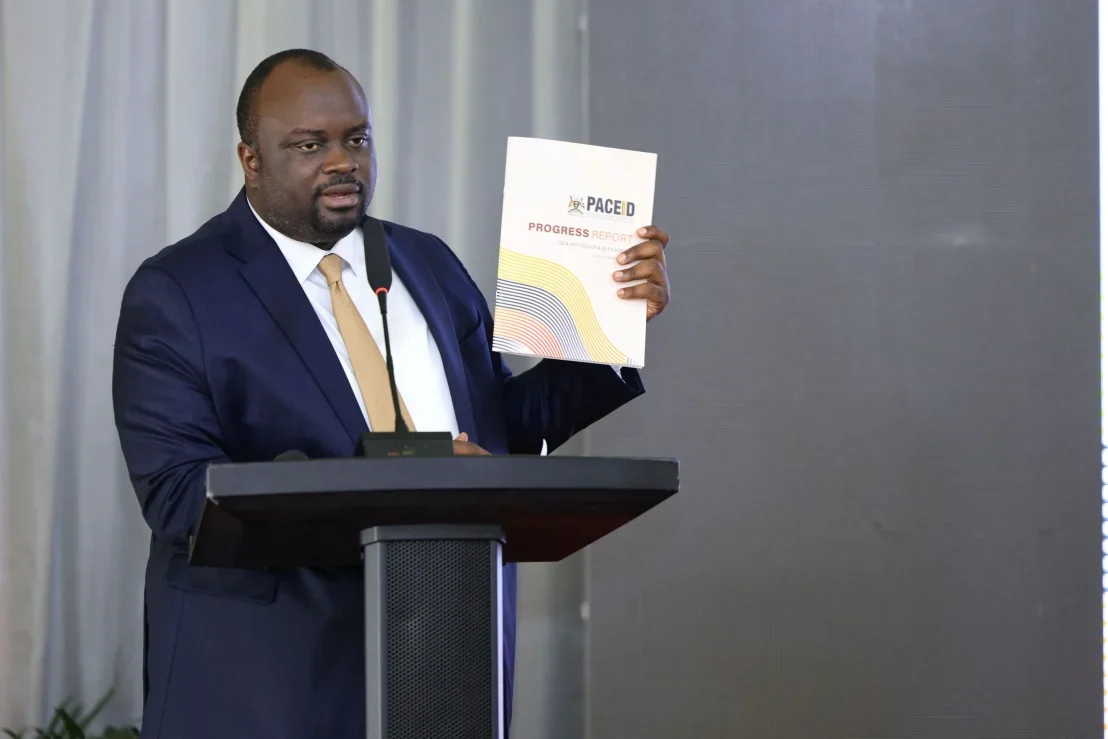
Security personnel arrived at a residence in Entebbe on Tuesday and left with Matthew Bagonza, a man who, until recently, operated largely outside the public eye. As the head of secretariat for Uganda’s Presidential Advisory Committee on Exports and Industrial Development, known widely as PACEID, and a long-serving personal assistant to committee chairman Odrek Rwabwogo, Bagonza was the kind of official who made things run quietly behind the scenes. His reported arrest, first reported by Chimp Reports, has shattered that quiet in spectacular fashion.
The Threat That Came First
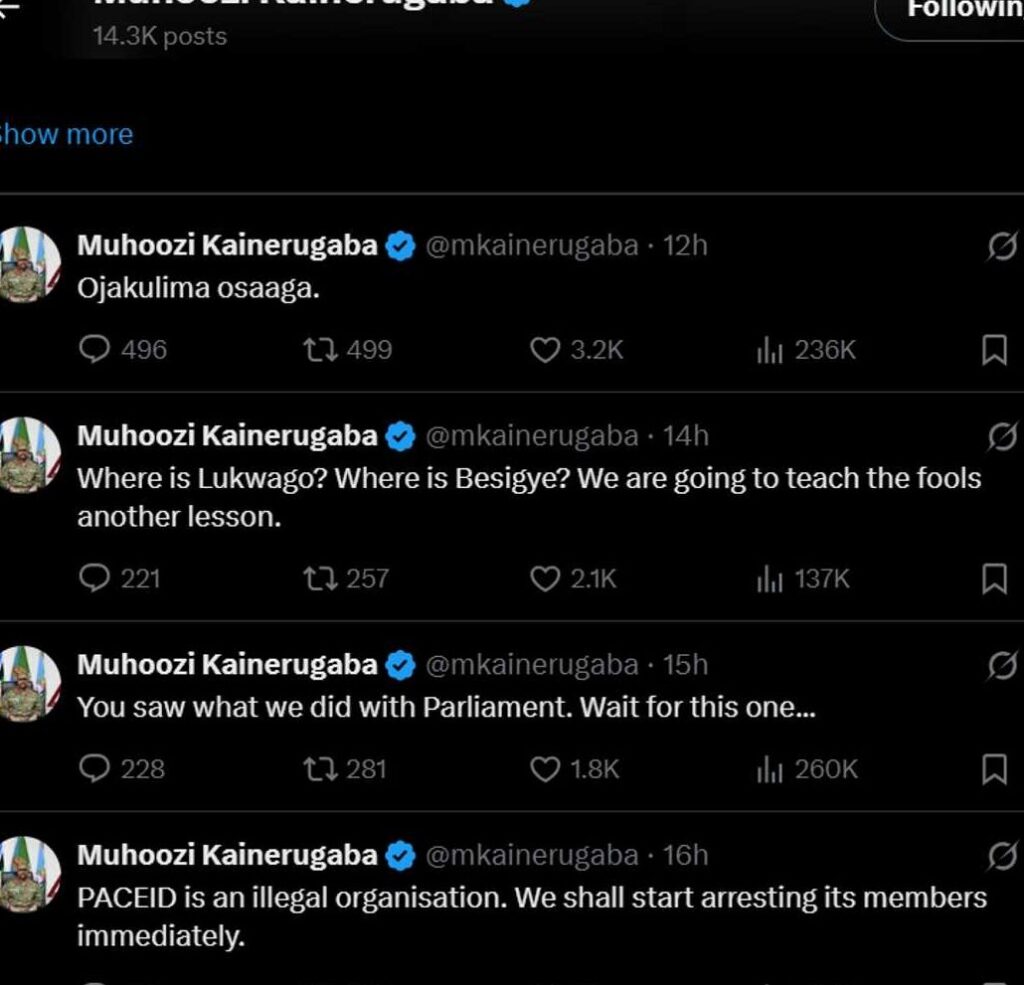
Hours before Bagonza was reportedly taken from his home, Uganda’s Chief of Defence Forces, General Muhoozi Kainerugaba, had taken to X with language that left little room for interpretation. “PACEID is an illegal organisation. We shall start arresting its members immediately,” he wrote in a post that quickly circulated across Ugandan social media. He followed that up with an equally blunt declaration: “We are going to arrest ALL the members of PACEID involved in corruption.”
For an organisation that has operated under a presidential mandate, the accusation of illegality was jarring. PACEID, chaired by Rwabwogo, has been central to Uganda’s export strategy, running programmes touching on international buyer engagements, export-market development, trade infrastructure through the Uganda Connect hubs, and broader efforts to sharpen the competitiveness of Ugandan goods on the global market. That an entire agency with those credentials could be labelled illegal in a social media post by a senior military official is itself a story worth sitting with.
One Arrest Confirmed, Identity Withheld
Muhoozi later posted again, this time confirming that at least one person had already been detained. He did not name the individual. Instead, he signed off with “Muraregye,” a Runyankore-Rukiga expression for “good night,” leaving the public to speculate about who exactly was in custody. By the time reports of Bagonza’s arrest surfaced, no one had officially connected the two events. Whether Bagonza is the person Muhoozi referred to has not been confirmed by any official body.
Neither the Uganda Police Force nor the military had issued a formal statement on the arrest by publication time. The agency that carried out the operation, the specific allegations being levelled against Bagonza, and his current place of detention all remain officially unconfirmed. That silence, in itself, tells a story.
Who Is Matthew Bagonza?
To understand why this arrest matters, it helps to understand who Bagonza actually is within the PACEID structure. He has not been a figurehead. As head of secretariat, he has been the operational engine of the committee, the person responsible for translating Rwabwogo’s vision into actual programmes and deliverables. His role has put him at the centre of Uganda’s export push, coordinating with international buyers, managing trade initiatives, and keeping the machinery of a complex advisory body ticking. His proximity to Rwabwogo, both professionally and personally through his years as a personal assistant, makes him one of the most consequential figures within PACEID’s day-to-day operations.
The Rwabwogo Connection
Odrek Rwabwogo is not simply a technocrat running an advisory committee. He is also a son-in-law of President Yoweri Museveni, which gives PACEID a proximity to Uganda’s highest office that few government bodies can claim. That context makes Muhoozi’s decision to publicly target the organisation particularly striking. Muhoozi, who is himself the president’s son and the country’s top military officer, is effectively firing across the bow of a body that operates within the family’s extended political sphere. Whether this represents a genuine anti-corruption drive, a turf battle between powerful factions, or something else entirely, remains a question that Uganda’s political observers are wrestling with urgently.
A Pattern of Social Media Declarations
It is worth noting that this is not the first time Muhoozi has used his X account to make sweeping pronouncements about arrests, political loyalties, or security operations. His social media activity has repeatedly generated headlines and occasionally controversy. But the follow-through on Tuesday’s posts, with an apparent arrest materialising within hours, suggests this particular intervention carries more operational weight than a simple online outburst.
What Comes Next for PACEID?
The bigger question hanging over all of this is what happens to PACEID as an institution. If Uganda’s Chief of Defence Forces continues to press his claim that the body is operating illegally, and if more arrests follow, the committee’s ability to function is effectively compromised regardless of any legal outcome. Export programmes that were mid-stream, partnerships with international buyers, and trade hub operations all depend on a functioning secretariat. With its head reportedly in detention and its chairman’s organisation under military-level scrutiny, PACEID’s operational continuity is now genuinely uncertain.
Uganda’s trade ambitions, which PACEID has been instrumental in advancing through market-linkage work and product competitiveness drives, deserve better than to become collateral damage in a political standoff. For the farmers, exporters, and small businesses that have plugged into PACEID’s programmes, the instability at the top is not an abstraction. It is a threat to relationships and opportunities that took years to build.
As Uganda watches this situation develop, one question demands an honest answer: when senior officials can publicly declare a government-linked body illegal and order arrests via social media, with no corresponding formal statement from police or prosecutors, what does that say about where institutional accountability actually sits in the country’s power structure?