








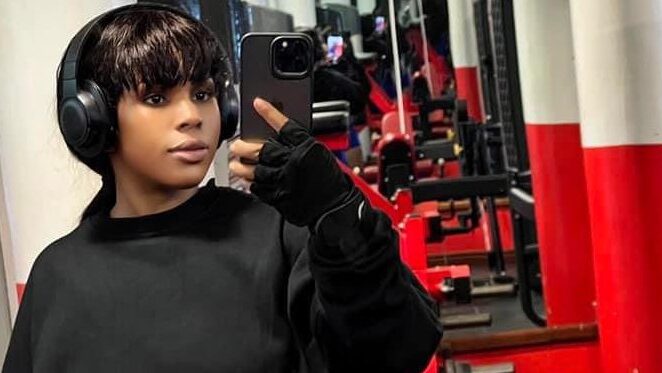
She does not whisper. She does not subtweet. Social media personality and reality TV star Prima Kadarshi went fully on record during a recent TikTok Live session, defending her well-documented habit of publicly criticising Uganda’s biggest musical acts and making it crystal clear that no amount of fame will earn an artist a hall pass from her commentary.

In a country where celebrity culture often operates on a code of silence, where fans protect their favourites and public figures rarely face honest public scrutiny, Prima has carved out a very different lane. And she is not slowing down.
Nobody Is Off the Table
Speaking directly to her audience during the TikTok Live, Prima addressed her public fallouts with several top Ugandan musicians, including Spice Diana and Lydia Jazmine. Her message was unambiguous. “We shall talk about every musician, no one is above the law, we don’t fear anyone. We talk about Sheebah and then you bring your stars?” she said, signalling that popularity is not a shield against honest feedback in her world.
What makes Prima’s position interesting is that she frames her criticism not as hatred but as a kind of accountability. She was explicit about that distinction during the session, noting that she does not carry personal grudges against the artists she discusses. The issue, in her view, is simpler: when she believes a musician has made a misstep, she will say so. Publicly. Loudly. Without apology.
Vinka’s Concert and the Lydia Jazmine Debate
Two of her most talked-about recent opinions involve Vinka and Lydia Jazmine. Prima described Vinka’s recently concluded concert as “boring”, a blunt assessment that cut through the usual wave of fan praise that follows such events. Whether or not you agree with her read of the night, the comment sparked genuine conversation about what audiences actually expect from live performances in Uganda’s growing music scene.
Her remarks about Lydia Jazmine carry a different weight. Prima argued that the talented singer is being held back, though the specifics of who or what she blames for that situation add another layer to an already complex discussion about how Uganda’s music industry supports, or sometimes fails, its female artists. Lydia Jazmine has long been respected for her vocal range and artistry, which makes Prima’s claim either a bold observation or a controversial one, depending on who you ask.
Why Social Media Banter Matters More Than Ever
There is a broader conversation sitting underneath Prima’s commentary, and it is worth taking seriously. Uganda’s entertainment industry, like many across Africa, has historically operated in a space where critique is treated as betrayal. Artists build loyal fan bases that function almost like protective bubbles, and anyone who punctures that bubble gets labelled a hater almost immediately.
Prima’s approach challenges that dynamic. Like music critics in more established entertainment markets, she is essentially arguing that public figures who release music, perform concerts, and cultivate public personas have opened themselves up to public opinion. That is not a radical idea. In fact, it is the basic contract of celebrity life in most parts of the world.
The difference in Uganda’s context is that social media has accelerated the timeline. A bad concert no longer fades quietly from memory in a week. A TikTok reaction or a vocal Instagram post can follow an artist for months, shaping perception in ways that traditional media never could. Prima understands that, and she uses it fluently.
The Fine Line Between Critique and Clout
Of course, Prima’s critics would argue that her commentary exists somewhere between genuine artistic critique and personal brand building. That is a fair question to ask. Calling out popular musicians on TikTok Live is also excellent content, it generates views, drives engagement, and keeps a creator’s name in circulation. The two motivations are not mutually exclusive, but they are worth naming honestly.
What separates effective critique from noise is consistency, specificity, and fairness. Prima’s comments about Vinka’s concert being “boring” land harder when she also explains what a better concert might have looked like. Her argument that Lydia Jazmine is being held back carries more weight when it is grounded in an honest reading of the singer’s career trajectory rather than a desire to generate controversy.
Whether Prima always clears that bar is a debate her audience is clearly having in real time. But she is forcing the conversation, and that alone has value in an industry that could use more honest public engagement.
What This Means for Uganda’s Music Culture
Prima Kadarshi is not going anywhere, and neither is social media’s role in shaping how Uganda’s artists are perceived. The musicians she names, Sheebah, Spice Diana, Lydia Jazmine, Vinka, are among the most prominent female voices in the country’s music scene. Their responses, or lack thereof, say as much about the current moment as Prima’s original comments do.
For younger fans and aspiring critics watching this play out, there is a lesson embedded in all of it: accountability in the arts is not an attack on artistry. Honest feedback, delivered with some knowledge of the craft, is how creative industries grow and improve. Prima may not be a music critic in the traditional sense, but she is functioning like one in the space where her generation actually lives, online, in real time, with millions watching.
Uganda’s music industry is talented, ambitious, and increasingly visible on the African stage. It can handle honest commentary. In fact, it needs it.
So here is the real question worth sitting with: should Ugandan musicians welcome sharp public criticism as part of the price of fame, or does social media banter cross a line that genuine artistic critique never would? Let us know exactly where you stand in the comments below.