








Todd Blanche’s confirmation as the next United States Attorney General is hanging by the thinnest of threads this week, after two Republican senators publicly announced their opposition to his nomination and a third critical vote remains frustratingly undecided. With the Senate arithmetic leaving almost no room for error, the former Trump personal lawyer who currently serves as acting attorney general faces a political reckoning that could deny him the permanent position.
The Numbers That Won’t Budge
In Washington, confirmation fights often come down to cold, hard vote counts. For Blanche, those counts are not trending in a favorable direction. Senator Lisa Murkowski has now publicly stated she will vote against his confirmation, a significant blow given the narrow margins at play. She is not alone. Senator Susan Collins has also voiced her opposition, placing Blanche in a position where even a single additional defection from within his own party would almost certainly end his bid.
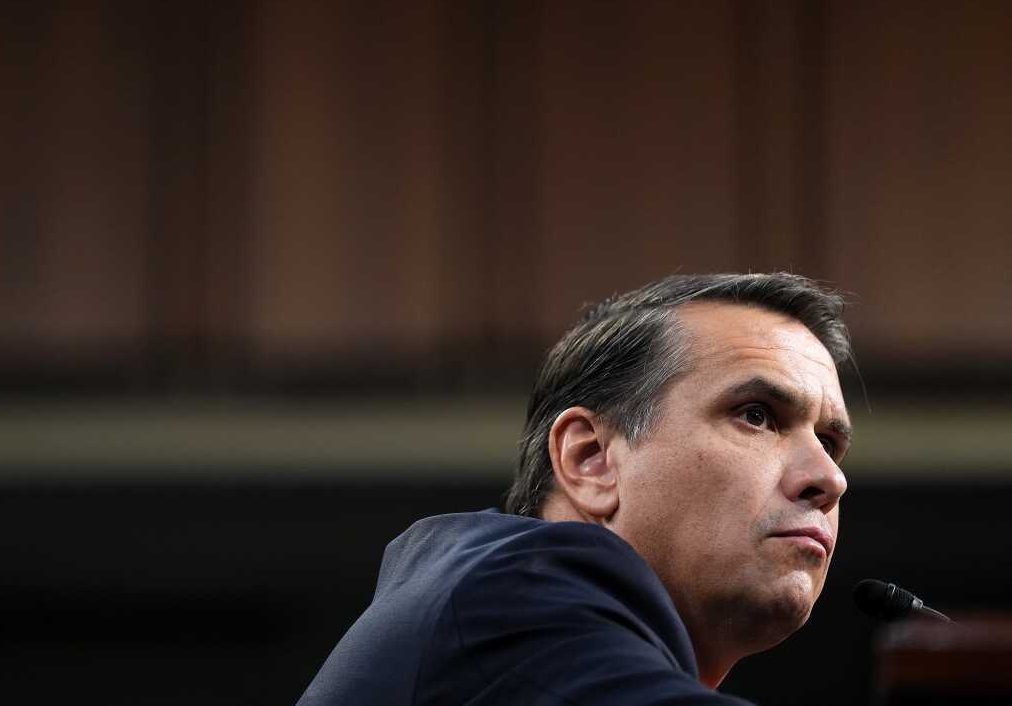
That is precisely what makes the stance of Senator Bill Cassidy so consequential right now. Cassidy, a former physician who represents Louisiana in the Senate, has not committed either way, but the concerns he has raised are pointed. He has said publicly that he questions whether Blanche possesses the ability to lead the Department of Justice with genuine independence, given that Blanche previously served as Donald Trump’s personal attorney. It is a legitimate question about institutional credibility, and it is one that so far has not been answered to Cassidy’s satisfaction.
The Independence Question at the Heart of It
The attorney general of the United States is not supposed to function as the president’s personal counsel. The Department of Justice is meant to operate at arm’s length from the White House, guided by law rather than personal loyalty. That structural principle is what Cassidy’s concern keeps circling back to, and it is the same anxiety that legal observers and opposition figures have flagged since Blanche’s nomination was first floated.
Blanche’s professional history is not in dispute. He represented Trump through serious legal proceedings, building a reputation as a fierce defender of his client. In the world of criminal defense, that kind of loyalty is a virtue. In the world of leading a department that investigates public corruption, oversees federal prosecutions, and is expected to operate free from political influence, that same history reads very differently to those who are skeptical.
For Cassidy, it appears the question is not personal. It is structural. Can an attorney who made his career defending the man who nominated him credibly tell the American public, or the career prosecutors inside Main Justice, that his decisions will be guided solely by law? It is a tension that the confirmation process was designed to surface, and right now it is doing exactly that.
What the Opposition From Murkowski and Collins Signals
Murkowski and Collins have both, at various points in recent years, demonstrated a willingness to break from party lines when they believe a principle is at stake. Their opposition to Blanche should not be dismissed as performative or procedural. These are senators with established records of crossing the aisle when their conscience demands it, and their alignment on this particular nomination suggests that concerns about Blanche’s fitness for the role are substantive rather than political theater.
The fact that both have spoken out publicly, rather than quietly signaling behind closed doors, tells you something about the intensity of their objections. In the Senate, public opposition of this kind is a statement. It is also an invitation for other wavering members to take cover behind the position already staked out by colleagues who have clearly thought it through.
Cassidy Holds the Key
With Murkowski and Collins already counted as losses, the arithmetic becomes almost brutally simple. If Cassidy votes no, the nomination is almost certainly finished. If he votes yes, there may still be a path, though a narrow one. His deliberate, measured public commentary this week suggests he is genuinely wrestling with the decision rather than performing for cameras, and that makes the outcome genuinely uncertain.
The Guardian has been tracking the developing confirmation dynamics in detail, and the live coverage of this August 7 political moment makes clear just how fluid and fragile Blanche’s situation has become as Republican dissent grows louder by the day.
The Broader Stakes for the Justice Department
Beyond the personal drama of a nomination in trouble, this fight carries real weight for an institution that has spent years navigating accusations of politicization from both sides of the aisle. The Department of Justice needs credibility to function. Federal prosecutors need to believe that the decisions made at the top are rooted in law. Defense attorneys, judges, and the public at large need to feel that investigations and prosecutions are not shaped by proximity to power.
A confirmed attorney general who carries the perception of owing his career to the sitting president creates a structural problem that lingers long after any individual case closes. Whether or not Blanche would in practice act with full independence is almost beside the point. The perception problem is real, and it is the perception problem that Cassidy, Murkowski, and Collins have each identified, from slightly different angles, as disqualifying.
If the nomination ultimately collapses, the White House will need to move quickly. The Department of Justice cannot function indefinitely under acting leadership when serious decisions about enforcement priorities, investigations, and institutional direction need to be made. The longer the vacancy lingers, the louder the questions about the administration’s judgment in putting forward a nominee with this particular background for this particular role.
The outcome rests, for now, in Bill Cassidy’s hands. A former doctor turned senator, weighing what it means for a former personal lawyer to become the nation’s chief law enforcement officer. The question is as old as the republic itself: can the attorney general serve the law, or will he serve the man who appointed him? What do you think, and does it matter to you who ultimately leads the Department of Justice?