









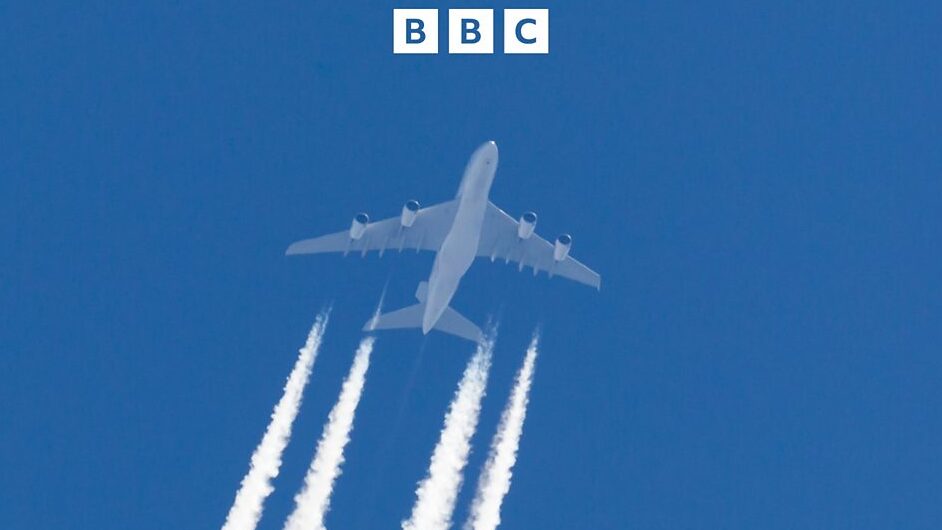
Look up on a clear day and you will almost certainly spot them: those long, white streaks that aircraft leave behind as they cut through the upper atmosphere. Pretty, almost cinematic. But scientists and climate researchers have grown increasingly concerned about what those trails are actually doing to the air around us, and the findings are hard to ignore.
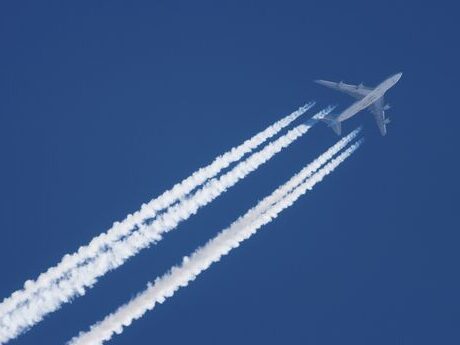
Vapour trails from aircraft, technically known as contrails, are not just a visual curiosity. According to research discussed by climate and tech experts, these trails actively contribute to atmospheric warming. The mechanism is straightforward but the scale is anything but small.
What Are Vapour Trails and Why Do They Form?
When a jet engine burns fuel, it releases hot, humid exhaust into the cold, low-pressure environment of the upper atmosphere. That moisture freezes almost instantly into tiny ice crystals, forming the white streaks we see from the ground. Under the right atmospheric conditions, those ice crystals persist for hours, spreading out into thin, wispy clouds that can cover vast swathes of sky.
The problem is that these artificial clouds behave a lot like natural cirrus clouds. During the day, they reflect some incoming solar radiation back into space, which sounds helpful. At night, however, they trap heat radiating up from the Earth’s surface, acting like an insulating blanket. Studies suggest that the net effect, across a full day-and-night cycle, is warming rather than cooling. The balance tips in the wrong direction more often than not.
Bigger Than You Might Think
Here is the part that tends to surprise people: some climate scientists argue that the warming effect of contrails could rival, or even exceed, the warming caused by the carbon dioxide that aircraft emit directly. CO2 from aviation is already a serious concern, accounting for a meaningful share of global transport emissions. But CO2 lingers in the atmosphere for centuries. Contrails, by contrast, form and dissipate within hours or days. Their warming effect is short-lived, but the sheer volume of flights happening every hour of every day means the cumulative impact adds up fast.
The global aviation industry currently handles tens of thousands of flights daily. Each one has the potential to lay down contrails depending on atmospheric humidity at altitude. On humid days at high altitude, those trails spread and persist. On drier days, they vanish within seconds. The variability makes them difficult to model, which is part of why the science has taken time to reach a mainstream audience.
Why This Has Taken So Long to Register
Carbon dioxide is visible in data, measurable in parts per million, and has been the dominant metric of aviation’s climate footprint for decades. Contrails, being a more complex radiative phenomenon, require different measurement tools and a different kind of atmospheric modelling. For a long time, they were treated as a secondary concern. That is changing rapidly as better satellite data and atmospheric science give researchers a clearer picture of what is happening at 35,000 feet.
The conversation has also shifted because the solutions, at least in theory, are not as radical as the problem might suggest. Unlike decarbonising an entire fleet overnight, avoiding the atmospheric conditions that produce persistent contrails could potentially be achieved by adjusting flight altitudes or routes by only a few thousand feet in certain situations. Some early modelling suggests this targeted approach could cut warming from contrails significantly without a dramatic fuel cost penalty.
What the Aviation Industry Is Starting to Do About It
Airlines and aviation authorities are not completely asleep on this. A handful of pilot programmes have tested contrail-avoidance routing, where aircraft are directed around altitude bands with high atmospheric humidity to reduce persistent trail formation. The results have been cautiously promising, though scaling such systems globally is a logistical and regulatory challenge of considerable complexity.
Sustainable aviation fuels, which produce slightly different exhaust compositions, may also play a role. Research into whether alternative fuels change the formation rate or persistence of contrails is ongoing, and early indications suggest some fuel types may produce fewer ice-nucleating particles in their exhaust, which could reduce contrail formation. Nothing is confirmed at scale yet, but the direction of research is encouraging.
The Passenger Angle
For the average traveller, this raises an uncomfortable question. Flying is already under scrutiny for its carbon footprint, and now there is an additional atmospheric impact to factor in. The so-called flight shame movement, which gained traction in parts of northern Europe in the early 2020s, was driven primarily by CO2 concerns. The contrail dimension adds another layer to that moral calculus.
That said, the solution is not necessarily to stop flying. Aviation connects families, drives economies, and enables the kind of international exchange that no video call fully replicates. The more pressing need is for the industry to take the full range of its atmospheric impacts seriously, not just the emissions that show up most easily in a spreadsheet.
A Problem Hiding in Plain Sight
There is something almost poetic about the fact that one of aviation’s most significant climate contributions has been hiding in plain sight, literally written across the sky in white lines that most people barely register. The science, which has been building for years, is now reaching a point where policymakers and industry leaders can no longer treat contrails as a footnote in climate discussions.
The atmosphere does not care whether warming comes from a CO2 molecule or an ice crystal formed at 38,000 feet. The effect is real, the data is growing, and the window for acting on it is not indefinitely wide.
So next time you tilt your head back and watch a jet trail slowly spread across the sky, ask yourself: is the aviation industry moving fast enough to address something that is literally written in the clouds above us?