







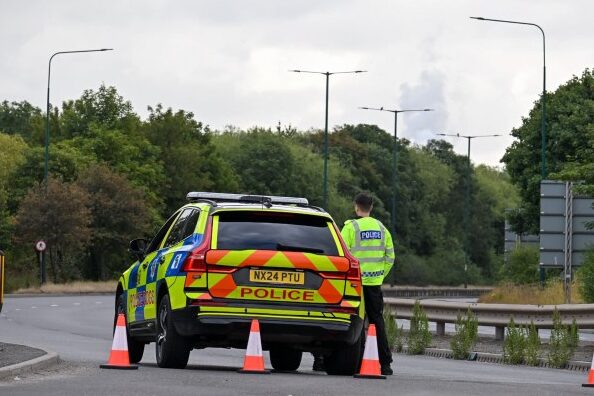
Seven people are dead after a catastrophic collision on the A66 near Middlesbrough in the early hours of Saturday, August 22, 2026. Among the victims were two serving police officers, a detail that has added a sharp and sorrowful dimension to what is already one of the most devastating road incidents to hit the North Yorkshire region in recent memory. Cleveland Police confirmed the death toll, and the police regulator wasted no time, announcing a formal inquiry into the circumstances surrounding the crash.
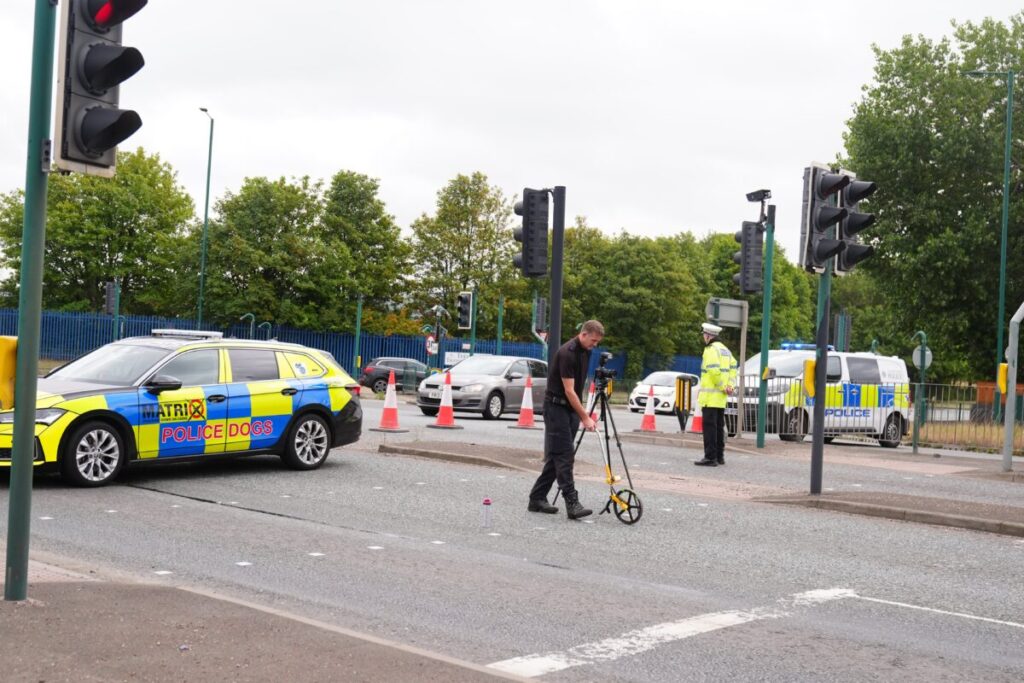
What We Know About the Collision
The crash involved a police car and at least one other vehicle, and it happened in the early hours of Saturday morning, when roads are typically quiet but conditions can be unpredictable. The A66 is a major arterial route that cuts through the north of England, connecting the east coast with the Lake District, and it has historically been the scene of serious road incidents. This stretch near Middlesbrough, however, now carries a particularly grim weight.
Cleveland Police confirmed the deaths of all seven individuals, though at the time of writing, formal identification of the victims and a detailed account of the sequence of events had not been fully released. The involvement of a police vehicle in a fatal crash automatically triggers a specific set of oversight mechanisms in the UK, which is why the police watchdog, the Independent Office for Police Conduct, moved to open an investigation.
According to reporting by The Guardian, the collision has prompted immediate scrutiny from the regulator, which is standard procedure whenever a police vehicle is involved in a death or serious injury on public roads.
Why the Watchdog Gets Involved
When a police vehicle is at the centre of a fatal incident, the matter does not simply fall to the local force to investigate itself. The Independent Office for Police Conduct, often referred to as the IOPC, exists precisely to handle these situations, providing an independent layer of accountability that the public expects and the law requires. It is a safeguard designed to ensure that no institution investigates its own potential failings without external oversight.
The launch of an inquiry does not, in itself, imply wrongdoing on the part of the officers or the force. It is a procedural step, one taken automatically and transparently. But the process matters enormously to the families of all seven victims, including those of the two officers who lost their lives doing their jobs. Those families deserve answers, and the watchdog exists to find them.
Police officers in the UK are trained to handle high-speed responses and emergency driving scenarios, but the roads do not offer guarantees. The A66 is a dual carriageway in parts and a single carriageway in others, and early morning driving brings its own set of risks, from fatigue among other road users to reduced visibility and unpredictable behaviour.
The Human Cost Behind the Headlines
Numbers in a headline can sometimes obscure the full weight of what they represent. Seven people. Seven individuals who had lives, families, routines, and futures. Two of them were police officers, people who put on a uniform with the understanding that some shifts carry risk. The other five were also someone’s loved ones, their stories not yet fully told.
For Cleveland Police, this is a period of profound grief. Losing colleagues on the job is a wound that runs deep through any department. Officers across the force will be processing not just the shock of the news, but also the quiet, haunting awareness that emergency response work always carries a measure of danger that cannot be fully eliminated.
The wider community near Middlesbrough and across North Yorkshire will also feel the weight of this. Major road fatalities ripple outward. They affect emergency services who responded to the scene, hospital staff who received casualties, and residents who may have known or recognised some of the victims.
A66: A Road With a History
The A66 has long been regarded as one of England’s more challenging road corridors. It spans a considerable distance and traverses terrain that can turn treacherous in poor weather or under the pressure of time-sensitive driving. Campaign groups and transport authorities have periodically raised concerns about specific sections of the route, and this latest incident will almost certainly reignite those conversations.
Road safety in the UK has been a persistent policy concern, with organisations pushing for infrastructure upgrades, better lighting, improved signage, and more rigorous speed monitoring on high-risk routes. Whether any of those factors played a role in Saturday’s collision remains to be determined by the ongoing investigation.
What Happens Next
The IOPC inquiry will now proceed alongside any criminal investigation the police themselves may conduct into the other vehicle involved. Families of the deceased will be kept informed of progress, and the watchdog is expected to publish its findings once the investigation concludes, though these processes can take months depending on complexity.
Cleveland Police will likely issue further statements as identifications are confirmed and as they are able to speak more fully about their fallen colleagues. Tributes from the policing community, from local officials, and from the public are already beginning to surface, as they always do in moments like this, a reminder that behind every badge is a person.
For now, the A66 carries a new and sombre significance. A stretch of road that thousands travel routinely became, in the early hours of a Saturday morning, the site of immense and irreversible loss. The investigation will seek to understand what happened. What no inquiry can do is undo it.
As this story continues to develop, one question lingers for road safety advocates, policymakers, and the public alike: how many more tragedies on routes like the A66 will it take before the infrastructure that surrounds emergency response driving receives the serious, sustained attention it deserves?