




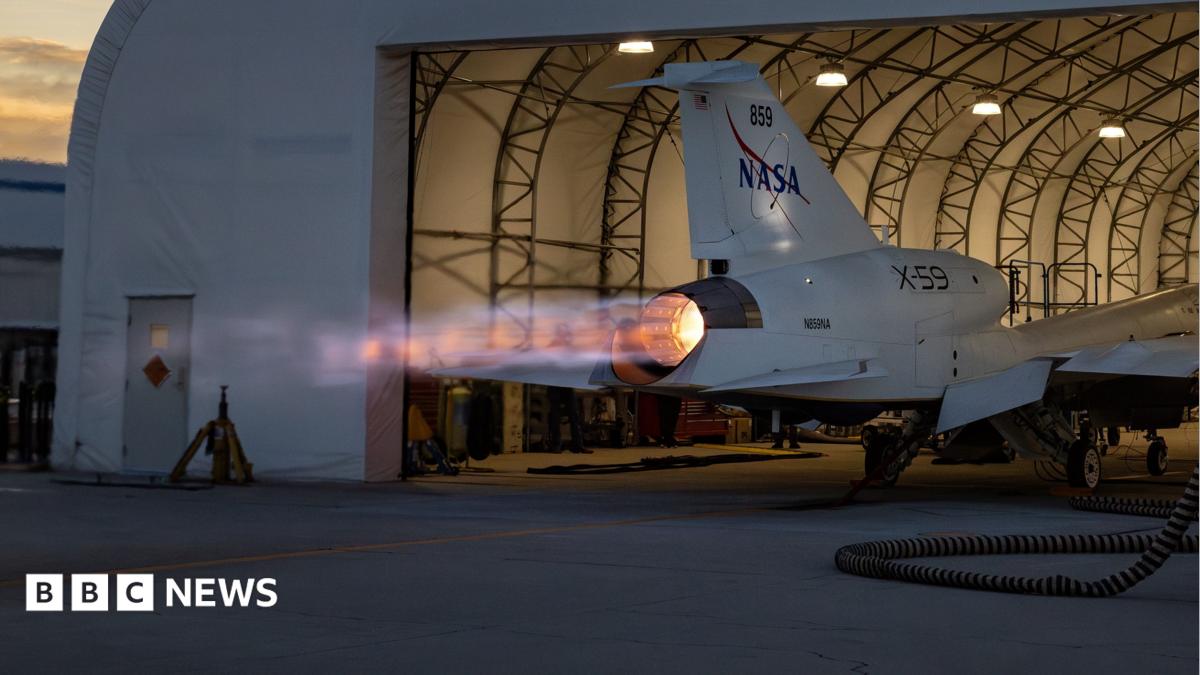
Somewhere over the United States right now, a jet that looks like it was designed by committee, cannibalised from spare parts bins, and finished on a dare is quietly making aviation history. NASA’s X-59 experimental aircraft, with its absurdly elongated nose and a cockpit positioned so far aft that the pilot relies on a camera feed to see the sky ahead, is not a joke. It is, potentially, the most important aircraft flying today.
Why a Plane Needs the Face of an Anteater
The X-59’s peculiar profile is not accidental. Every millimetre of that stretched, tapering snout serves a single purpose: taming the sonic boom. When an aircraft punches through the sound barrier, it generates a shockwave that hits the ground like a clap of thunder. That physics problem killed Concorde’s commercial ambitions. The Anglo-French supersonic jet was restricted to transoceanic routes because flying it over land at full speed would have rattled windows and nerves from London to Los Angeles.
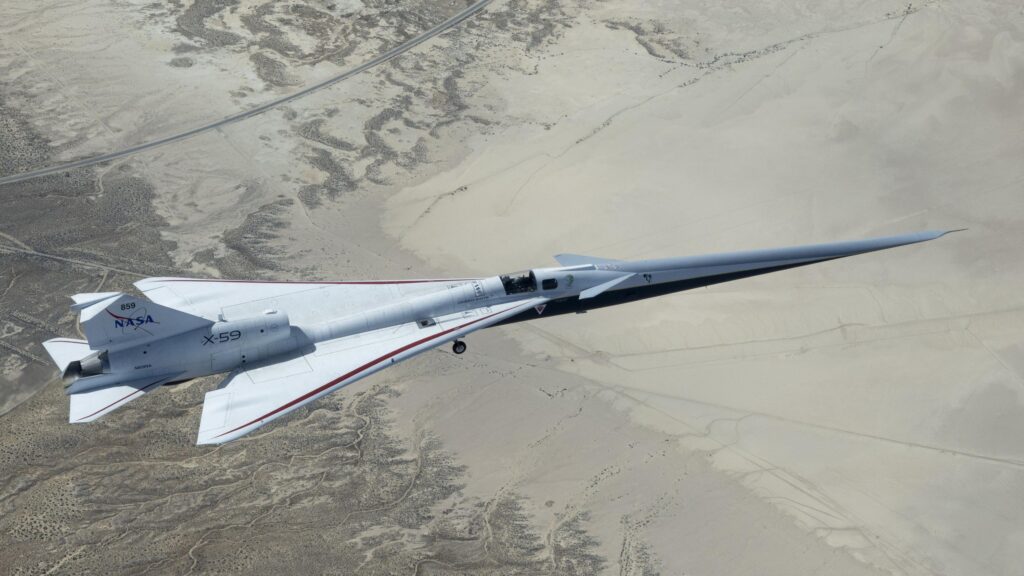
NASA’s solution, as explored in detail by the BBC, is to use the X-59’s extended fuselage to spread and flatten those shockwaves before they reach the ground. The result, engineers hope, will be less a thunderclap and more a soft thump, barely distinguishable from background noise. If that works, supersonic passenger flights over land become legally and practically viable again, and an entirely new chapter of air travel opens up.
One Goal, One Aircraft, No Distractions
Peter Coen, a NASA veteran with 43 years of institutional knowledge behind him, manages the X-59 programme. His description of the X-plane philosophy is almost brutally simple: pick one small, provable goal, build an aircraft around it, and stop there. More goals mean more complexity, and more complexity means more money. The X-59 exists to suppress sonic booms on a budget. Nothing else is on the agenda.
That philosophy of radical focus has defined the X-plane lineage since 1947, when the Bell X-1 broke the sound barrier for the first time. That aircraft, flown by the legendary test pilot Chuck Yeager, was shaped like a .50 calibre bullet because NASA knew a bullet of that calibre already travelled faster than sound. The logic was clean and almost startlingly direct: if it works for a bullet, make the plane look like one.
From Sound Barrier to the Edge of Space
The X-1 was just the beginning. Two decades later, the X-15 rocket plane took the programme to staggering new heights, literally. Dropped from a B-52 bomber, this cylinder with tiny wings reached 6.7 times the speed of sound, or roughly 4,520 miles per hour, and grazed the edge of space. The materials science that came out of keeping the X-15 from disintegrating at those speeds fed directly into the heat shields that protected Space Shuttle crews on re-entry. One experimental aircraft, one focused goal, and the ripple effects changed human spaceflight.
The X-59 sits in that same lineage, nearly 80 years after Yeager’s historic flight. It borrows parts from other aircraft, including components sourced from the F-16 and U-2 programmes, keeping development costs manageable while producing a machine technically capable of answering a very specific question: can we make supersonic commercial flight acceptable over populated land?
The Drone Question Hanging in the Air
There is an obvious tension in all of this. We live in an age of unmanned flight. Drones have rewritten military doctrine, reshaped logistics, and begun creeping into passenger transport concepts. Every dollar spent on a crewed experimental aircraft is a dollar not spent on autonomy research. Critics ask whether the X-plane model, built around human pilots proving aerodynamic theories, still makes sense.
The counter-argument is persuasive. The X-59 is not trying to replace drone research. It is answering a question no drone can currently answer: whether the human experience of supersonic commercial travel, on real routes over real cities, becomes viable when the boom is quieted. A drone cannot simulate passenger psychology or regulatory acceptability. A crewed aircraft flying over communities, generating data on noise perception, can. The two tracks are parallel, not competing.
What Happens If It Works?
If NASA’s flight data eventually persuades regulators to lift the ban on supersonic overland flight, the commercial implications are significant. Airlines could operate New York to Los Angeles routes in roughly half the current time. London to Dubai could become a morning trip rather than a full day commitment. The market for high-speed business travel, which quietly survived Concorde’s retirement by adapting to premium flat-bed cabins, would face a genuine disruption from above.
None of that happens automatically. Flight data from the X-59 will need to feed into international regulatory reviews. The process is slow, political, and expensive. But the alternative, leaving supersonic overland travel permanently off the table because of a problem nobody tried seriously to solve, seems like a stranger choice the longer the X-59 keeps flying.
A Weird Machine With a Clear Purpose
It would be easy to laugh at the X-59. The pilot who cannot see forward, the nose borrowed from nature’s most comically specialised mammal, the patchwork of salvaged components from other programmes. It does not look like the future. But then again, neither did a stumpy bullet-shaped plane flown by a former World War Two fighter pilot over the California desert in 1947. That flight changed everything.
The X-59 is not beautiful. It is not elegant. What it is, potentially, is correct. And in aviation, correct tends to win eventually.
With drone technology advancing on one front and experimental crewed aircraft pushing aerodynamic boundaries on another, the real question is this: are we bold enough to bring back the age of supersonic passenger travel, or will we settle for watching unmanned machines do the interesting flying while we sit in the same seats at the same speeds we have for the past fifty years?