


For the first time in 18 years, a pope is walking the streets of Paris. On September 25, 2026, Pope Leo arrived in France for a visit that carries the weight of history and the urgency of the present, with a schedule that takes him from the grand halls of the Élysée Palace to the rebuilt stones of Notre Dame Cathedral, with a stop at UNESCO in between to deliver what is being billed as a landmark address on artificial intelligence.
A City, a Pope, and a Long Absence
Eighteen years is a long time in geopolitics, in faith, and in the life of a city. Paris has burned and rebuilt, mourned and celebrated, and now it receives a pope at a moment when Europe itself is wrestling with some of its most consequential questions in a generation. The timing feels anything but accidental.
The papal itinerary reads less like a pastoral visit and more like a carefully constructed statement. Every stop on the schedule sends a signal, whether it’s the diplomatic weight of the Élysée Palace meeting, the intellectual gravitas of a UNESCO speech, or the deeply symbolic choice to visit Notre Dame, the cathedral that collapsed in flames in 2019 and has since risen again.
The Élysée Palace: Diplomacy Before Devotion
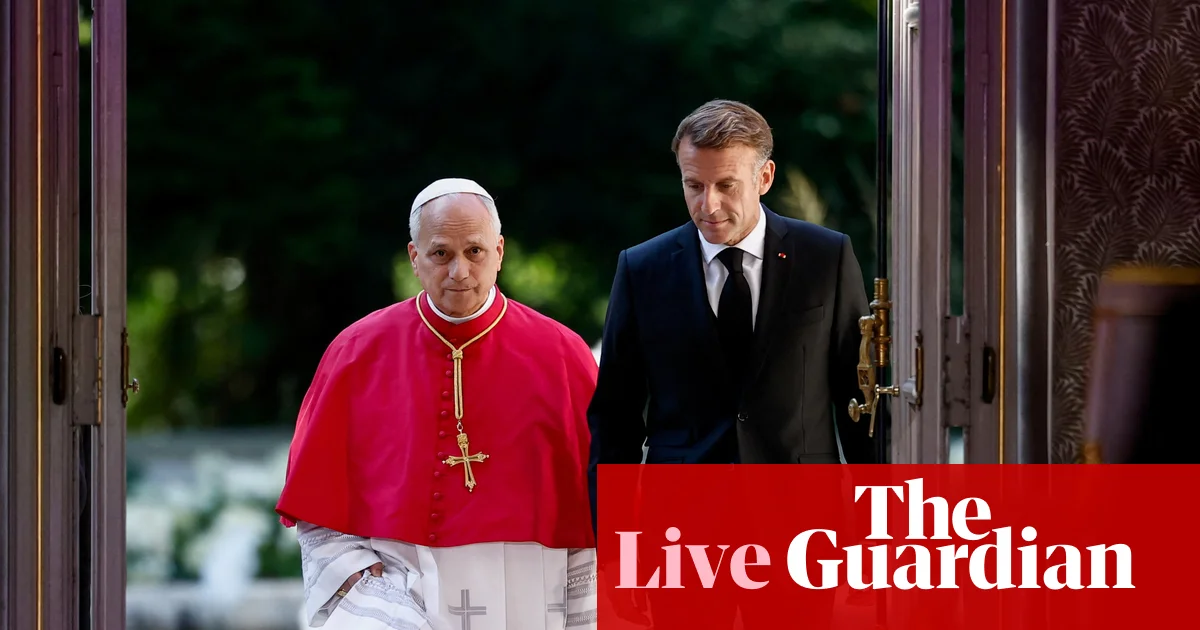
Pope Leo’s day began with a formal reception at the Élysée Palace, the nerve centre of French political life and the official residence of the French president. These encounters between the Holy See and heads of state are choreographed down to the minute, but they carry real diplomatic substance. France, home to one of the largest Catholic populations in Europe yet fiercely committed to its tradition of secularism, is a complex interlocutor for any pope.
Beyond the bilateral conversation, Leo also met with representatives from civil society and the diplomatic corps. That breadth of engagement points to a pope who understands that the Church’s influence in Europe today runs through culture and conscience as much as through formal religious structures.
UNESCO and the AI Speech: Faith Enters the Tech Debate
The centrepiece of the day, intellectually at least, is Pope Leo’s mid-afternoon address at UNESCO on artificial intelligence. The choice of venue matters enormously. UNESCO, the United Nations body responsible for education, science and culture, has been one of the leading multilateral voices attempting to set ethical guardrails around AI development. For a pope to stand at that podium and address the question of AI is to insert the moral authority of the Catholic Church directly into one of the most contested policy debates of our time.
The Vatican has not been silent on technology in recent years. Questions about human dignity, the rights of workers displaced by automation, algorithmic bias, and the existential risks of advanced AI systems all sit squarely within the Church’s traditional concerns about the common good. What Pope Leo chooses to say at UNESCO could reframe how religious institutions globally position themselves in the AI governance conversation. You can follow the full details of the visit as they unfold via The Guardian’s live coverage.
There is something genuinely striking about the image: a pope, the leader of a two-thousand-year-old institution, standing before the world’s foremost cultural body to talk about machine learning, large language models, and the ethics of automation. It collapses the distance between ancient and modern in a way that few other moments can.
A Stroll Through Paris: The Human Gesture
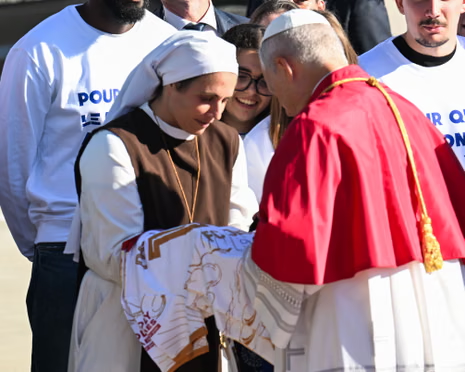
After the UNESCO address, Leo is expected to do something refreshingly unscripted by the standards of high-level papal visits: take a walk through the streets of Paris. These moments, when a pope steps outside the armoured motorcade and into the flow of ordinary city life, tend to generate the most enduring images and the deepest public connection. Paris, a city that loves a spectacle but distrusts pretension, tends to reward authenticity.
It is the kind of gesture that no amount of diplomatic choreography can manufacture. A man in white walking through one of the world’s great cities, greeting whoever approaches, is a visual that transcends the institutional and touches something more elemental.
Notre Dame: The Spiritual Culmination
The visit ends where it was perhaps always destined to end: at Notre Dame Cathedral. The fire that gutted the medieval structure in April 2019 was one of the most watched disasters in modern history, a collective grief that crossed religious lines and national borders. The cathedral’s restoration, completed and reopened to the public in late 2024, is one of the most ambitious architectural reconstruction projects Europe has undertaken in living memory.
For a pope to visit Notre Dame now is to acknowledge both the wound and the healing, to stand inside a building that nearly ceased to exist and to affirm what it represents. It is a moment of enormous symbolic power, and one suspects that Leo and his team chose it deliberately as the emotional and spiritual punctuation mark of the entire visit.
Europe’s Future and the Church’s Voice
Taken together, this day in Paris is about more than a single visit. It is about the role the Catholic Church intends to play as Europe navigates a period of genuine uncertainty, from the governance of transformative technologies to questions of identity, solidarity, and democratic resilience. Pope Leo is, by his schedule alone, signalling that the Church has opinions on all of it and is not content to observe from the margins.
Whether that voice lands as wisdom or as interference will depend, as always, on what is actually said. The UNESCO speech will be parsed closely by technologists, ethicists, policymakers, and the faithful alike. Paris, for one day at least, is the centre of a conversation that the whole world has a stake in.
As the sun sets over the Seine and the spire of Notre Dame catches the last of the light, one question hangs in the air: can institutions rooted in ancient tradition genuinely shape the direction of technologies that are being built faster than any ethical framework can follow?