










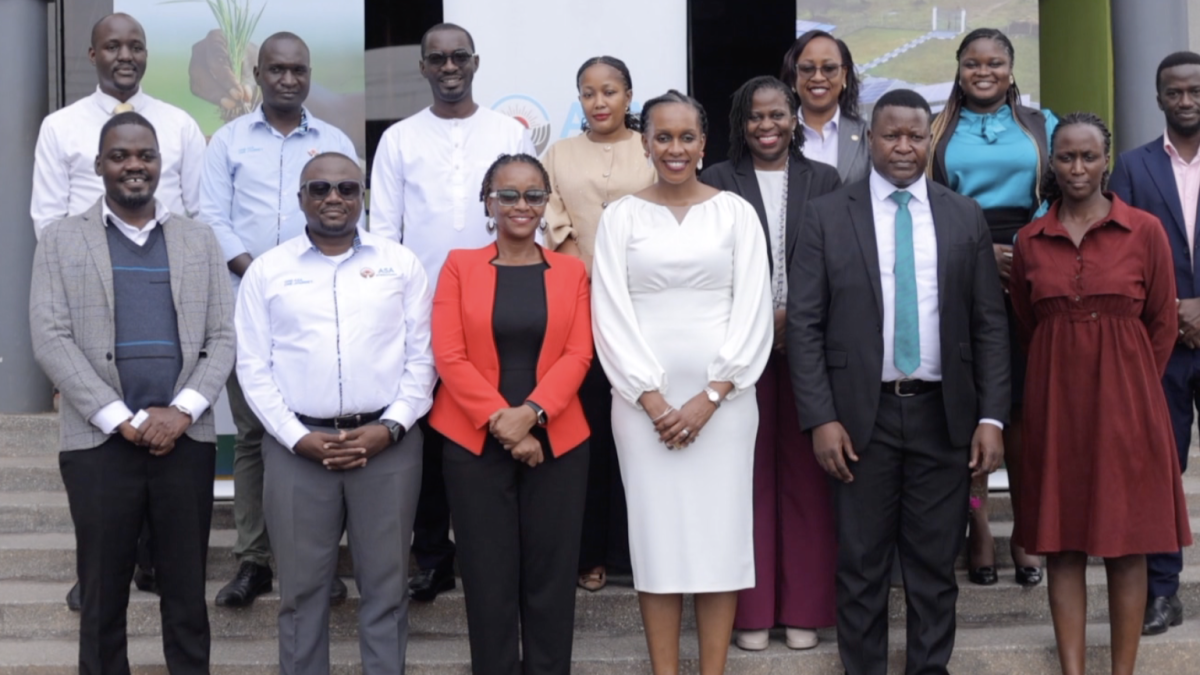
Two financial institutions are putting real money behind a conversation that Uganda has been having for years. ABI Finance and ASA Microfinance have announced a joint Shs2 billion programme designed to give women-led small and medium enterprises in northern and eastern Uganda access to credit without the usual demand for collateral. It is a significant move, targeting regions where poverty rates remain stubbornly high and where women have historically been pushed to the margins of economic opportunity.
The Collateral Problem Nobody Fixed
Ask any woman running a small business in Lira, Soroti, or Gulu what the biggest obstacle to growing her enterprise is, and the answer is almost always the same: the bank wants something she does not have. Collateral requirements have long functioned as an invisible gate keeping women out of formal finance. Land is traditionally held by men. Assets accumulated through years of hard work often sit outside a woman’s name. The result is a cycle where ambition outpaces access and promising businesses stall before they ever truly start.
This new programme cuts through that barrier directly. By offering collateral-free loans, ABI Finance and ASA Microfinance are removing the single biggest structural hurdle standing between women entrepreneurs and the capital they need. It is not charity. It is a calculated bet on a segment of the economy that has consistently been underestimated.
Credit Plus Skills: A Smarter Approach to Support
What separates this programme from a straightforward lending exercise is the additional layer baked into its design. The Shs2 billion in credit will be paired with business skills training, giving recipients not just money but the tools to put it to work effectively. That combination matters more than it might seem on the surface.
Microfinance history across the continent offers cautionary tales of programmes that handed out loans without building the capacity to use them well. Debt without knowledge can push vulnerable borrowers deeper into difficulty rather than lifting them out of it. By integrating training alongside credit, ABI Finance and ASA Microfinance appear to be drawing on those lessons and designing something more durable. The goal is not just disbursement numbers, it is actual business growth.
Why Northern and Eastern Uganda, Specifically?
The geographic targeting here is not accidental. Northern Uganda carries the scars of prolonged conflict that displaced communities and disrupted economic development for decades. Recovery has been uneven, and women in these areas face a double burden: general poverty and the specific constraints that come with gender inequality in access to land, markets, and formal financial services.
Eastern Uganda tells a similar story in parts. High poverty rates, limited infrastructure, and a concentration of subsistence-level activity mean that small businesses, particularly those run by women, often operate with thin margins and zero safety nets. Directing capital toward these regions rather than the more commercially active central corridor around Kampala is a strategic choice that acknowledges where the need is greatest.
As NTV Uganda reports, the programme is explicitly designed around the economic constraints that women in these regions face disproportionately, making this one of the more deliberately targeted financial inclusion efforts Uganda has seen in recent memory.
What Shs2 Billion Actually Looks Like on the Ground
Two billion shillings sounds enormous at the national policy level. On the ground, split across potentially hundreds or thousands of individual borrowers, it becomes individual loan tranches that could fund an expanded market stall, a second sewing machine, a small poultry unit, or a motorbike for a delivery business. Small amounts by corporate standards, but transformative at the household level.
The real multiplier effect comes not from any single loan but from what happens when women reinvest earnings back into their families. Research across sub-Saharan Africa consistently shows that income controlled by women flows disproportionately toward children’s education, household nutrition, and community welfare. Lending to women is not simply a gender equity exercise. It is one of the most efficient routes to broad social and economic development available.
The Institutions Behind the Initiative
ABI Finance and ASA Microfinance both operate within Uganda’s regulated financial sector, giving this programme a layer of institutional credibility that distinguishes it from informal lending arrangements. ASA Microfinance, part of the global ASA International network, has an established footprint across several African markets and a model built specifically around serving low-income clients. ABI Finance brings local market knowledge into the partnership. Together, they represent a combination of global experience and on-the-ground understanding that the programme will need to reach its intended beneficiaries effectively.
A Moment That Could Set a Precedent
Uganda’s financial sector still has significant ground to cover when it comes to serving women and rural populations. The formal banking penetration rate in underserved regions remains low, and many women continue to rely on savings groups and informal lending circles as their primary source of credit. A programme of this scale, from regulated institutions, operating without collateral demands, has the potential to shift expectations on both sides of the lending relationship.
If the results demonstrate what many financial inclusion advocates have long argued, that women borrowers are reliable, growth-oriented, and capable of using credit productively, it could encourage other institutions to follow with similar offerings. The argument for collateral-free lending to women entrepreneurs would move from idealistic to evidenced.
There is also a question of sustainability. Grant-funded or subsidised programmes often struggle to outlast their initial funding cycles. Whether ABI Finance and ASA Microfinance have structured this as a commercially viable, self-sustaining model or as a time-limited initiative will ultimately determine its long-term legacy.
For now, the women of northern and eastern Uganda preparing to access this programme have something more immediate to focus on than policy architecture. They have a chance to grow their businesses with capital they would not otherwise have. And that, in the most direct sense, is exactly the point.
The real question worth sitting with: if a Shs2 billion programme can move the needle for women entrepreneurs in Uganda’s hardest-hit regions, what would ten times that investment accomplish, and who should be stepping up to provide it?