








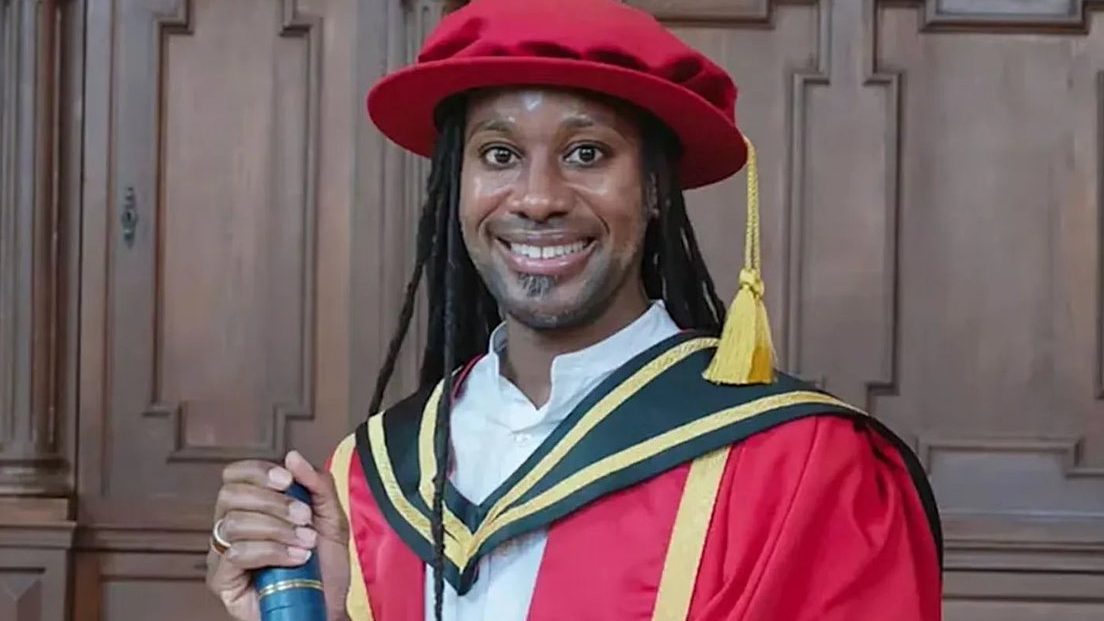
Jason Arday, the man who had once broken one of British academia’s most enduring barriers, has died. The 41-year-old former University of Cambridge professor was found unresponsive by ambulance crews at a property in Battersea, south London, in what police have described as an unexpected but non-suspicious death. His next of kin have been informed and are receiving support from officers.
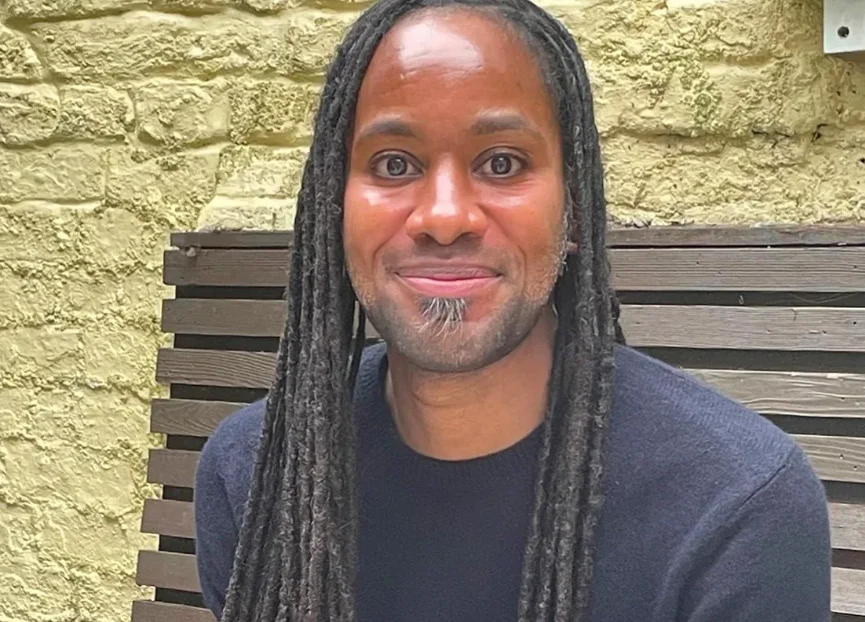
The Metropolitan Police confirmed the facts in a brief public statement: “Sadly, a 41-year-old man was pronounced dead at the scene. His next-of-kin have been informed and are being supported by officers. At this time, his death is being treated as unexpected, but is not believed to be suspicious.” The case has been handed to officers from the Met’s Central division for further investigation.
A Historic Rise, Then a Rapid Fall
To understand the weight of this moment, you have to understand what Jason Arday represented. He was not simply a professor. He was a symbol, the youngest Black professor in the entire history of the University of Cambridge, an institution that has stood for over 800 years. His appointment as a professor of sociology of education had been celebrated across academic circles and beyond as a sign that one of the world’s most elite universities was finally, meaningfully, opening its doors.
That symbolism made what came next all the more painful. Earlier this month, Arday resigned from his position at Cambridge after accusations of plagiarism emerged and rapidly escalated into a full-blown controversy. The allegations sent shockwaves through academia, generating intense debate not just about the specifics of the case but about how universities respond to misconduct claims, the enormous pressure placed on high-profile academics, and the particular burden carried by those who are cast as institutional firsts.
As reported by NTV Uganda, the scandal had caused a significant furore in academic circles before Arday’s death brought an abrupt and devastating close to the public storm.
The Pressure of Being a Pioneer
There is something worth sitting with here. Being the first of anything in an institution like Cambridge is not a light thing to carry. It comes with visibility that is, by nature, unforgiving. Every success gets magnified. Every stumble gets dissected. The margin for error shrinks in inverse proportion to the height of the expectation placed on your shoulders.
Arday’s story was one that many young Black academics across the UK had looked to as proof that the system could work for them. His appointment was not just professional news; it was personal news for a generation of scholars who had watched doors stay shut and wondered whether they ever would open. When the plagiarism accusations surfaced, the fallout was not contained to Cambridge’s internal processes. It played out publicly, loudly, and with an intensity that rarely attaches itself to misconduct cases involving less symbolically charged figures.
Critics and supporters alike began debating online and in academic publications whether the scrutiny applied to Arday was proportionate, whether institutions have adequate support structures for academics at the centre of public investigations, and what responsibility universities carry when a scandal becomes a public spectacle.
Academia’s Uncomfortable Reckoning
The academic world is not known for its gentleness. It is a space built on peer review, rigorous critique, and the expectation that ideas will be challenged and tested. That culture has obvious merit. But it can also produce an environment where reputational destruction moves at speed, where the presumption of guilt in public discourse frequently outpaces any formal institutional finding, and where the human cost of controversy can go dangerously unacknowledged.
Arday’s death forces a reckoning with that reality. Whatever the full facts of the plagiarism accusations against him, whatever conclusions any formal inquiry might have reached, he was a human being navigating an extraordinarily public crisis. The question of what support was available to him, and whether it was sufficient, deserves serious attention from university administrators, academic bodies, and policymakers alike.
This is not about absolving anyone of professional responsibility. Plagiarism in academia is a serious matter that undermines the integrity of scholarship. But professional accountability and human welfare are not mutually exclusive concerns. The manner in which institutions manage public misconduct processes has real consequences for the people at their centre, and those consequences demand consideration.
What Happens to the Conversation He Started?
Arday’s work in sociology of education had touched on questions of race, identity, and structural inequality within academic institutions. The irony that his death has now ignited precisely those conversations in a raw, urgent way is not lost on those who knew his research. His presence at Cambridge had prompted discussion. His departure from it, under these circumstances, demands it.
Across social media and academic networks, tributes have been appearing alongside uncomfortable questions. How do elite universities care for the human beings who occupy their most pressured roles? What does it mean to place a person on a pedestal of historical significance and then watch the public narrative curdle around them? And who, in moments like these, is looking out for the individual rather than the institution’s reputation?
The Metropolitan Police have not indicated any suspicious circumstances, and the investigation continues in the hands of officers assigned to the case. Beyond the police formalities, though, lies a far more complex set of questions that no investigation will fully answer.
A Life at 41
Jason Arday was 41 years old. By any measure, that is a life cut short. He had achieved more in his field than most academics manage across an entire career, and he had done so in a way that meant something far beyond his own professional advancement. His story, at its height, was one of those rare examples of a person genuinely moving the needle on what is possible within an institution that has long resisted change.
The end of that story, in a flat in Battersea, found by ambulance crews and confirmed by a police statement, is a sobering reminder that behind every headline about academic controversy is a person. A person with a family now being supported by officers. A person whose next of kin are grieving tonight.
The academic community, the media, and the wider public that followed this story owe it to that reality to ask a serious question: when institutions and the public turn a professional scandal into a prolonged spectacle, what duty of care do we collectively hold toward the person at the centre of it?