






One of the most recognizable names in video game history has just changed hands. Electronic Arts, the American publishing powerhouse behind some of the best-selling game franchises on the planet, has been acquired for $55 billion by a group of investors led by Saudi Arabia’s Public Investment Fund. The deal, confirmed on August 8, 2026, marks a seismic shift not just for EA, but for the entire global gaming industry.

Who Bought EA and for How Much?
The buyers form a constellation of serious financial muscle. At the centre of the deal is Saudi Arabia’s Public Investment Fund, the kingdom’s sovereign wealth fund, which has been aggressively expanding its footprint in entertainment, sports, and technology over recent years. Alongside PIF is Affinity Partners, an investment firm led by Jared Kushner, the son-in-law of US President Donald Trump.
The $55 billion price tag, equivalent to roughly £41 billion, makes this the largest leveraged buyout ever recorded. And that word, “leveraged”, is doing a lot of heavy lifting here. PIF has already committed $36 billion to close the transaction, but it still needs to borrow an additional $20 billion from investment bank JPMorgan to get the deal across the line. That borrowed capital will sit on EA’s books as corporate debt, and how the company manages that burden will define its next chapter.
EA Goes Dark on the Stock Market
With this acquisition, EA is being taken private. That means the company’s publicly traded shares will be bought out entirely, and EA will no longer list on any stock exchange. For everyday investors who held EA stock, this is the end of the road. For the new ownership group, it means operating without the quarterly scrutiny that public markets demand, which can be both a freedom and a pressure cooker.
Private ownership gives the new controllers far more room to restructure, cut, merge, or expand without broadcasting every decision to shareholders. Industry watchers have noted this type of arrangement tends to come with a very hands-on style of management. Christopher Dring, editor-in-chief and co-founder of The Game Business, put it plainly: private equity firms are typically aggressive in how they run companies. The question is what that aggression will look like inside one of gaming’s most storied studios.
What’s at Stake for EA’s Games and Players
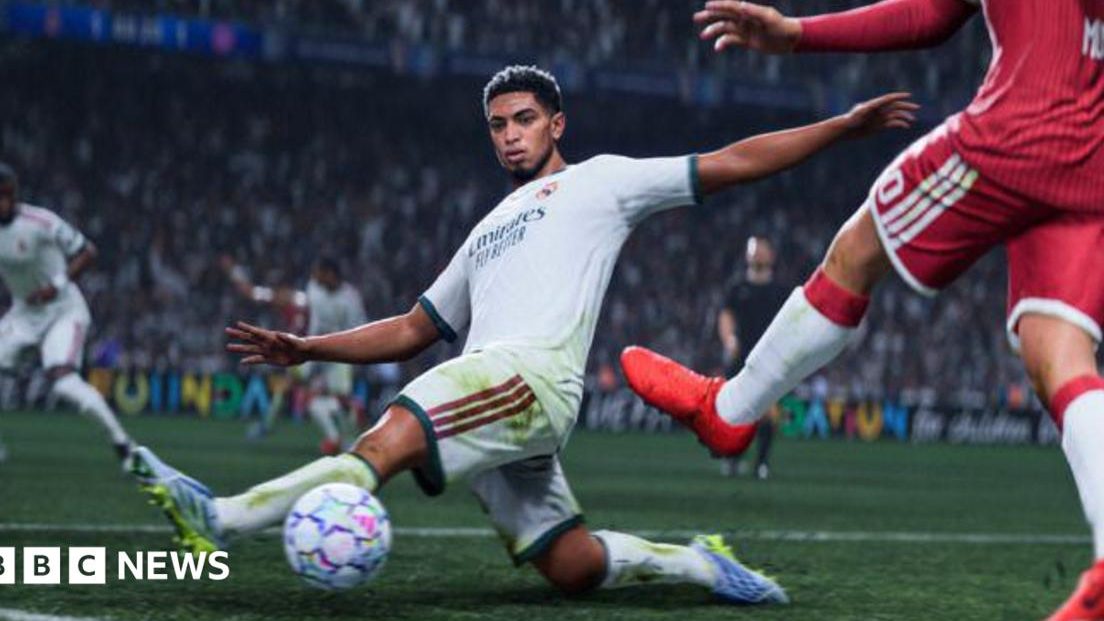
EA’s portfolio reads like a hall of fame for the medium. The company’s football franchise, which launched as Fifa in 1993 and rebranded to EA FC in recent years, has sold over 325 million copies across its entire run. The Sims, the beloved life simulation series with a fanbase that spans generations, sits alongside EA’s sci-fi epic Mass Effect as cornerstones of its catalog.
These are not just games. They are cultural institutions with hundreds of millions of loyal players worldwide. Which is precisely why the post-acquisition roadmap matters so deeply to the gaming community.
Bloomberg journalist Jason Schreier, one of the most respected voices in games industry reporting, suggested the weight of that $20 billion in borrowed debt could translate into mass layoffs, more aggressive in-game monetization, and sweeping cost-cutting measures across the organization. None of that would be surprising given the logic of leveraged buyouts, where the acquired company essentially works to service the debt used to purchase it. The numbers, however comfortable they sound at the boardroom level, have real consequences for the people making the games and the players buying them.
Saudi Arabia’s Gaming Ambitions Are No Secret
This acquisition does not arrive out of nowhere. Saudi Arabia’s Public Investment Fund has been building a formidable position in the global gaming sector for several years. The kingdom’s leadership has identified gaming as a strategic growth industry, and PIF has made notable moves into major gaming companies internationally. This deal, though, dwarfs anything that came before it in pure scale.
Critics have raised questions about what Saudi Arabia’s expanding influence in global entertainment means for creative freedom, labor practices, and content decisions within the studios it controls. Those questions will now apply directly to the teams behind EA FC and The Sims.
A New Era or a Cautionary Tale?
There is a version of this story where the new ownership injects fresh capital, stabilizes a company that had been navigating a tough stretch, and gives EA’s development teams the runway they need to build genuinely great games. Private ownership, in theory, can remove short-term thinking driven by quarterly earnings pressure.
But there is another version. One where debt repayment becomes the organizing principle of every business decision, where studios are consolidated, headcounts shrink, and the games themselves become more heavily monetized to generate the cash flows needed to service those JPMorgan loans. Players who already bristle at the annual churn of EA FC editions and its Ultimate Team model will be watching closely.
The gaming industry has seen consolidation accelerate sharply over the past decade. Microsoft’s acquisition of Activision Blizzard, Sony’s growing studio portfolio, and now this. Each deal reshapes the power dynamics of who makes games, who distributes them, and ultimately, who profits from them.
For now, EA remains operational, its games still on shelves and digital storefronts, its development teams still at their desks. But the clock on the debt has started ticking. Every patch update, every season pass, every new title from here forward will carry the invisible weight of a $20 billion loan.
If you are an EA fan, a shareholder, a developer, or just someone who has spent hundreds of hours building a Sims household or grinding through EA FC’s career mode: do you trust a Saudi sovereign wealth fund and a Trump family investment firm to be the stewards of the games you love?