


Long before American soccer became a commercial juggernaut, before the sport found its footing in the cultural consciousness of a nation raised on baseball and gridiron football, one man was doing something genuinely extraordinary. Desmond Armstrong, goalkeeper and quiet pioneer, stepped onto the world stage at a time when the United States had no real business being there, and he did it with the kind of composure that history rarely rewards with the attention it deserves.
A Nation Learning to Play Its Way
To understand what Armstrong represented, you have to understand the landscape of American soccer in the late 1980s. The North American Soccer League had collapsed in 1984, leaving the sport in an organizational vacuum. There was no professional top-flight league to speak of. Players who wanted careers in football had to travel abroad or scrape together opportunities wherever they could find them. The infrastructure was, to put it charitably, skeletal.
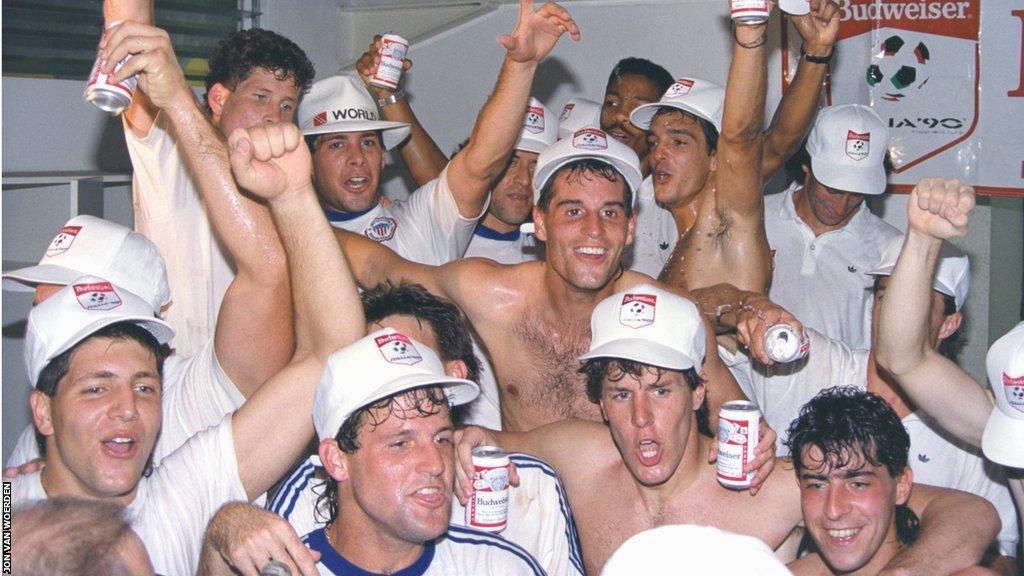
Into this uncertain climate stepped Armstrong, a Maryland-born goalkeeper who had sharpened his skills through college football and the American amateur system. His rise to the national team was not built on glamour or a high-profile transfer. It was built on consistency, on showing up, on being better than the chaos around him demanded he had to be.
The World Cup and What It Meant
When the United States qualified for the 1990 FIFA World Cup in Italy, it was the country’s first appearance at the tournament since 1950, a gap of four decades that underscores just how far outside the global conversation American soccer had drifted. Armstrong was part of that squad, part of a group of players who understood they were not just representing their country in a football match. They were making an argument, to the world and to their own countrymen, that the United States belonged on this stage.
The matches themselves were grueling. The competition in Italy was fierce, featuring some of the finest footballing nations on earth. But the Americans competed, and Armstrong’s presence between the posts gave the side a foundation. Coverage of American soccer’s formative years has occasionally surfaced on major broadcasters, but figures like Armstrong rarely receive the extended biographical treatment their contributions warrant.
More Than a Goalkeeper
What makes Armstrong’s story resonate across decades is not simply the saves he made or the minutes he logged. It is the symbolic weight of what he and his teammates carried. Every time he pulled on the national shirt, he was pushing against a cultural assumption that soccer was somehow foreign to American identity, that it belonged to other nations and other traditions.
That assumption has since been thoroughly dismantled. The United States hosted the World Cup in 1994, co-hosted it in 2026 alongside Canada and Mexico, and built the MLS into one of the most commercially attractive domestic leagues in the world. None of that happens without the groundwork laid by the 1990 generation.
The Pioneers Nobody Remembers
Sport has a habit of celebrating its marquee moments while quietly forgetting the people who made those moments possible. Armstrong sits in that second category, a player whose legacy is embedded in structures and opportunities he never fully got to enjoy himself. The teenagers putting on USMNT shirts today do so in a world Armstrong helped build, even if they have never heard his name.
There is something both melancholy and quietly dignified about that kind of contribution. You do not do it for the recognition. You do it because the work matters, because the game matters, because someone has to go first.
Why His Story Matters Now
With the United States having recently co-hosted one of the most-watched World Cups in the tournament’s history, this is exactly the right moment to look back at the people who made the arc of that story possible. Armstrong is not a footnote. He is a foundation stone, one of the Americans who walked into a global tournament with nothing but skill, nerve, and the audacity to believe the US could compete.
Soccer in America has arrived. But arriving somewhere always requires someone to leave first, to take the road before it is properly paved. Desmond Armstrong took that road, and the game on this side of the Atlantic owes him more than it typically admits.
Who else from that pioneering 1990 squad do you think deserves a wider reckoning from modern American soccer fans? Drop your thoughts below and keep the conversation going.