


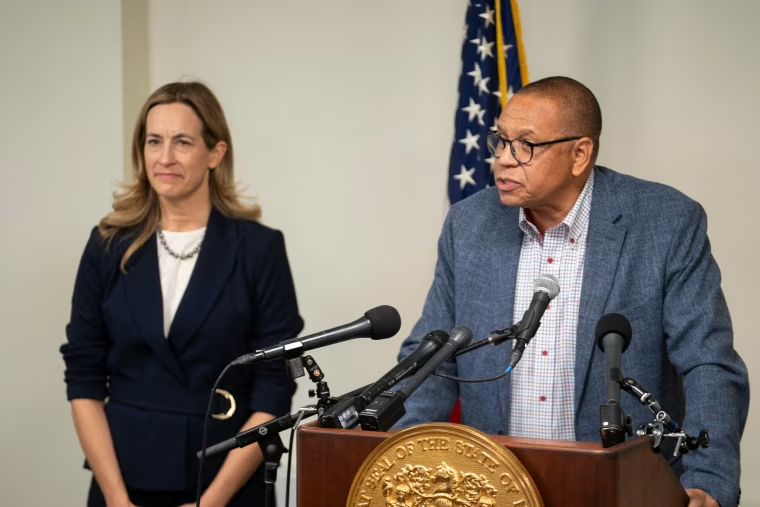
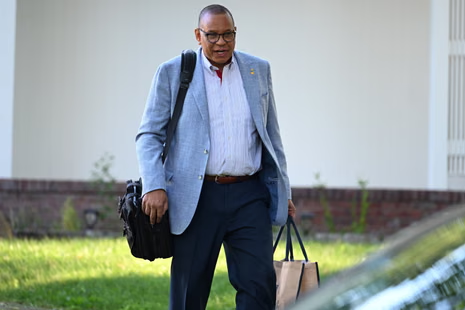
Dale Caldwell, who served as lieutenant governor of New Jersey, submitted his resignation on Friday, September 25, 2026, after the release of a formal investigation report concluding that he had sexually harassed a female staffer and broken the state’s ethics rules. Governor Mikie Sherrill confirmed the departure publicly on Friday afternoon, telling the press that Caldwell had handed over his resignation earlier in the day.
What the Investigation Found
The report at the center of this controversy is not a vague collection of allegations. Investigators determined that Caldwell’s conduct toward a female staff member crossed the line into harassment and that his behavior constituted clear violations of New Jersey’s ethics standards. The findings are significant both legally and politically: ethics violations at this level of government carry real institutional weight, and the conclusions of an official investigation leave little room for ambiguity.
According to reporting by The Guardian, the investigation found that Caldwell had engaged in harassing behavior and that those actions violated the ethical standards governing state officials. The report’s release on Friday appears to have been the final trigger for a resignation that the governor then confirmed within hours.
Governor Sherrill Responds Swiftly
Mikie Sherrill, New Jersey’s governor, wasted no time. Her public announcement came the same afternoon the report landed, signaling that she had no interest in letting the situation drag out. The speed of the response matters here. In political scandals of this nature, the gap between an investigation’s conclusion and a governor’s public statement often tells you everything about how seriously leadership takes the underlying conduct.
Sherrill’s quick acknowledgment of the resignation sends a clear message that the state’s executive leadership was not prepared to stand behind an official credibly found to have harassed a subordinate. Whether that swift action will satisfy critics or be seen as too little oversight earlier in Caldwell’s tenure is a separate conversation New Jersey’s political class will be having for weeks.
The Broader Context: Power, Accountability, and the Workplace
Cases like this one do not exist in a vacuum. Across American politics, the post-2017 reckoning over workplace harassment in positions of power has reshaped how institutions, voters, and the press respond to credible findings of misconduct. An official investigation that concludes a senior government figure harassed an employee is no longer something that can be quietly managed or dismissed as a personal matter.
The staffer at the center of this case, a woman who worked under one of the state’s most powerful officials, is a reminder that workplace protections in government are not just policy documents. They are supposed to be lived realities. When an investigation finds that a lieutenant governor violated those protections, the credibility of the entire ethics framework depends on what happens next.
What Happens to the Lieutenant Governor’s Office?
With Caldwell’s departure, the practical question of succession and replacement will now occupy Trenton’s attention. The lieutenant governor’s role in New Jersey carries real constitutional weight, and the process of filling or managing the vacancy will test the efficiency of the state’s governance structures. Governor Sherrill will need to navigate both the political optics of the moment and the administrative demands of a partially vacant executive office.
New Jersey politics is no stranger to turbulence, but a resignation of this profile at this level, driven by a formal ethics and harassment finding, is the kind of event that reshapes narratives heading into future election cycles. Candidates, campaign managers, and voters across the state will be watching how the governor handles the next chapter.
A Moment That Demands More Than a Resignation
Resignations, as satisfying as they can feel in the immediate moment, are not the same as systemic change. One official leaving office after being found in violation of ethics rules does not automatically fix the conditions that allowed the harassment to occur or go unaddressed for however long it did. The woman who reported the misconduct took a real risk in doing so, and the credibility of New Jersey’s ethics and HR processes will now face scrutiny over how the complaint was handled from the very beginning.
This is also a moment for New Jersey’s political parties, watchdog organizations, and civil society groups to press for a fuller accounting. What structures were in place to protect staff from senior officials? Were complaint channels genuinely accessible and safe to use? And what oversight did the governor’s office exercise over the lieutenant governor’s conduct before an investigation had to bring it to light?
Caldwell’s resignation closes one chapter, but the questions it raises about accountability in the Garden State’s executive branch are far from settled.
When a senior government official is found to have harassed a subordinate and broken ethics rules, a resignation may be necessary, but is it ever truly sufficient? What more should voters and institutions demand to ensure this kind of conduct does not repeat itself?