



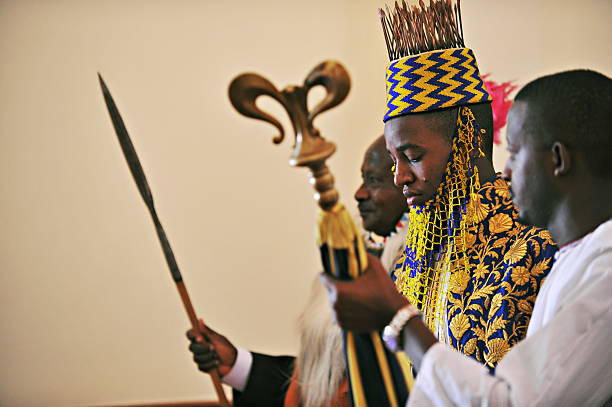
He was a king who could have used his title as armor, keeping the world at a respectful, formal distance. Instead, those who met King Oyo Nyimba Kabamba Iguru Rukidi IV of Uganda’s Tooro Kingdom remember something altogether different: warmth, accessibility, and a humility that seemed almost at odds with the weight of his royal position. Now, as the world absorbs the news of his death at just 34 years old, tributes are arriving from corners of the globe that most obituaries never reach.
A Personal Memory from South Korea
Among the voices rising in grief is that of Rev. James Kim, a South Korean missionary with deep roots in Uganda. Kim chairs the International Youth Fellowship in Uganda and is also connected to Good News Mission Uganda, as well as serving as a professor at the Good News Theology School in the United States. These are the credentials of a man who has spent considerable time navigating both faith communities and public figures across the African continent. And yet, when he spoke about King Oyo, what he reached for was not protocol or ceremony.
“I had the privilege of meeting him and will always remember his humility and gracious heart,” Kim said, describing himself as deeply saddened by the passing of the Tooro monarch. That phrase, “gracious heart,” carries weight precisely because it comes from someone with no political obligation to say it. Kim extended his prayers specifically to Queen Mother Best Kemigisa and the broader Tooro Royal Family, signing off with a phrase in Rutooro, the local language: “Omukama Atulize,” meaning “May God comfort us.” It is the kind of detail that signals genuine connection rather than a drafted press release.
A Reign That Began in Childhood
King Oyo’s story was always going to be extraordinary. He ascended the Tooro throne as a child, making him one of the youngest monarchs in the world at the time of his coronation. Decades later, he had grown into a cultural figure who represented not just his kingdom in western Uganda but also the broader conversation about the role of traditional monarchies in modern African governance. His was not a ceremonial role stripped of meaning. For the people of Tooro, the king embodied identity, heritage, and continuity.
His death came in the United States, where he had been receiving treatment for an aggressive form of cancer. Uganda’s President Yoweri Museveni confirmed that the government had supported the king’s medical care, first in Germany and then in the US, as physicians searched for options against what turned out to be an unrelenting disease. He was 34. By any measure, that is a life cut brutally short.
Grief Without Borders
The international dimension of the mourning is striking. Georgian President Mikheil Kavelashvili expressed his condolences to the Royal Family and to the people of Uganda, a gesture that underlines how traditional African leaders increasingly occupy space in global diplomatic consciousness. Rev. Kim’s tribute adds a South Korean voice to that choir, which is a reminder that Tooro’s reach, through its king’s personality and Uganda’s diaspora connections, extended far beyond the kingdom’s geographic boundaries.
This is what happens when a leader leads with character rather than with the blunt instrument of authority. People remember. Strangers grieve.
What Humility Looks Like on a Throne
There is something worth sitting with in the recurring word that appears in descriptions of King Oyo: humility. It is not the first quality most people associate with royalty. Thrones tend to produce distance. Protocols create walls. Titles demand deference that can, over time, calcify into isolation. And yet, multiple people who encountered King Oyo, from his own subjects to visiting missionaries to foreign dignitaries, seem to have met a man who had not let the crown change him in those ways.
Rev. Kim’s memory of warmth is consistent with how Ugandans who interacted with the king described him over the years. There was an approachability there, a sense that the man behind the title was genuinely curious about the people around him. That quality, more than any political achievement or ceremonial function, appears to be what defined his legacy in the hearts of those who knew him.
A Kingdom Now Navigating Loss
For the Tooro Kingdom and its subjects, the immediate reality is one of mourning and transition. Queen Mother Best Kemigisa and the Royal Family face the enormity of loss on both a personal and institutional level. The kingdom must process grief while also looking toward whatever comes next, a process that is always complicated when a monarch dies young and unexpectedly.
The broader Ugandan public has been left absorbing what it means to lose a cultural figure who was, in many ways, still in the middle of his story. At 34, King Oyo had decades of potential leadership ahead of him. The questions of what he might have built, what conversations he might have led, and what version of Tooro he might have helped shape will linger for a long time.
Tributes like Rev. Kim’s serve a purpose beyond formal condolence. They are pieces of a portrait, details from different angles and different relationships, that together build a picture of who a person actually was. When a South Korean missionary in Uganda says he will always remember a Ugandan king’s humility, that is a data point that matters. It tells you something real about the man being mourned.
As Tooro grieves and the world offers its prayers, one question lingers: how do we, as societies, better honor and preserve the legacies of cultural leaders who quietly shape far more lives than the headlines ever capture?