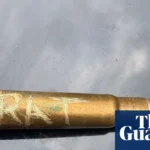


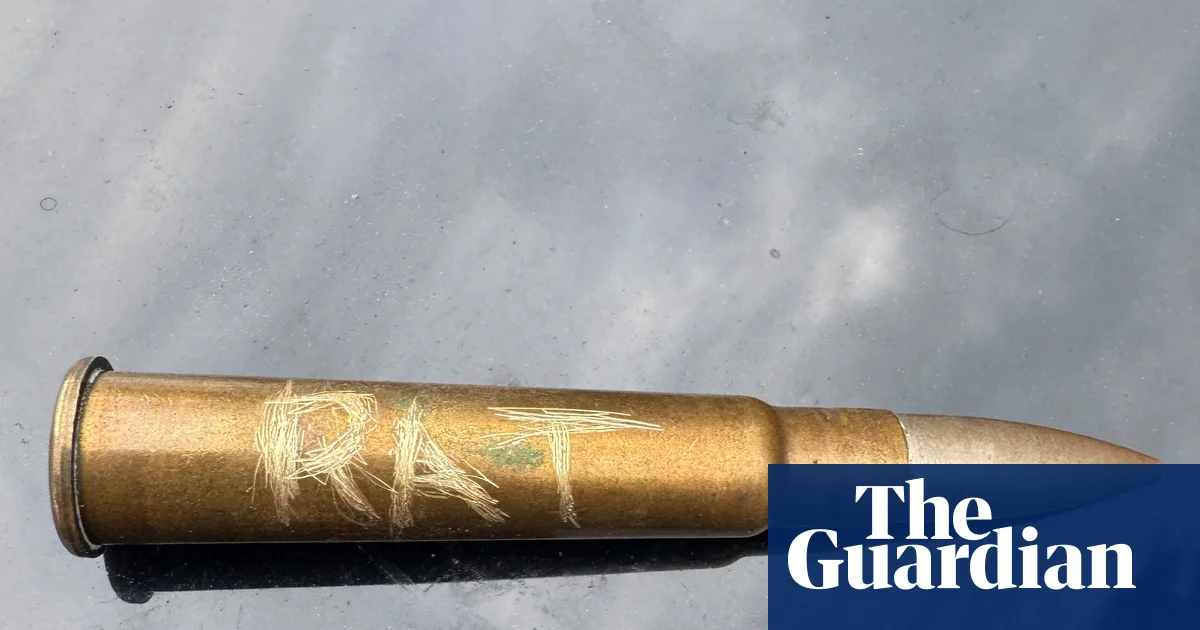
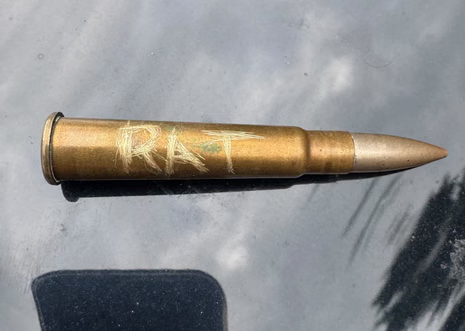
On a quiet Saturday in Frankston, Victoria, Paul Edbrooke returned to his parked car after attending a community event to find something no public official should ever have to encounter: a single bullet, resting on the bonnet, with the word “RAT” and his old firefighter number etched into its casing. He had been away for roughly an hour. Whoever left it knew exactly whose car it was, and they wanted him to know that.
The discovery, first reported by the Herald Sun and later covered by The Guardian, has sent a chill through Victoria’s political circles and beyond. Edbrooke, who serves as the state’s emergency services minister and carries the lived experience of years as a working firefighter, described the find as nothing short of “chilling.” Given what the inscription references, his former identity within the fire service, the threat carries a deeply personal edge.
More Than a Warning: The Weight of What Was Left Behind
A bullet is not a letter. It requires no explanation and offers no room for misinterpretation. When paired with a loaded slur like “RAT” and a number that ties directly to someone’s professional past, the message becomes surgical in its intent. It is designed to frighten, to remind the target that the sender has done their homework, and to suggest that being a public servant offers no immunity from being hunted.
Edbrooke told reporters he now genuinely fears for his family’s safety. That is a sentence no elected official should have to utter. But here we are, in 2026, and it is not the first time in recent memory that an Australian politician has had to look over their shoulder in earnest.
A Climate of Threat That Refuses to Cool Down
This incident does not exist in isolation. It arrives against a backdrop of heightened anxiety around the safety of Members of Parliament across Australia, a concern that was brought into sharp focus by the alleged attack on independent MP Helen Haines. The Haines case drew national attention and prompted urgent conversations about what protections exist for politicians who operate, often without significant security, in close contact with the public.
The contrast between the accessibility that constituents rightfully expect from their representatives and the very real dangers that accessibility can invite is one of modern democracy’s most uncomfortable tensions. Politicians are meant to be approachable. They attend fetes and footy days, open new community centres, and park their cars like anyone else on a Saturday morning. That openness, for all its democratic virtue, creates vulnerability that bad actors are clearly willing to exploit.
The Frankston Electorate and the Public-Facing Life of a Minister
Frankston, situated on Port Phillip Bay south of Melbourne, is a diverse and politically contested patch of Victoria. Community events there are not rare, and ministers who work hard for their electorates often attend them without a security detail following them through the car park. Edbrooke’s presence at such an event on Saturday was entirely routine. The bullet on his bonnet was anything but.
The fact that the threat incorporated his firefighter number adds an unsettling layer of premeditation. This was not a random act of rage. Someone researched him, identified a piece of his past that might carry particular symbolic weight, and used it to craft a message. That speaks to planning, and planning speaks to seriousness.
What This Moment Demands from Institutions and Leaders
Australian authorities and political institutions now face renewed pressure to confront a question they have been circling for some time: are the people elected to run the country adequately protected while doing so? Reactive responses after the fact, investigations, statements of solidarity, calls for calm, are necessary but not sufficient on their own.
The kind of threat Edbrooke received does not emerge from a vacuum. It feeds on an environment where political figures are increasingly dehumanised in online spaces, where grievance cultures fester, and where the line between vigorous dissent and outright menace gets deliberately blurred. Calling a sitting minister a “RAT” and leaving a bullet to drive the point home is not political speech. It is intimidation, and it deserves to be treated with the full weight of the law.
Victoria Police are expected to investigate the matter. Meanwhile, Edbrooke continues to serve in his role, but with a family watching the news and, presumably, the street outside their home with a little more unease than they had before Saturday.
The Human Cost of Public Life Under Threat
What tends to get lost in the political analysis of incidents like this is the deeply human cost. Paul Edbrooke is not just a minister with a portfolio. He is a person with a family who, on a routine Saturday, discovered that someone considers him an enemy worth threatening. The psychological weight of that, and the ripple effect it has on spouses, children, and extended family, is real and lasting.
Good people, capable people, are already reconsidering careers in public service when they weigh up what it increasingly seems to demand. Incidents like this one do not just threaten one minister, they threaten the pipeline of individuals willing to put themselves forward at all.
So here is the question worth sitting with: if Australia cannot guarantee the basic physical safety of the people it elects to serve, how long before the cost of public office becomes a price too high for anyone decent to pay?