



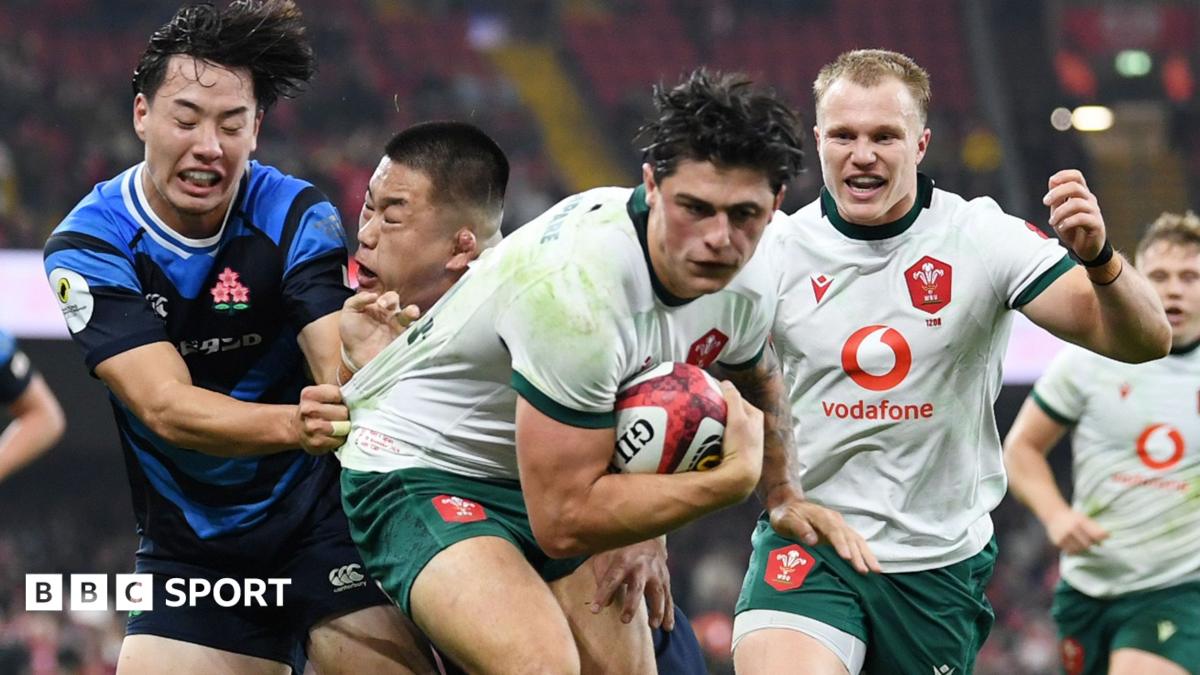
Wales got the result. They did not get the performance. At the Principality Stadium in Cardiff on November 7, 2026, Steve Tandy’s side ground out a bonus-point victory over Japan in the Nations Championship, but the final scoreline flattered a Welsh team that looked disorganised, undisciplined, and fortunate to avoid a genuinely embarrassing outcome against Eddie Jones’ visitors.
How the Match Unfolded
Wales started with enough energy to build what should have been a comfortable lead. Prop Archie Griffin crossed first, then wing Josh Adams added another, and the returning Louis Rees-Zammit got himself on the scoresheet to give Wales a 21-14 lead at the break. Three tries, three conversions from Costelow and Edwards, and the kind of first-half scoreline that suggests control. It was anything but controlled.

Japan refused to cooperate with Wales’s script. Flanker Ben Gunter and lock Warner Dearns both scored before half-time, with Saito and Komura converting two between them, keeping the visitors very much alive. The gap at the interval felt misleadingly generous given how Japan had moved through Welsh defences at will in patches.
The second half was nervier still. Adams grabbed his second try to push Wales further ahead, but Japan replacement Kenta Fukuda crossed late to secure a losing bonus point for the visitors and turn the final stages into a frantic, nail-biting scramble. Wales survived, but only just, mirroring the drama of their last meeting with Japan twelve months earlier when a last-minute Jarrod Evans penalty separated the two sides by a single point.
Rees-Zammit Leads the Bright Spots
If there was a genuine positive to take from the afternoon, it was the form of Louis Rees-Zammit. The wing collected his 17th international try in 44 appearances and walked away with the player-of-the-match award, his ball-carrying causing Japan constant problems throughout. Full-back Blair Murray was equally impressive in attack, as were back-row pair Morgan and Wainwright and centre Eddie James, all of whom carried hard and kept Wales moving forward when the team’s structure around them was creaking.
You can read the full BBC Sport match report for a detailed breakdown of every score and key moment from Cardiff.
The Problems Steve Tandy Cannot Afford to Ignore
Four wins from 13 internationals as head coach. That is Tandy’s record after this result, and while a win is always a win, the manner of this one raises questions that cannot be brushed aside by pointing at the final score.
The line-out was a disaster. Wales lost six of their own, a figure that would concern any coach at any level, let alone in an international competition where set-piece reliability is non-negotiable. It handed Japan repeated opportunities and shifted momentum at exactly the wrong moments.
Discipline was another sore point. Wales gave away penalties at a rate that kept Japan competitive and in position to attack, something a side of Japan’s quality does not need offering twice. Add a string of handling errors that killed promising Welsh attacks, and you have a picture of a team that is good enough to win ugly but not yet polished enough to win convincingly.
Where Does Wales Go From Here?
The Nations Championship table tells its own story. Wales sit fifth in the northern hemisphere standings after this round, which means the margin for error shrinks with every fixture. Japan, for all their finishing position in this match, demonstrated once again under Eddie Jones that they can live with northern hemisphere opposition and punish any lapse in concentration.
Tandy will know that the spine of this performance, the energy from Rees-Zammit, the physicality of the forwards in open play, gives him something to build on. But the structural issues, the line-out, the handling, the tendency to let opponents breathe when Wales should be burying them, need addressing before tougher opponents arrive. Japan were generous enough to let Wales off. Future opponents in this competition will not be.
A bonus-point win keeps Wales moving. It does not keep them safe. The question now is whether Tandy can fix the issues before they cost Wales something more than pride.
So here is the real conversation: is this Wales side genuinely improving, or are they simply finding ways to win games they should be controlling from the first whistle? Let us know your thoughts in the comments below.