



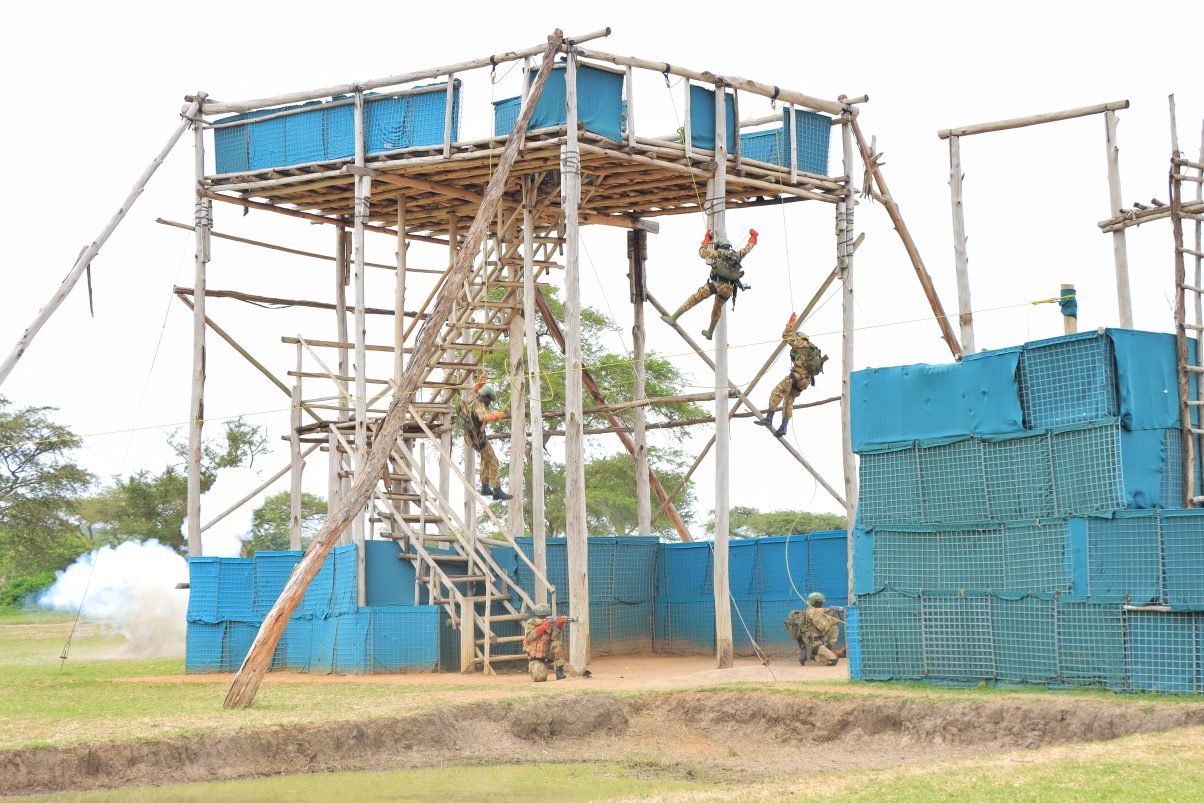
Two hundred and fourteen soldiers, including ten women, have officially earned their commando credentials after completing a rigorous qualification course run by Uganda’s Special Forces Command. The graduation ceremony, held at the Special Warfare Centre and School in Ruhengyere, marked the conclusion of Commando Qualification Course Intake 05/25-26, and within the same breath, the beginning of the next cohort’s journey into one of the most demanding training pipelines the Uganda People’s Defence Forces has to offer.
A Graduation Built on Sweat, Not Ceremony
These weren’t the kind of parades where everyone gets a ribbon. The event at Camp Rufu in Kiruhura District carried the unmistakable weight of earned distinction. Presiding over the ceremony was the Commander of the Special Forces Command, Maj Gen Asaph Mweteise Nyakikuru, who made it clear from the outset that the SFC’s standards are not decorative, they are operational. According to Chimpreports, the commander also officially opened the next training intake during the same event, signalling that the production line of elite soldiers shows no signs of slowing down.
The qualification course was designed with a specific philosophy: build soldiers who can go anywhere and handle anything. The curriculum targeted endurance, specialised combat skills, and the kind of psychological fortitude that keeps a soldier functional in high-pressure, complex environments both inside Uganda and far beyond its borders.
The Message from the Top: Train or Be Left Behind
Nyakikuru’s address to the graduates wasn’t a pep talk, it was a doctrine. He framed continuous training not as a luxury but as the actual engine of military effectiveness. “Continuous training is an arm that moves an army to make operations simple,” he said, a line that distils a complicated strategic truth into plain, powerful language.
He also acknowledged the financial reality of running a world-class special forces programme. Equipping and training personnel at this level demands serious investment, in infrastructure, instructors, equipment, and time. But in his view, that investment is non-negotiable if Uganda wants to maintain a force that is modern, professional, and genuinely combat-ready. The alternative, a military that cuts corners on preparation, is a military that fails at the worst possible moment.
His direct message to the new commandos was equally no-nonsense. Respect the chain of command. Stay dependable. Keep your tactical edge sharp. And never, under any circumstances, let professionalism slip. “We have trained warriors to finish the enemies of Uganda within and beyond,” he said, a statement that leaves little room for misinterpretation about the SFC’s operational scope.
Women in the Ranks: A Notable Shift
Among the 214 graduates, ten were women, a detail that deserves more than a footnote. The inclusion of female commandos in what has historically been a male-dominated domain reflects a broader evolution within the UPDF. Special forces roles demand physical excellence, mental resilience, and tactical intelligence. That women are completing these courses and earning the same qualification speaks to both their capability and to an institutional willingness to widen the talent pool.
This isn’t a symbolic gesture. Female commandos bring strategic advantages in certain operational contexts, from intelligence gathering in environments where male operatives would stand out, to counter-terrorism missions where flexibility in team composition can be decisive. Their graduation is both a personal achievement and a structural asset.
What This Means for Uganda’s Security Posture
The SFC doesn’t operate in a vacuum. Uganda’s security environment is complicated, the country shares borders with nations that have experienced significant instability, and regional threats from armed groups have required UPDF deployments that go well beyond standard peacekeeping. Special forces personnel are precisely the kind of resource that gets called upon when conventional military responses aren’t sufficient.
The Commander of the UPDF’s 2 Infantry Division, Maj Gen Paul Muhanguzi, reinforced this point at the ceremony, underscoring that specialised training is essential to protecting Uganda’s national interests. That two senior commanders of this calibre were present at the same graduation ceremony signals just how seriously the institution treats the development of its elite units.
Opening the Next Intake: The Cycle Continues
Perhaps the most strategically significant moment of the day wasn’t the graduation itself but the opening of the next intake. It tells you something about an institution’s confidence in its own systems when it doesn’t pause to celebrate, it simply keeps moving. The SFC is building a cadre, not just a class. Each intake feeds into a larger design, one aimed at producing a consistently replenished pool of operators who are trained to the same exacting standard.
This kind of institutional momentum is rare. Special forces training programmes around the world struggle with attrition, funding gaps, and leadership inconsistency. The fact that the SFC is running consecutive intakes and doing so with visible command investment suggests an organisation that has found its operational rhythm.
The Bigger Picture
Uganda’s military has been a subject of regional conversation for years, partly because of its peacekeeping commitments and partly because of its demonstrated willingness to deploy forces in complex environments. A well-trained, well-resourced special forces command is central to that reputation. The 214 commandos who passed out this week aren’t just individuals who survived a hard course, they are the latest addition to a force that the UPDF clearly intends to keep sharp, relevant, and ready.
As the new intake begins its own journey through Camp Rufu, the question worth sitting with is this: in a region where security threats shift faster than policy can respond, how much of a nation’s safety ultimately comes down to the quality of the individuals it trains to protect it?