



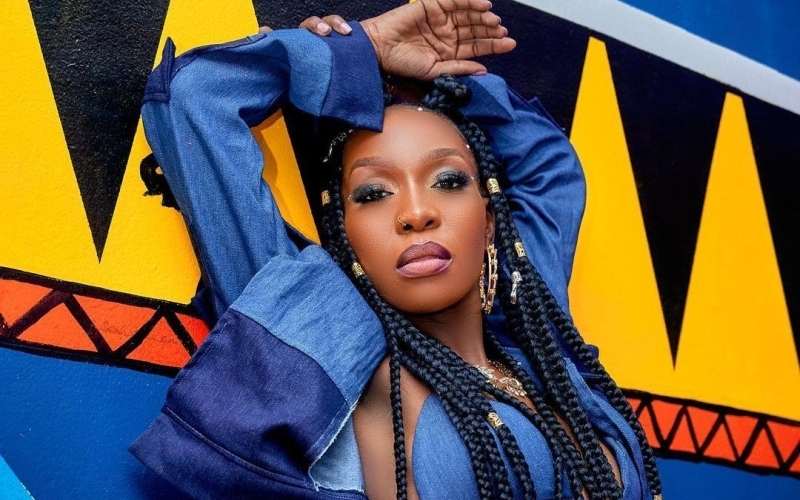
Uganda’s Karole Kasita is not the kind of artist who hands out feature slots like flyers at a concert gate. Speaking candidly on KFM radio, the singer pulled back the curtain on the thought process she runs through before agreeing to any musical partnership, and it turns out the checklist is more layered than most fans might expect.
It Starts With Energy, Not Ego
If you think a big name or a fat advance is enough to get Karole Kasita’s voice on your track, think again. According to her interview on KFM, the very first thing she weighs up is the energy between herself and a potential collaborator. That word, energy, might sound like vague artistic speak, but Karole is precise about what she means: the way she feels around another artist, the ease of conversation, the natural pull of creative synergy. If that spark is absent, no number of streaming projections will change her mind.

This kind of instinct-driven decision-making is actually more common among seasoned artists than the industry likes to admit. Collaborations that look perfect on paper, two artists with complementary fan bases, similar tempos, overlapping genres, often fall flat because the personal chemistry simply was not there. Karole, it seems, has learned that lesson early and internalized it deeply.
The Market Strategy Behind Every Feature
But Karole is also a businesswoman, and she makes no apology for that. Beyond the emotional and creative connection, she factors in which audience she is trying to reach at any given moment in her career. “It depends on what market I’m looking for at that particular time,” she explained during the KFM appearance, a statement that reveals a level of strategic thinking that separates artists who build lasting careers from those who chase one viral moment after another.
This market-first mindset is something the best artists in the world quietly operate by. Beyoncé does not feature on a track without knowing exactly what that placement means for her brand. Burna Boy picks his collaborators with an eye on which geography he wants to penetrate next. Karole Kasita, operating within one of East Africa’s most competitive music scenes, is applying the same logic on her own terms.
Why Audience Targeting Matters More Than Ever in 2026
The music landscape in 2026 is fragmented in ways that would have been unimaginable a decade ago. Streaming algorithms carve listeners into micro-niches, social media platforms reward specificity over breadth, and a single collaboration with the wrong artist can confuse a fanbase that took years to build. Choosing a collaborator who reaches an audience you are genuinely trying to court is not a cynical calculation; it is basic artistic survival.
Karole’s approach acknowledges this reality without surrendering to it. She is open to working with anyone, she says, but that openness is filtered through a clear personal and commercial lens. The result is a process that respects both the art and the audience.
Connection as a Creative Advantage
There is another dimension to what Karole describes, one that often gets overlooked in conversations about collaborations. When two artists genuinely connect, that connection tends to show up in the music itself. Listeners are not naive. They can feel when a feature is transactional and when two artists actually wanted to be in the same room together. The difference between those two scenarios is often the difference between a song that gets skipped and one that gets added to a playlist.
Karole’s insistence on real chemistry before committing to a project is, in a way, a quality control mechanism for her own artistry. It is how she protects the integrity of her sound while still leaving the door open for unexpected creative partnerships.
A Lesson the Entire Industry Could Use
The Ugandan music industry, much like its counterparts across Africa, has seen a surge in collaborations in recent years. Cross-border features between artists from Uganda, Kenya, Tanzania, Nigeria, and South Africa have become a standard part of how artists grow. But not all of those partnerships produce music that lasts beyond the promotional cycle. Many feel forced, assembled for algorithmic advantage rather than genuine creative purpose.
Karole’s framework offers a useful counter-model. Prioritise the human connection. Know your market at every stage of your career. Let those two filters do the heavy lifting, and the music that comes out of the process will reflect that intentionality. It sounds simple, but very few artists actually practice it consistently.
Whether you are a fan of her music or simply someone interested in how creative industries really work, Karole Kasita’s approach to collaborations raises a question worth sitting with: in a world where every artist has access to the same tools, the same platforms, and the same global reach, is it the ones who choose their creative partnerships most carefully who end up building the most durable legacies?