


More than sixty years have passed since East African nations broke free from colonial rule, and yet the boldest promise their founding leaders made to each other, that they would soon dissolve their borders into a single political federation, remains stubbornly unfulfilled. The flags are different, the currencies are separate, and the passport queues at Jomo Kenyatta International Airport tell you everything you need to know about how far the region still is from the union its visionaries once considered inevitable.
A Dream Born at the Moment of Independence
To understand the weight of this moment, you have to go back to the early 1960s, when leaders like Julius Nyerere of Tanganyika, Milton Obote of Uganda, Jomo Kenyatta of Kenya, and Jaramogi Oginga Odinga were not just liberating their individual nations. They were sketching the outline of something far grander: a federated East Africa that would speak with a single political voice, pool its resources, and stand as proof that African self-governance could work at continental scale.
The energy in those early post-independence years was electric. Nyerere, perhaps the most articulate champion of the idea, reportedly offered to delay Tanganyika’s own independence if it would help the federation come together faster. That kind of selflessness is almost impossible to imagine in today’s political climate, where national interest almost always trumps regional ambition. The fact that it was even proposed tells you how seriously these men took the idea.
Yet the federation never arrived. The reasons are layered and, frankly, still painfully relevant today. Competing economic interests, the mechanics of power-sharing, the question of which city would serve as capital, and the personal ambitions of individual leaders all conspired to stall what had seemed, for a brief moment, like an unstoppable momentum.
The Butiama Pilgrimage and the Next Generation
Fast forward to the present, and a grassroots effort called the Twende Zetu Butiama pilgrimage is trying to do something quietly ambitious: reconnect young East Africans with the federation vision before it fades entirely from collective memory. Butiama, a small town in northern Tanzania, was Nyerere’s birthplace and remains the site of his grave. For those who believe in the federation project, it functions almost as a spiritual home, a place where the original intent feels closest to the surface.
The pilgrimage is not just a nostalgia exercise. It is, at its core, a political act, a deliberate effort to remind a generation that grew up swiping through social media that the idea of a borderless East Africa was not some colonial fantasy but a project designed by Africans for Africans. Whether that message lands with enough force to shift the political calculus is another question entirely.
Why the Dream Keeps Stalling
Here is the uncomfortable truth: the obstacles today are not so different from those that defeated Nyerere and his contemporaries. Sovereignty remains the sharpest sticking point. Governments that fought hard for independence are deeply reluctant to hand chunks of it over to a supranational authority, even one that promises economic dividends. The East African Community, the region’s main integration bloc, has made real progress on trade and movement, but political federation is a categorically different conversation.
Then there is the question of trust. Relations between member states have been periodically strained by border disputes, trade wars, and accusations of economic protectionism. Uganda and Tanzania have clashed over various infrastructure and trade issues. Kenya and Tanzania have had their own economic frictions. Rwanda’s relationships within the region carry their own complicated history. A federation requires a level of political trust that the region has not yet consistently demonstrated.
Perhaps the most counterintuitive obstacle is democratic diversity. As some countries in the region have moved toward more competitive, pluralistic political systems, the prospect of a union involving states at very different points on the democratic spectrum becomes more complicated. Citizens in more open societies reasonably ask whether a federation might dilute their hard-won political rights.
Museveni and the Contradiction at the Heart of the Push
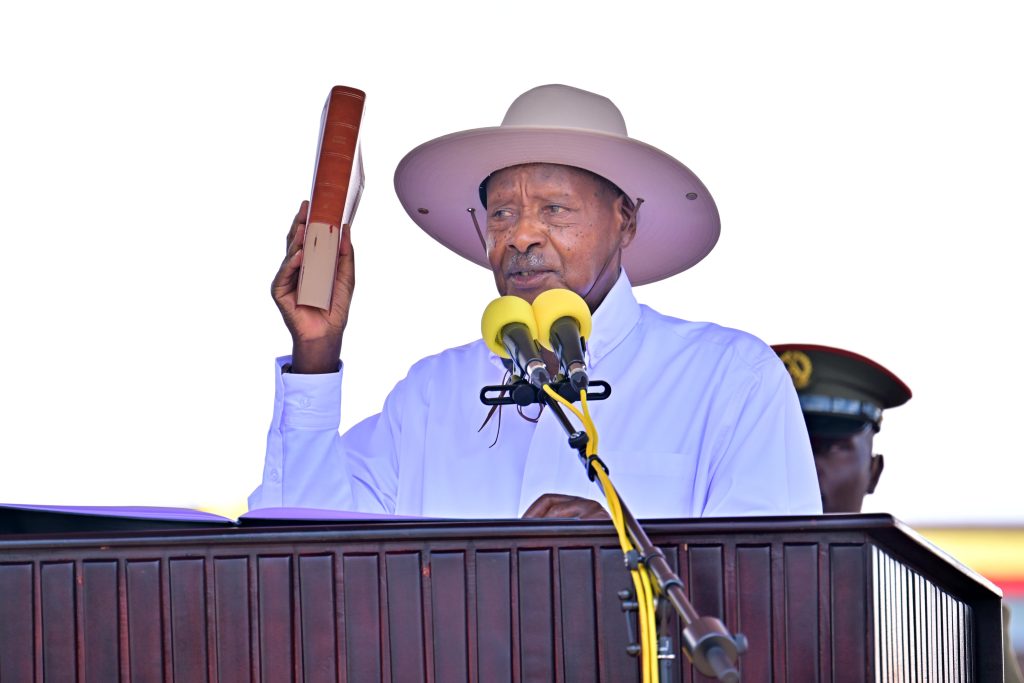
Uganda’s President Yoweri Museveni is, by most accounts, one of the most vocal living advocates for East African political federation. He has made the case repeatedly, in regional summits and in interviews, that integration is the only logical path to genuine African economic sovereignty. His argument carries historical weight and strategic logic in roughly equal measure.
But Museveni’s championing of the federation also presents a paradox that critics are quick to point out. Advocacy for regional political unity sits awkwardly alongside governance models that prioritize centralized national authority. For skeptics, that tension raises genuine questions about what kind of federation any particular leader actually has in mind. A union that expands African power collectively is a very different thing from one that simply amplifies the influence of its most powerful advocates.
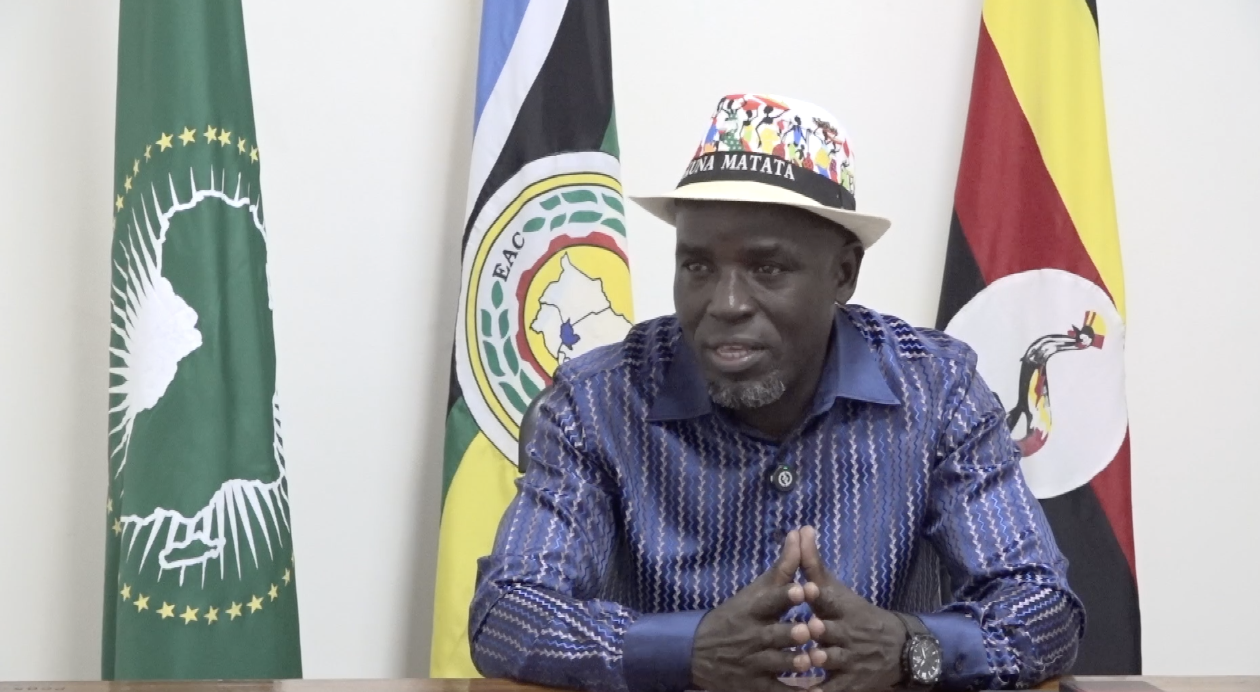
As NTV Uganda’s Diplomatic Watch series examined this week, the gap between rhetoric and reality on federation has become one of East Africa’s most enduring political puzzles. Decades of summit communiqués and integration roadmaps have not moved the needle anywhere near the finish line.
What Would Federation Actually Look Like?
It is worth pausing to ask a practical question that often gets lost in the idealism: what would a functioning East African federation actually require? A common currency would demand the surrender of monetary policy from individual central banks. A federal parliament would need a formula for representation that satisfies populous nations like Tanzania without completely marginalizing smaller ones. A federal judiciary would have to command genuine authority over member states. A common defence force would require standardizing military structures currently built around very different national doctrines.
None of this is impossible. The European Union, for all its flaws and internal tensions, demonstrates that deep integration between sovereign nations can happen. But Europe took decades of incremental steps, backed by powerful economic incentives and, critically, the shared trauma of two world wars. East Africa’s motivating force would need to be equally compelling, and the economic case, while real, has not yet proven sufficient to override political inertia.
The Youth Factor
There is one genuinely hopeful element in the current moment. East Africa has one of the youngest populations on the planet. Young people in Nairobi, Kampala, Dar es Salaam, and Kigali are growing up more connected to each other than any previous generation, through shared music scenes, startup ecosystems, and social media cultures that barely register national borders. Bongo Flava plays in Kampala bars. Kenyan tech entrepreneurs collaborate with Rwandan founders. Ugandan athletes compete alongside Tanzanians at regional meets and barely think twice about it.
That cultural groundwork does not automatically translate into political will, but it creates a social environment where the idea of federation feels less abstract than it did to previous generations. The Twende Zetu pilgrimage is betting that if you can connect that organic youthful solidarity to the intellectual tradition of Nyerere and his contemporaries, you might generate enough political pressure from below to finally push leaders toward action from above.
Whether that bet pays off depends on factors no pilgrimage alone can control: the willingness of sitting governments to genuinely trade sovereignty for unity, the ability of regional institutions to build credibility, and the emergence of leaders with the kind of selfless regional vision that Nyerere embodied in the 1960s. Those are not small asks.
Sixty-plus years is a long time to wait for a dream. But then again, some of the most consequential political projects in history took generations to reach completion. The question East Africa needs to honestly confront is this: how many more generations are willing to wait before the vision finally becomes a reality?