







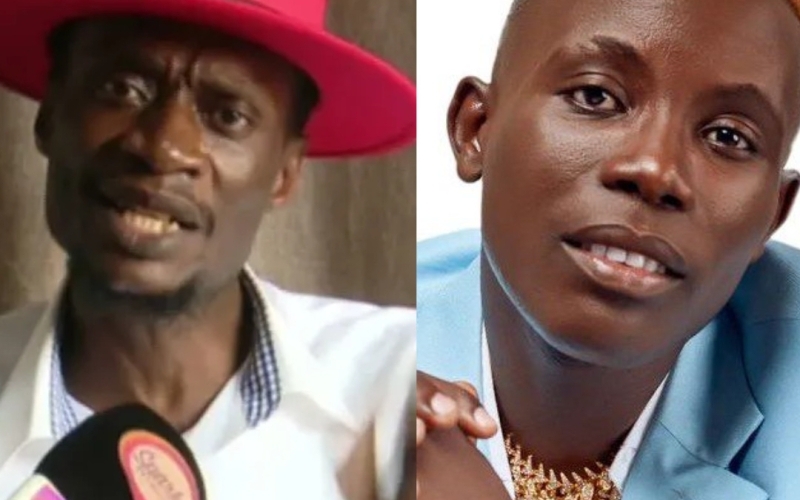
Alexander Bagonza, the Ugandan singer who performs as A Pass, stepped forward this week to address the growing chatter surrounding his absence from Lil Pazo’s much-talked-about Mbarara festival, shutting down speculation with a statement that was equal parts calm and pointed: he was never supposed to be there.
The explanation may seem straightforward, but in Uganda’s music circles, where public appearances, social media posts, and concert promotions often blur into assumed commitments, the clarification carried real weight. A Pass had publicly supported the event, promoting it to his fanbase before showtime. For some followers, that visibility translated into an expectation that he would be taking the stage. He was not. And according to him, there was never any agreement that he would.
Promotion Versus Performance: A Line That Got Blurred
The core of A Pass’s response, as reported by Mbu, was a distinction that gets overlooked more often than it should in the entertainment industry. He made clear that supporting a fellow artist’s event by sharing information about it online is a gesture of goodwill, not a performance commitment. He never stated publicly that he would attend or perform. He was not contracted to do so. Therefore, his absence was not a cancellation because there was nothing to cancel.
It is a nuance worth unpacking. In the age of social media, where artists regularly hype each other’s projects, concerts, and releases, fans frequently read between lines that were never written. A repost or a promotional story becomes, in the minds of many followers, a confirmed appearance. A Pass is essentially calling out that assumption head-on.
His message to critics was unambiguous: showing love for a colleague’s work does not mean you are on the lineup. Booking does. A contract does. A mutual agreement does. A social media shout-out does not.
What This Moment Reveals About Uganda’s Concert Culture
Beyond the specifics of this incident, A Pass’s statement opens a broader conversation about how Uganda’s live music economy functions. Concert promotion in the country is often informal, relationships between artists are public and highly visible, and audiences have grown accustomed to seeing established names turn up at each other’s events as surprise guests. That tradition is wonderful for the culture, but it creates a grey area when an artist who promoted an event does not physically show up.
Organizers, too, sometimes benefit from the ambiguity. When a big name is seen supporting an event online, it can boost ticket sales regardless of whether that artist is booked. Audiences may arrive expecting something that was never officially announced. When the night ends without that artist on stage, frustration follows, and it tends to land on the artist rather than the event organizers.
A Pass, by speaking up, is essentially pushing back against that dynamic. He is drawing a public boundary between solidarity and obligation, between being a supportive member of the music community and being contractually tied to every event he publicly endorses.
The Bigger Picture for Artists and Fans
For artists watching this play out, there is a practical lesson buried in the drama. The era of casual online promotion carrying implicit social contracts is becoming increasingly complicated. When your reach is large enough that your promotional post gets interpreted as a personal RSVP, you may need to be more precise in how you communicate support for an event versus confirmed attendance at one.
For fans, the takeaway is equally important. Excitement is understandable, and when a favourite artist appears to be hyping an event, the anticipation is natural. But assuming that promotion equals presence can lead to disappointment that the artist neither caused nor deserved.
A Pass comes out of this situation with his position clear. He supported Lil Pazo’s concert as a peer. He was not paid to perform, was not scheduled to perform, and made no promise to perform. That is not an excuse. That is simply the fact.
Lil Pazo’s Mbarara Show in Context
The Mbarara festival itself was a significant moment for Lil Pazo, bringing his music to a western Uganda audience in what was described as a highly anticipated event. Mbarara has grown as a concert destination in recent years, with audiences there proving enthusiastic and loyal. For an artist looking to cement their presence beyond Kampala, a successful Mbarara show carries real career value.
Whether the event delivered on its promise despite the A Pass absence is a separate question, but the controversy around the no-show arguably generated more conversation about the night than might have existed otherwise. In that ironic way, A Pass’s name staying in the headlines might have kept attention on Lil Pazo’s festival longer than a quiet, uneventful concert night would have.
At the end of all this noise, the situation offers a useful mirror for Uganda’s entertainment industry. Clear communication, formal agreements, and managed fan expectations are not bureaucratic formalities. They are the infrastructure that prevents moments like this from becoming unnecessary controversies in the first place.
So here is the question worth sitting with: in an era where artists are expected to be perpetually visible, promotional, and engaged with their peers online, where should the line between showing support and making a promise actually be drawn, and who is responsible for making that line visible to fans?