






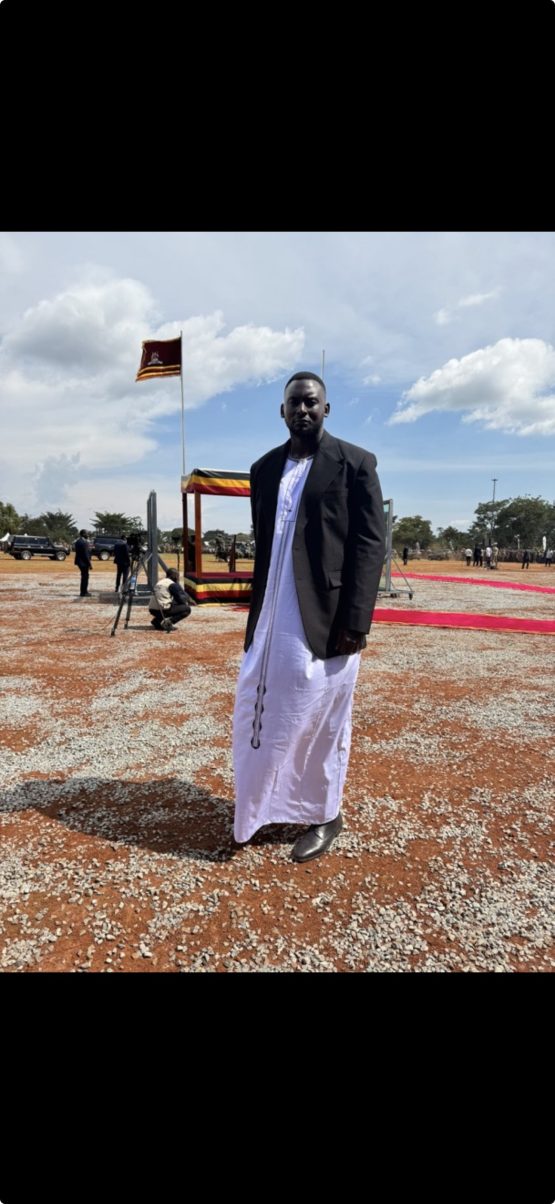
Fort Portal, Uganda, September 2026: A 36-year-old Ugandan who spent the better part of his life in the United Kingdom has been named King-elect of Tooro, one of Uganda’s most historically significant kingdoms. But for those who have followed George Desmond Kamurasi’s public statements over the years, the announcement feels less like a surprise and more like the closing of a very long circle.
A Connection That Never Faded
Some people speak about their homeland in the abstract, with the polished nostalgia of someone who has been away too long. Kamurasi was different. His comments about Uganda, scattered across social posts and public appearances, carried a specificity and warmth that is hard to manufacture. He did not simply miss Uganda. He named the thing he missed most: its people, and the values his parents raised him with.
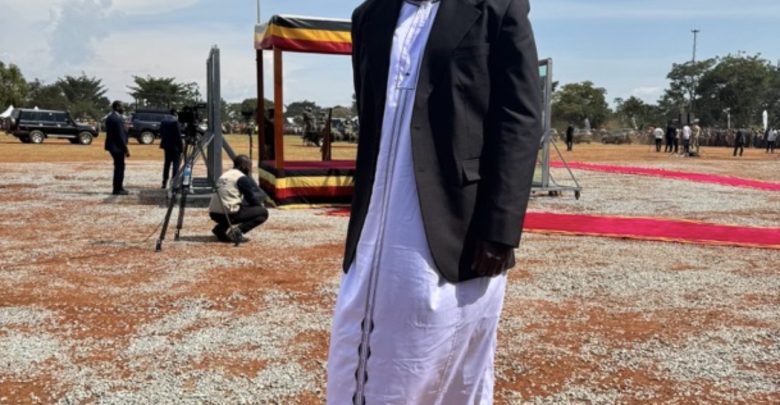
“My love for Uganda comes from its people, especially my parents, who taught me the values of kindness, hard work and resilience,” he wrote in a widely shared message. “I hope to give back to this beautiful nation.” Those words, written before any royal succession was on the table, now read as a quietly kept promise.
The Moment at Entebbe
In 2024, during Uganda’s 62nd Independence Day celebrations, Kamurasi found himself at State House Entebbe, sharing a stage with President Yoweri Museveni and First Lady Janet Museveni. For many, it would have been a moment for photographs and pleasantries. For Kamurasi, it carried a deeper emotional register.
He later described the moment President Museveni acknowledged his late father’s name as genuinely humbling, writing that he carries “the knowledge of the man and father he was.” It was a glimpse into how personal his relationship with Uganda actually is, not a political calculation dressed in sentiment, but grief and pride occupying the same breath.
According to Chimpreports, Kamurasi specifically noted the honour of sharing his story and future plans with the President and First Lady, framing the encounter as a milestone in his own journey toward contributing to Uganda.
Selected by the Royal Succession Committee
The path from that Independence Day gathering to King-elect was neither direct nor simple. Following the passing of King Oyo Nyimba Kabamba Iguru Rukidi IV, the Tooro Kingdom faced the task of identifying a successor. That responsibility fell to a 21-member Royal Succession Committee, a body charged with one of the most consequential decisions a traditional institution can make.
Their choice landed on Kamurasi. At 36, he is young by the standards of royal succession, but the committee’s deliberations pointed toward someone whose ties to the kingdom were legitimate, whose character was considered a fit, and whose stated desire to serve Uganda was part of the public record long before this moment arrived.
What the Selection Signals
Tooro is not a ceremonial afterthought. The kingdom, headquartered in Fort Portal in western Uganda, has a distinct cultural identity and plays a real role in the social fabric of the region. Who sits at its head matters to the people who live under its traditions. In choosing Kamurasi, the committee selected someone who has spent considerable time outside Uganda but maintained a visible, vocal connection to his roots.
That combination, international exposure paired with genuine local attachment, is increasingly common among a generation of Africans who grew up straddling two worlds. What makes Kamurasi’s situation unusual is that the stakes of his return are not just personal. They are institutional.
The Weight of “Giving Back”
Politicians say they want to serve their countries every day. The phrase has been worn smooth by overuse. What gave Kamurasi’s version of it texture was the consistency. These were not campaign trail declarations made under pressure. They were private-feeling public statements, made without obvious political motive, at a time when no throne was being offered.
His parents, he said, were the foundation of his love for Uganda. The values they instilled, kindness, hard work, resilience, read less like a royal manifesto and more like the kind of thing someone actually believes when no one is watching. That authenticity may well prove to be his most significant asset as he transitions from London resident to King-elect of Tooro.
What Comes Next
Kamurasi now faces a very different kind of task than writing heartfelt Independence Day posts. He steps into a leadership role that carries cultural authority, community expectation, and the memory of a predecessor in King Oyo, who became one of the world’s youngest monarchs and held the throne for decades. The comparison will be unavoidable. The challenge will be to define his own version of what Tooro’s kingship means in 2026 and beyond.
The people of Tooro will be watching closely. So will Uganda at large. For a man who spent years saying he wanted to return and serve, the moment of reckoning has arrived in a form far grander than most people’s ambitions ever take.
The question worth sitting with is this: when a life’s stated purpose finally becomes a lived reality, does the dream survive contact with the crown, or does the weight of it change everything?