




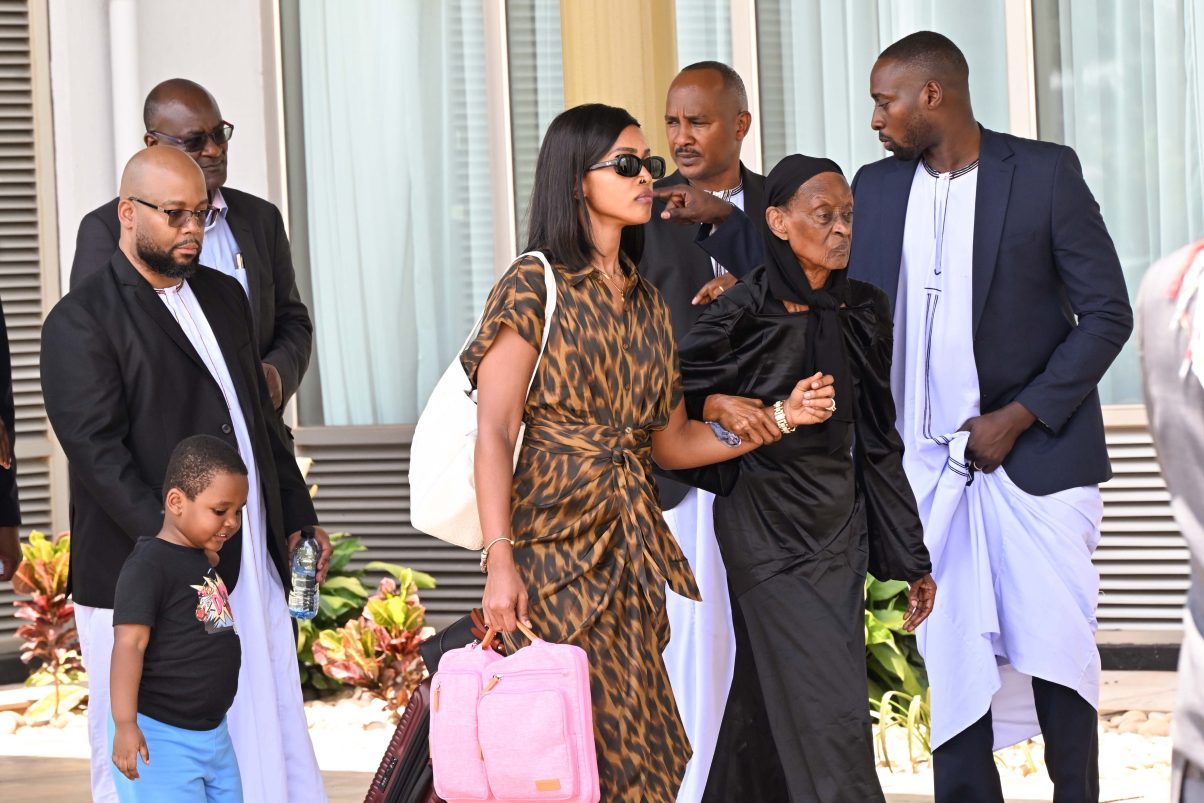
He left Uganda as a living king and returned as a legend. On Friday, the body of Tooro King Oyo Nyimba Kabamba Iguru Rukidi IV touched down at Entebbe International Airport at exactly midday, beginning the monarch’s final journey back to the kingdom he led from childhood. Uganda held its breath. The grief was real, the silence louder than any words of mourning could be.
A Midday Arrival That Stopped a Nation
The aircraft carrying King Oyo’s remains landed at the VIP terminal of Entebbe International Airport, where a solemn reception had been arranged. President Yoweri Museveni was there, along with the Queen Mother, Best Kemigisa, members of the Tooro Royal Family, kingdom officials, Cabinet ministers, and religious leaders. It was a gathering that cut across the lines of state and tradition, united by one shared weight: the premature loss of a 34-year-old monarch.
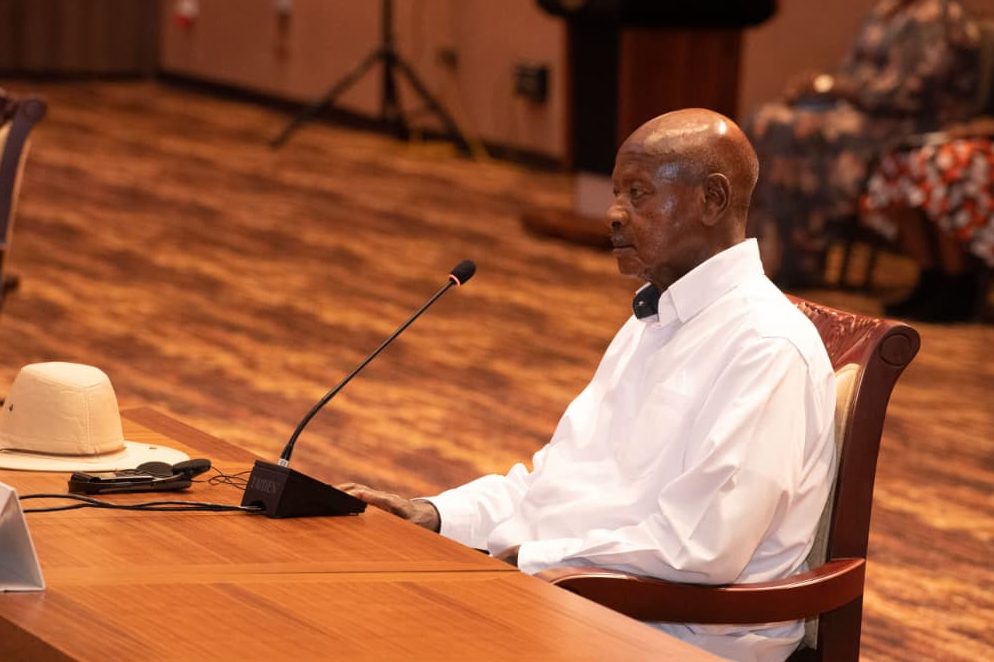
Museveni laid a wreath on the casket and signed a condolence book, then spoke in the measured tone of a man carrying both official duty and personal grief. “Sorry for the loss of the grandchild, King Oyo. We looked after him, we took him to school, and he grew up, but now the Lord has taken him,” the president said. That phrase, “the grandchild,” was not protocol. It was personal. It said everything about the depth of the relationship between the presidency and the Tooro Royal Family.
The Queen Mother’s Quiet Warning in November 2025
What made the loss especially difficult to absorb was how long those closest to King Oyo had been carrying the knowledge of his illness in private. According to Museveni, Best Kemigisa, the Queen Mother, had visited him during the campaign period ahead of Uganda’s general elections in November 2025 and disclosed that the king was battling a severe form of cancer.
“The Queen Mother came and visited me in November 2025 during the campaigns ahead of the elections, and she told me about this problem of aggressive cancer that had started disturbing the King,” Museveni said. The word “aggressive” is not one that leaves much room for optimism. It signals speed, severity, and a kind of biological cruelty that even the best medicine struggles to outrun.
Following that private conversation, the Ugandan government moved to support the king’s medical care. He received treatment in Germany first, and then in the United States, where the most advanced oncology resources were available. As Chimpreports reported from the Entebbe reception, those efforts, though substantial, could not save him. King Oyo died in the United States on August 27, 2026, at the age of 34.
From Dallas to Kampala: A Long Road Home
His body departed Dallas, Texas, on Wednesday before the two-day journey brought him back to the soil he had ruled since he was barely old enough to tie his own shoes. King Oyo ascended to the Tooro throne as a toddler in 1995, making him one of the youngest reigning monarchs in modern history at the time. He grew up in the public eye, navigated the complex terrain of traditional leadership in a modern African state, and became a symbol of cultural pride for the Batooro people and beyond.
To understand what his death means is to understand what he represented. He was not merely a figurehead. He was continuity. He was the living link between Tooro’s historical identity and its contemporary expression. Losing him at 34, with decades of potential leadership still ahead, is the kind of loss that does not follow a clean narrative arc.
A Kingdom Now Facing Its Most Difficult Chapter
The Tooro Kingdom, headquartered in Fort Portal in western Uganda, now faces the deeply complex question of succession and stability. Traditional kingdoms in Uganda operate within a constitutional framework that recognises them as cultural institutions, not political entities. But their symbolic power is enormous, and the identity of the monarch matters enormously to millions of people.
For the Queen Mother, Best Kemigisa, the grief is layered in ways that defy simple description. She raised her son in the public eye, watched him grow into a king, and then spent the last months quietly carrying the knowledge of his illness while the world around her remained largely unaware. That kind of private endurance is its own form of courage.
What Comes Next
King Oyo’s remains will be taken to the Tooro Kingdom for burial rites befitting a monarch of his stature. The days ahead will be marked by ceremony, tradition, and the particular grief that comes when a community buries someone who was supposed to be there for a very long time.
Uganda has mourned kings before, but rarely one this young, this widely known beyond its borders, or one whose story began under such extraordinary circumstances. The boy who became king at three. The young man who never got to become old. The monarch who came home one final time, carried by the hands of a nation that had no idea how to say goodbye.
What does it mean for a people when the symbol of their cultural identity is gone too soon, and how does a kingdom rebuild its sense of self in the aftermath of such a loss? That is the question the Batooro people, and Uganda at large, will have to sit with in the weeks and months ahead.