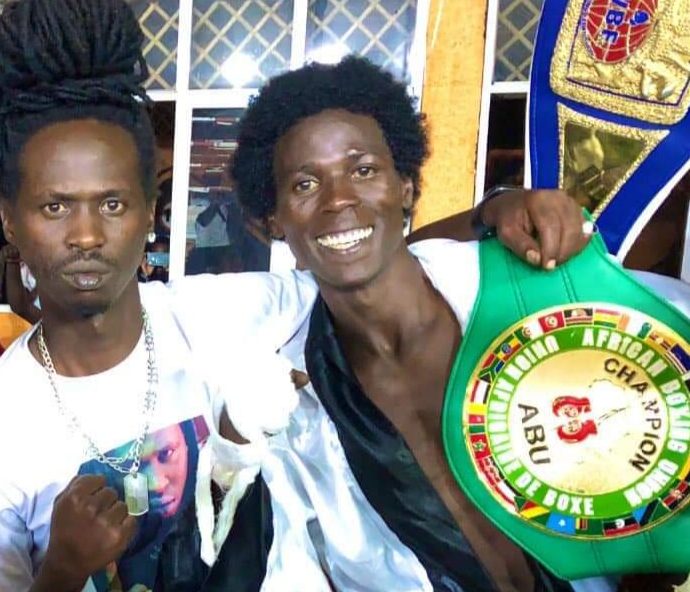
He did not walk into a courtroom. He did not face a judge. He has not spent a single night in a cell. Yet as far as a section of the Ugandan public was concerned this week, singer Lubega Kassim, better known by his stage name Yung Mulo, had apparently been sentenced to 130 years in prison. The story, of course, was spectacularly wrong. And now the musician is threatening to take legal action against the media outlets he holds responsible for what he describes as a calculated assault on his name and livelihood.

How a Name Became a Crisis
The chaos began when a convicted criminal, upon sentencing, identified himself to authorities as “Young Mulo.” The name, close enough to the musician’s established stage identity, slipped through the cracks of some newsrooms without adequate verification. Several outlets ran with reports that named the alias without investigating whether a real, well-known public figure shared a similar moniker. The result was a wave of public confusion that moved fast, as online misinformation tends to do.
People who follow Ugandan music started sharing the reports, tagging the singer’s profiles, sending messages of shock, and treating the story as confirmed fact. The narrative had already taken on a life of its own before anyone stopped to ask a basic journalistic question: is this actually the same person?
It was not.
The Musician Breaks His Silence
Yung Mulo took to his social media platforms to address the situation directly, making clear in no uncertain terms that he has no connection to the criminal case, has never been arrested, and had absolutely nothing to do with the conviction or the 130-year sentence handed down to the individual in question. His tone, by most accounts, was not one of a man quietly issuing a clarification. It was one of someone genuinely furious at watching his reputation dissolve in real time over someone else’s crimes.
According to a report by Mbu, the singer accused specific media outlets of damaging his reputation by publishing content that tied his name to the convicted individual, without doing the basic legwork to confirm they were covering two entirely different people.
The Journalism Problem at the Centre of This Mess
Let’s be blunt about what went wrong here. Reporting on a sentencing without establishing the full identity of the convicted person is a fundamental failure of verification. A name, particularly an alias or a stage-style nickname, is not sufficient identification. Any editor worth their title knows this. The moment “Young Mulo” appeared in court documents, the responsible move was to confirm whether that was a legal name, a pseudonym, or a borrowed identity before attaching it to a headline.
That step, apparently, did not happen in every newsroom that covered the story. And a working artist, a man who has built a career around his stage persona, is now dealing with the fallout from that failure.
The entertainment industry in Uganda, like music scenes across the continent, is one where reputation is currency. A single false association with crime can collapse brand deals, kill performance bookings, and permanently alter how an audience perceives an artist. The damage is not theoretical. It is financial, professional, and deeply personal.
Legal Action: What It Could Mean
Yung Mulo’s threat of legal action is not unusual in cases of media-driven defamation. In several African jurisdictions, defamation law allows individuals to seek remedies when published material causes reputational harm, even when the publication was not intentionally malicious. Whether the outlets in question acted out of carelessness or simply moved too fast in a competitive news cycle, the legal threshold for defamation does not always require intent.
What the singer would need to demonstrate, should he pursue this in court, is that the reporting directly linked his identity to the criminal, that the association caused measurable harm, and that the outlets had a reasonable duty of care to verify the facts before publishing. Given the nature of the confusion, and depending on how explicitly his name was invoked in those reports, those arguments may have some weight.
Whether he ultimately files a suit or not, the very public nature of his response sends a message to newsrooms: artists are no longer going to absorb the collateral damage of sloppy reporting quietly.
A Wider Warning for Digital-Age Newsrooms
This incident sits within a much larger pattern that has accelerated with the rise of social media and the pressure to publish first. When a story moves quickly, when an alias sounds like a familiar name, when editors are under deadline pressure, verification sometimes takes a backseat to speed. The consequences, as this case shows, can be severe for the person caught in the middle.
Yung Mulo’s situation is a sharp reminder that behind every name in a headline is a real person with a real life, real relationships, and a real livelihood. Getting it wrong is not just a journalistic embarrassment. For the person misidentified, it can feel like a life turned upside down overnight through no fault of their own.
The music goes on for Lubega Kassim. But the fight to restore what this week tried to take from him is just beginning. How many other artists, or ordinary people for that matter, are sitting with similar damage right now, without the platform to push back?