





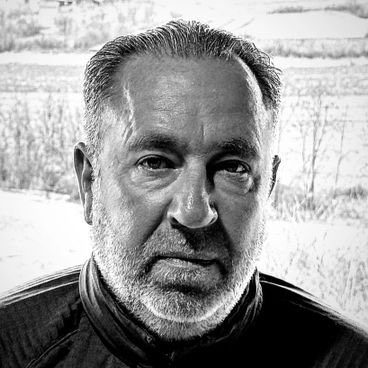
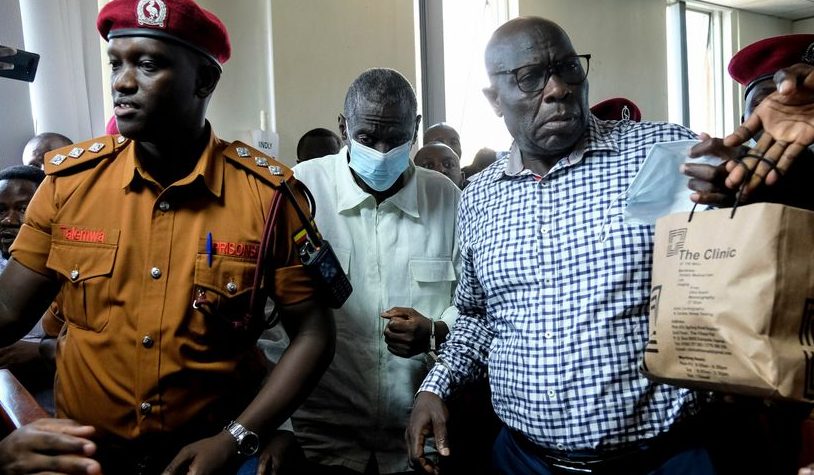
A prosecution witness in one of Uganda’s most politically charged court cases stepped onto the stand in Kampala this week and described, in extraordinary detail, how he spent months pretending to be something he was not: a well-connected foreign financier with access to millions of dollars, military hardware and paramilitary trainers. His name is Andrew Wilson Orlando, described in court as a British-American private security investigator, and his testimony has offered the most vivid window yet into the prosecution’s case against veteran opposition figure Kizza Besigye.
The Man With the Money That Never Existed
Orlando told Justice Emmanuel Baguma at the High Court in Kampala that he constructed an elaborate fiction to win the confidence of Besigye and his associates. The centrepiece of this fiction was a $5 million offer, supposedly backed by unnamed foreign financiers and available via a Dubai bank account to which Besigye would have access. Orlando was unambiguous about the reality behind the offer: the company, the financiers and the money were all invented.
He also claimed to have offered weapons, including hand grenades, drones and other military equipment, as well as promises of organised paramilitary training. The grenades, he testified, were referred to in coded language as “pineapples” and were allegedly to be delivered at a training site in Kisumu, Kenya. None of this, he made clear, was ever going to materialise. It was the architecture of a sting operation, built to extract incriminating conversations from its targets.
The Besigye treason case, which also involves co-accused Obeid Lutale and Captain Denis Oola, centres on allegations of a plot to overthrow President Yoweri Museveni’s government. The charges are allegations before the court and have not been proven. But Orlando’s testimony, as reported in detail by Chimpreports, is the prosecution’s most granular account yet of how the alleged conspiracy supposedly unfolded.
A Camera Hidden in a Power Bank
Perhaps the most technically striking element of Orlando’s testimony was the description of his surveillance methods. He told the court that he secretly recorded his meetings with both Besigye and Joel Wakayima, a Ugandan national based in Switzerland, using a camera concealed inside a mobile power bank. It is the kind of detail that usually lives in spy thrillers rather than court transcripts, yet there it was, offered matter-of-factly to a judge in a Ugandan High Court.
Orlando described one particularly revealing episode in Geneva, where Besigye suggested the two of them move their discussions to Besigye’s own apartment. Orlando said he declined. His reason was straightforward: he had already set up his own residence specifically for covert recording, and agreeing to relocate would have compromised the whole operation. The meeting, he suggested, needed to happen on his terms and in his space, not on Besigye’s.
Reading Between the Lines of This Testimony
What makes Orlando’s account so layered is what it reveals about the methodology of the investigation, regardless of how one views the underlying allegations. Here was an operative who, by his own admission, used deception as his primary tool. He invented a company. He invented backers. He offered weapons and cash that did not exist. He manipulated meeting locations to protect his recording equipment. Every interaction, it seems, was a calculated performance.
Legal observers and civil liberties voices across East Africa have long raised concerns about the use of entrapment-style tactics in political cases, and Orlando’s testimony will inevitably fuel fresh debate about where the line sits between legitimate undercover investigation and manufactured evidence. That is a question the court will have to weigh carefully as proceedings continue.
The Bigger Picture in Uganda’s Political Landscape
Kizza Besigye has been a persistent and prominent voice in Ugandan opposition politics for decades, repeatedly contesting presidential elections and spending stretches of his career in and out of legal trouble that his supporters consistently characterise as political persecution. The current treason charges represent the most serious legal challenge he has faced, and the trial has attracted international attention as a barometer of political space in Uganda.
Besigye’s supporters argue that the case is a continuation of a pattern of state-sponsored harassment against opposition figures. The government’s position is that the treason allegations reflect a genuine threat to national security that was uncovered through legitimate investigative means. Orlando’s testimony sits at the very core of that disputed territory.
The involvement of a foreign private security investigator adds another dimension altogether. The use of a British-American operative, working apparently to gather intelligence on Ugandan opposition activities conducted partly on European soil, raises questions about the international reach of the investigation and who, if anyone beyond Ugandan state agencies, was involved in commissioning or coordinating Orlando’s work. None of those questions were definitively answered in the testimony reported so far.
What Comes Next
The trial continues before Justice Baguma, and Orlando’s cross-examination by defence counsel is expected to probe the credibility and legality of his methods. Defence teams are likely to challenge whether conversations elicited through fabricated financial inducements can form a reliable or admissible foundation for treason charges. The “pineapples”, the phantom millions and the power bank camera are not just dramatic courtroom details. They are the evidentiary bones the prosecution’s case rests on, and the defence will work methodically to pick them apart.
For anyone watching this trial, the central tension is becoming clearer by the day: when the state uses fiction to uncover what it claims is reality, how does a court determine what actually happened?
As testimony unfolds, one question lingers over the entire proceeding. If the money was fake, the weapons were fake and the company behind it all never existed, what does that tell us about the nature of the alleged plot itself, and where does legitimate intelligence gathering end and the manufacturing of a case begin?