








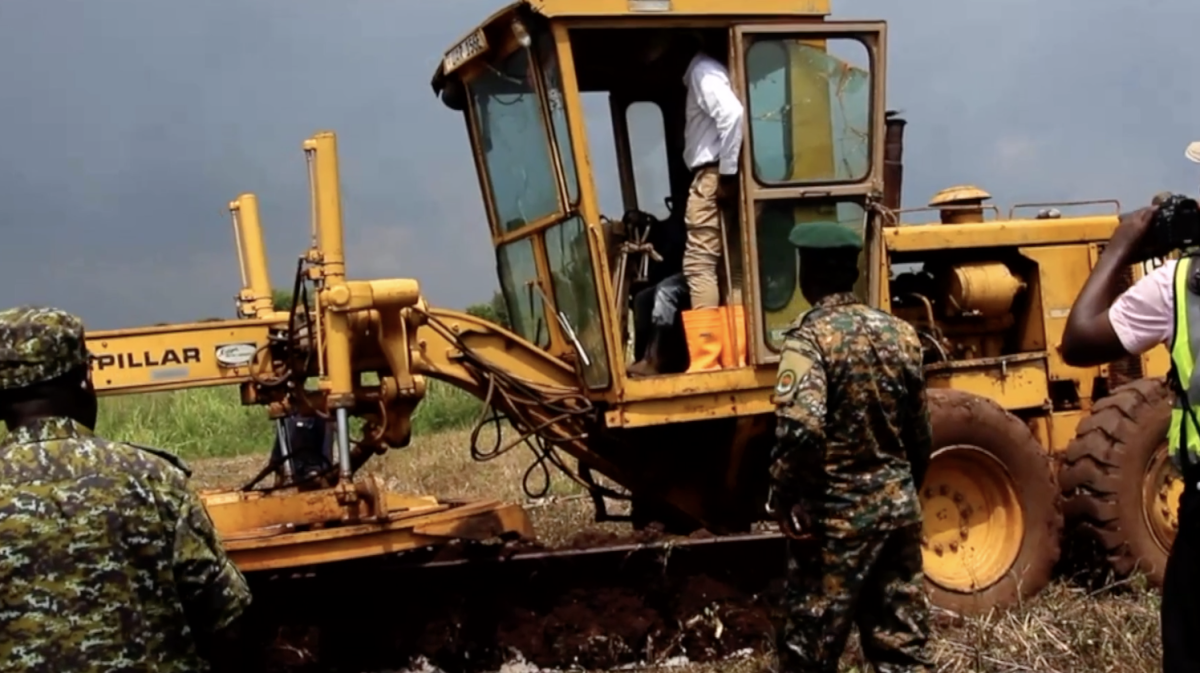
Ground has broken, machinery has moved in, and Uganda’s preparations for one of Africa’s biggest football tournaments just shifted from planning documents into actual bricks and mortar. On Wednesday, the National Council of Sports and the Pamoja 2027 Africa Cup of Nations Local Organising Committee officially launched construction work on the Sir Tito Winyi Sports Academy in Hoima District, a facility that carries both a proud local legacy and a continental-scale purpose.

A UGX 17 Billion Statement of Intent
The numbers alone communicate how serious this project is. Construction is budgeted at UGX 17 billion and has been handed to the UPDF Engineering Brigade, the military’s specialist construction arm with a track record of delivering large-scale infrastructure across the country. The target completion window is six months, a timeline that is ambitious but entirely necessary given that the academy will serve as a training facility for the 2027 Africa Cup of Nations, which Uganda is co-hosting alongside Kenya and Tanzania.
That three-nation hosting arrangement, branded under the Pamoja 2027 identity, is itself a landmark moment for East African football. Having a purpose-built training ground tucked into Hoima is not just a local win; it is part of a broader infrastructure story that will play out across the region as the tournament approaches.
Why Hoima, and Why Now
Hoima District sits in the Bunyoro sub-region of western Uganda, a historically and culturally significant part of the country. Naming the academy after Sir Tito Winyi, a revered figure from that region’s history, ties the facility to a deeper sense of identity and pride. Sports academies named after historical figures tend to carry extra weight in the communities they serve; they become more than training grounds. They become symbols.
The timing, with AFCON 2027 on the horizon, gives the project an urgency that purely domestic infrastructure projects sometimes lack. Deadlines focused on international events have a way of cutting through bureaucratic delays. Whether it is a Commonwealth Games venue or a World Cup stadium, the pressure of a global audience watching tends to keep contractors honest and timelines tight.
The UPDF Engineering Brigade Factor
Choosing the UPDF Engineering Brigade to carry out the construction is a strategic decision worth noting. Uganda’s military engineering unit has been deployed on major public works before, bringing a level of discipline and logistical coordination that civilian contractors sometimes struggle to match on compressed schedules. For a six-month window on a project of this scale, that kind of structured execution matters enormously.
It also signals that the government treats this facility as a national priority rather than a regional afterthought. Deploying military engineering resources carries institutional weight, and it suggests that delays will not be quietly tolerated.
What the Academy Means for Football Development
Beyond AFCON 2027, the longer-term significance of the Sir Tito Winyi Sports Academy lies in what it does for grassroots and elite development in the region. Hoima and the broader Bunyoro area have produced football talent that has often had to travel to Kampala or abroad to access quality training infrastructure. A well-equipped academy on home soil changes that equation.
Properly resourced sports academies, with quality pitches, coaching facilities, and recovery amenities, tend to create local ecosystems. Scouts come. Coaches come. Youth programmes grow up around the facility. The ripple effect of getting the infrastructure right in the first place can be felt a generation later, in the careers of players who grew up training in proper conditions rather than making do with whatever was available.
Uganda’s football story at the continental level has had its ups and downs over the decades, but the Uganda Cranes qualifying for AFCON and then landing a co-hosting slot for the 2027 edition represents a genuine high-water mark. Infrastructure investment of this kind, in multiple locations across the country, is how you sustain that momentum rather than just riding it.
Pamoja 2027: A Tri-Nation Ambition
The Pamoja 2027 Local Organising Committee’s involvement in Wednesday’s launch underlines how tightly this project is integrated into the broader tournament preparations. Uganda, Kenya, and Tanzania hosting AFCON together is an exercise in East African unity that carries political, economic, and sporting dimensions all at once. Each host nation needs to demonstrate that it can deliver to CAF’s standards, and having training venues ready well ahead of matchday is part of that credibility.
With six months on the clock and the UPDF Engineering Brigade on the tools, Hoima’s newest sporting landmark is expected to be ready well before teams begin arriving for pre-tournament preparations. Whether it ends up hosting a storied national team running their final drills before a crucial group stage match, or becomes the home of the next generation of Ugandan football talent long after the tournament flags come down, the Sir Tito Winyi Sports Academy is already a story worth watching.
As Uganda positions itself on the continental stage, one question lingers for sports fans and policymakers alike: will this infrastructure wave outlast the tournament itself, and finally give Ugandan football the development pipeline it has long deserved?