


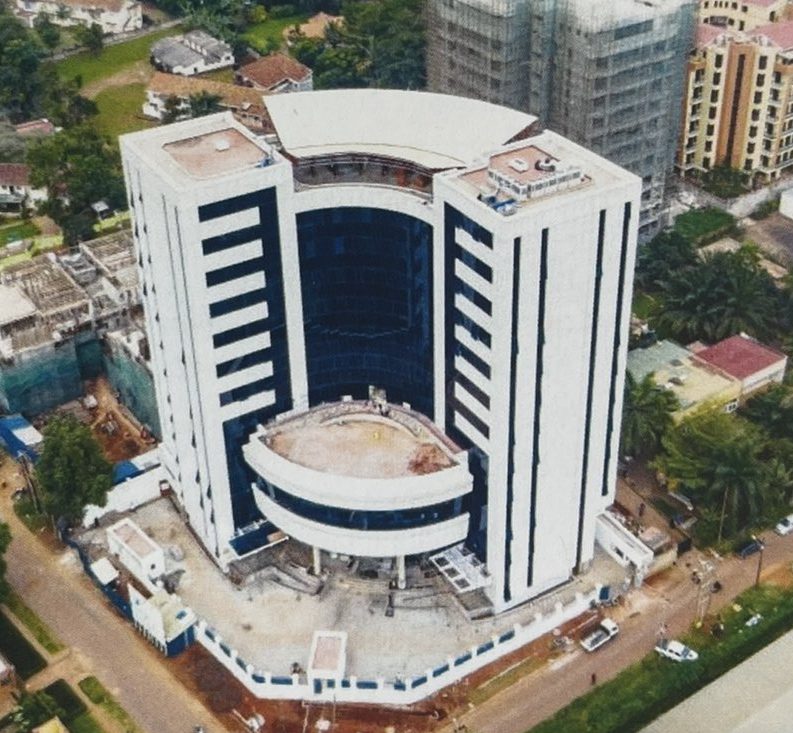
In late July 2026, a State House letter with President Yoweri Museveni’s directive quietly changed the trajectory of one of Uganda’s most important regulatory bodies. The Uganda Registration Services Bureau, commonly known as URSB, found itself at the centre of a growing storm after its own Commissioner for Business Registration, Gilbert Agaba, broke ranks and put his concerns in writing. The fallout was swift, presidential, and very public.
The Letter That Started Everything
On July 24, 2026, Museveni signed a directive ordering several senior URSB officials to proceed on leave while an audit he personally instituted gets underway. The officials named in the presidential directive include Registrar General Mercy Kainobwisho, alongside Walid Kule, Alex Anganya, and Arthur Kwesiga. The instruction was unambiguous: step aside until the audit is done.
“This is to direct that the following persons go on leave until the audit I am instituting into the activities of URSB is finished,” the President stated in the letter. Short, firm, and with no room for interpretation.
This kind of direct presidential intervention in a regulatory agency is not an everyday occurrence in Uganda. It signals that the concerns raised had passed through enough hands, and carried enough weight, to demand action from the very top of government.
Who Is Gilbert Agaba and What Did He Allege?
Agaba, serving as URSB’s Commissioner for Business Registration, sent a formal complaint to bureau management outlining what he described as serious governance and accountability failures. His letter, dated July 29, laid out a striking list of alleged wrongdoings that read like a governance textbook on what not to do with public funds.
The allegations included inflation of contracts tied to the development and maintenance of ICT systems, money laundering through a project called the Non-Individual Register, embezzlement and misappropriation of bureau funds, irregular procurement practices, fraudulent registrations, weak internal financial controls, and deliberate under-collection of government revenue.
Taken individually, any one of these allegations would be serious. Together, they paint a picture of an institution allegedly struggling with systemic rot at multiple levels. According to reporting by ChimpReports, Agaba confirmed that the Attorney General had considered the gravity of his concerns serious enough to refer the matter to both the President and the Inspectorate of Government, which reportedly commenced its own investigations.
The Whistleblower Pays a Price
If Agaba expected his internal complaints to be welcomed as a contribution to better governance, he was disappointed. He alleged that rather than addressing the concerns he raised, URSB management turned its focus onto him, and not in a flattering way.
“I have reasonable grounds to believe that the investigations culminating in the impugned warning were neither impartial nor undertaken in good faith,” Agaba wrote, suggesting that a disciplinary process was initiated against him after he flagged the alleged misconduct.
This pattern, where the person who raises the alarm becomes the target, is unfortunately familiar in both public and private institutions across the region. It raises a question that Uganda’s legal and institutional framework must reckon with: how protected are whistleblowers who challenge those above them?
Whistleblower Retaliation: A Recurring Problem
The experience Agaba describes is not unique to Uganda. Across Africa and beyond, individuals who surface corruption within government agencies often find themselves facing disciplinary action, demotion, or worse. The mechanics of institutional self-protection tend to kick in before accountability does. What makes the URSB case notable is that the complaints eventually travelled far enough up the chain to reach the President, despite the apparent pushback Agaba faced internally.
What the Audit Will Need to Answer
With the senior leadership now on leave and an audit underway, attention will turn to what investigators actually find at URSB. The bureau is responsible for company and business registration, intellectual property oversight, and insolvency administration, making it a cornerstone of Uganda’s formal economy. If the allegations of fraudulent registrations and revenue under-collection are borne out, the ripple effects could touch businesses, investors, and ordinary citizens who rely on the bureau’s integrity.
The ICT contract inflation allegations are also worth watching closely. Technology procurement in government institutions across the continent has proven to be a particularly fertile ground for inflated costs and irregular dealings. Auditors will need to trace how contracts were awarded, who benefited, and whether proper procurement guidelines were followed at each stage.
The money laundering allegations tied to the Non-Individual Register project add another dimension entirely, one that could draw the attention of financial intelligence agencies beyond Uganda’s borders if the trail leads there.
Museveni’s Move and Its Broader Signal
Presidents rarely involve themselves directly in the operational affairs of mid-level government agencies unless the political or institutional stakes are high. Museveni’s decision to personally order the URSB officials on leave and institute an audit suggests the allegations were taken seriously at the highest level, and that the normal bureaucratic response was either too slow or too compromised to be trusted.
For Uganda’s anti-corruption architecture, this could be read in two ways. On one hand, it shows that persistent, well-documented whistleblowing can eventually reach decision-makers with the authority to act. On the other hand, it also raises the uncomfortable question of why it required a presidential letter to move the needle, and what happens in all the cases where a whistleblower’s concerns never make it that far.
The Inspectorate of Government’s involvement adds another layer of institutional accountability to the process. Whether the findings from both the presidential audit and the IGG’s investigations lead to prosecutions, recoveries, or institutional reform remains to be seen. Uganda has seen corruption probes before. The measure of this one will be what happens after the audit concludes.
What Comes Next for URSB
With Registrar General Mercy Kainobwisho and the other named officials sidelined, URSB must continue its day-to-day functions under a cloud of institutional uncertainty. Businesses that depend on its services, law firms that work through it, and investors seeking registration assurances will all be watching the situation carefully.
The bigger issue is whether the bureau emerges from this process with meaningful structural reforms, or whether accountability stops at the suspension level and the underlying systems that allowed the alleged misconduct to take root go untouched.
Uganda’s citizens, business community, and international partners deserve a URSB that functions with integrity. Right now, that integrity is on trial. The question worth sitting with is this: if it takes a whistleblower’s bravery, the Attorney General’s referral, and a presidential directive to trigger accountability in a single government bureau, what does that tell us about the health of Uganda’s broader institutional oversight systems?