







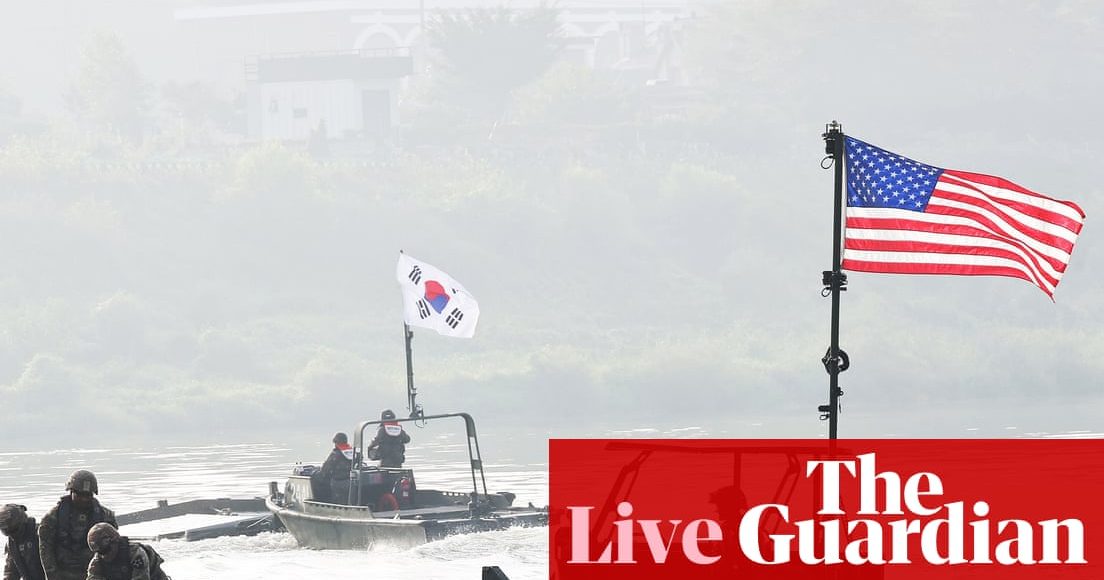
President Donald Trump confirmed on August 17, 2026, that North Korean leader Kim Jong-un has responded to his diplomatic outreach, even as the White House’s decision to scale back joint US-South Korea military exercises drew immediate fire from within his own party and rattled security officials on both sides of the Pacific.
A Familiar Playbook, A Riskier Moment
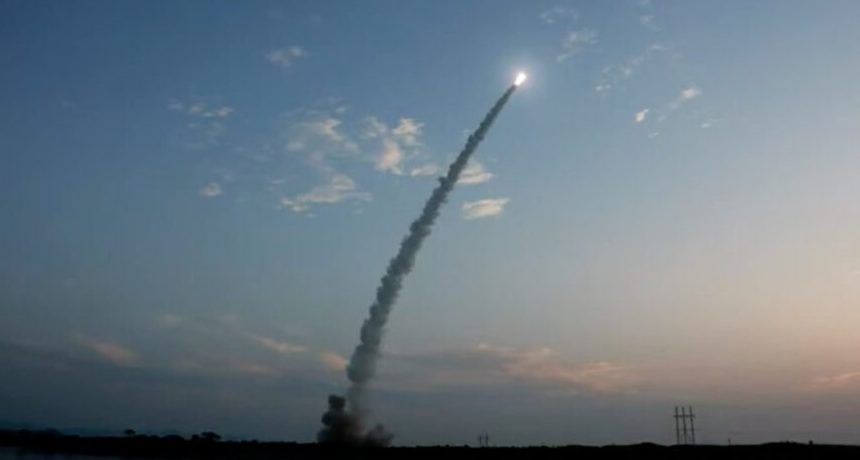
Trump has long believed that personal diplomacy with authoritarian leaders can unlock what decades of sanctions and military posturing could not. With Kim, he has tried this before. But the context this time is sharply different. North Korea test-fired ballistic missiles just days before Trump’s announcement on scaling back the drills, a move that military officials on both the American and South Korean sides had warned against. Yet the White House pressed forward, with Trump telling reporters he is “actually making it much safer” for South Korea by reducing the exercises.
That claim landed like a grenade in Washington’s foreign policy circles. Safer, critics argue, is not the word most analysts would reach for when describing a peninsula where the North is actively refining its military capabilities, partly by running battlefield operations alongside Russian forces in Ukraine.
The Republican Rupture
It is one thing for Democrats to push back on Trump’s Korea strategy. It is another thing entirely when a senior Republican senator goes public with his objections in unmistakable terms. Senator Thom Tillis did exactly that, taking to X to register his displeasure in language that left little room for diplomatic hedging.
Tillis described South Korea as a solid military ally of over 70 years, one that brings serious and capable military assets to the partnership. His core argument, as reported in detail by The Guardian, was pointed: cutting back joint exercises does not pressure Pyongyang. Instead, it frees up North Korean troops to keep supporting Russia’s war in Ukraine, where they have allegedly been involved in systematic acts of violence including kidnapping and torture.
That is not a fringe concern. It reflects what military officials from both the US and South Korea have been saying privately and, increasingly, publicly: North Korea’s troops embedded with Russian forces are not just helping Putin. They are coming home with lessons. New drone tactics. New battlefield experience. Skills that did not exist in the North Korean military playbook five years ago.
What Kim Gets Out of This
From Pyongyang’s perspective, the current situation is close to ideal. Kim Jong-un gets to receive diplomatic overtures from the American president, which lends his regime a degree of international legitimacy it has rarely enjoyed. He gets to test ballistic missiles and watch Washington shrug. And now, he watches the US voluntarily reduce the very military exercises designed to keep South Korean and American forces sharp and interoperable.
There is a strategic logic to Trump’s approach, even if its critics find it dangerously naive. The theory goes that gestures of goodwill build the trust needed to eventually bring Kim to a denuclearisation deal. But that theory has been tested before, including during Trump’s first term, when the Singapore summit in 2018 produced warm handshakes and little else in the way of verifiable concessions from Pyongyang.
South Korea’s Uncomfortable Position
Seoul finds itself in a genuinely awkward spot. South Korea cannot afford to publicly antagonise Washington, its most critical security guarantor. But the country’s military establishment understands better than almost anyone what reduced readiness looks like when the neighbor to the north has artillery aimed at a capital city of ten million people.
Joint military exercises are not just symbolic. They are the mechanism by which two different armed forces learn to communicate, coordinate, and execute under pressure. Every month without them is a month where that integration softens. Commanders retire. Protocols drift. The sharp edge of interoperability dulls. None of that is recoverable overnight if a crisis suddenly demands it.
The Drone Factor No One Should Ignore
Perhaps the most alarming detail buried in this story is the drone dimension. North Korean forces assisting Russia in Ukraine are reportedly picking up new drone warfare techniques, a domain that has been utterly transformed by the conflict there. Modern drone tactics, from first-person-view kamikaze drones to coordinated swarm attacks, represent a genuine leap forward in asymmetric warfare. The idea that Kim’s military is now absorbing these lessons in a live combat environment should be alarming to any security strategist.
Tillis’s warning connects directly to this: reducing the joint exercises that help US and South Korean forces adapt to emerging threats is precisely the wrong response to a North Korea that is quietly upgrading its military doctrine through a real war in Europe.
Diplomacy Without Leverage
The Trump administration’s position rests on the belief that reducing military pressure creates space for dialogue. That is a legitimate diplomatic philosophy, and it has worked in other contexts. But diplomacy without leverage is just a conversation. And right now, Washington appears to be handing back leverage, one cancelled drill at a time, while Pyongyang banks the goodwill, test-fires its missiles, and waits.
Kim’s reported response to Trump’s overtures is being treated by the White House as a win. Whether it leads anywhere substantive remains the question that the coming weeks will begin to answer. If history is any guide, patience and skepticism are both warranted in equal measure.
So here is the question worth sitting with: if Kim Jong-un is responding to Trump’s outreach while simultaneously firing ballistic missiles and upgrading his military through a live war in Ukraine, what exactly is the US getting in return for scaling back the exercises that have kept one of its most important alliances combat-ready for over seven decades?