







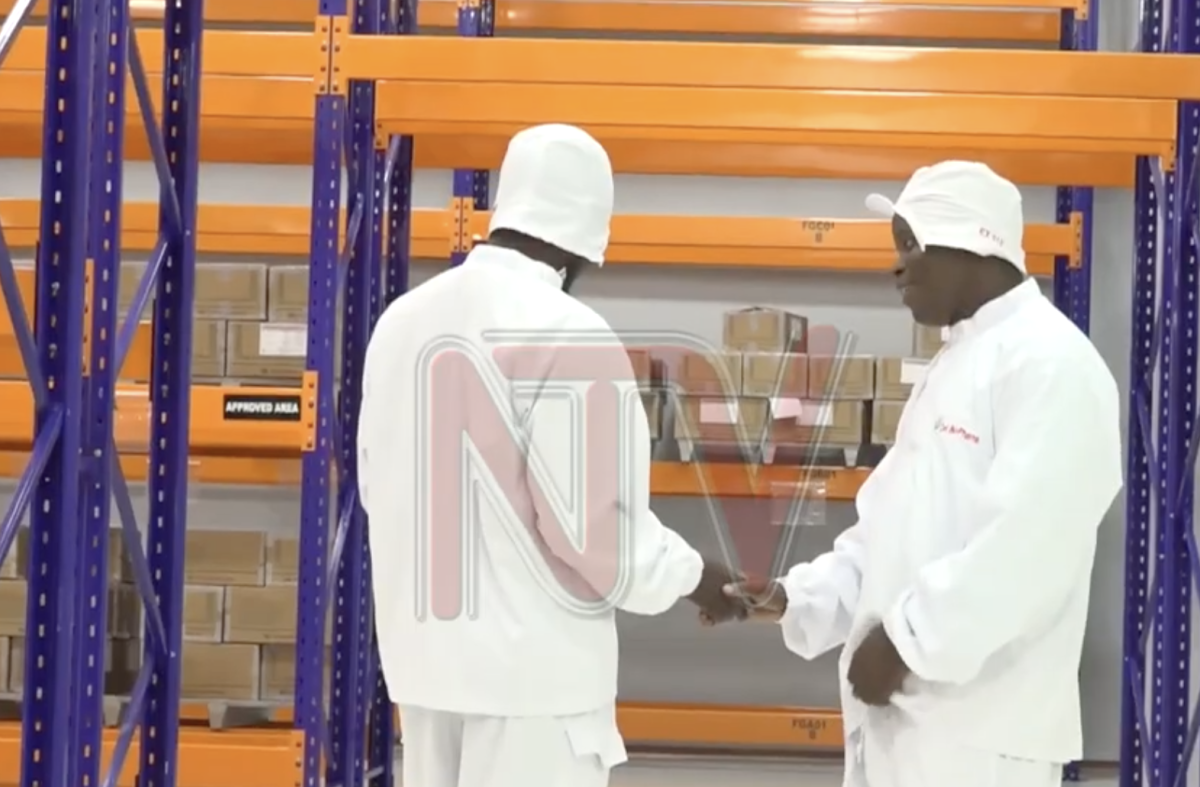
A Ugandan biotech company is asking the government to write another enormous cheque, $430 million to be precise, that would push the state’s total financial commitment in one pharmaceutical project to nearly a billion US dollars. The request, tabled by Dei Biopharma, has forced a moment of reckoning in Kampala: is this the investment that finally breaks Uganda’s dependence on imported medicines, or is it a funding spiral with no clear end?
The Ask That Changes Everything
Dei Biopharma’s pitch is not small in ambition. The company says the fresh injection of funds is critical to expanding local production of vaccines, oncology drugs and other complex medicines that Uganda currently imports at considerable cost. If approved, the cumulative government investment in the project would sit just under the symbolic one-billion-dollar threshold, a figure that would make this one of the most significant single-sector public investments in the country’s recent history.
For context, Uganda spends hundreds of millions of dollars every year importing medicines and medical supplies, a dependency that has repeatedly exposed the country to supply chain shocks, price volatility and the kind of vulnerability that became painfully obvious during the COVID-19 pandemic when global vaccine supplies were rationed and lower-income nations waited at the back of the queue. The argument for building domestic pharmaceutical capacity, therefore, is not merely economic, it is a matter of national health security.
Government Sends a Watchdog, Not a Cheque
Before any new money changes hands, the government has moved cautiously. The Minister of State for Economic Monitoring, Sandra Santa Alum, made a visit to the Dei Biopharma plant to personally assess how previous public funds have been deployed and what the facility is actually capable of producing at this stage. It is the kind of due diligence visit that signals the government is interested but not yet convinced, an on-the-ground audit before a boardroom decision.
According to NTV Uganda’s reporting on the development, the government has acknowledged the strategic logic of the project while stating it is still assessing the best way to support it going forward. That language, careful, non-committal, tells you that the $430 million request is very much still in negotiation territory.
Why Pharmaceutical Manufacturing Is So Hard to Get Right
Building a functional pharmaceutical plant from the ground up in a developing economy is, to put it plainly, brutally difficult. The regulatory requirements are exacting, the cold chain logistics are complex, the technical expertise is scarce and the timelines almost always stretch longer than projected. Africa has tried and failed at pharmaceutical self-sufficiency many times, not because the ambition was wrong but because the ecosystem, skilled labour, reliable power, consistent raw material supply, was not yet ready to support it.
That said, the continent’s trajectory is changing. The African Union has set targets to produce 60 percent of the vaccines consumed in Africa locally by 2040. Countries like Rwanda, South Africa and Senegal have made serious strides. Uganda, with Dei Biopharma as its flagbearer, is now trying to write itself into that story. The question is whether nearly a billion dollars in public money is the right instrument to get there, or whether additional structural support, trade policy, regulatory reform, private sector co-investment, needs to accompany it.
The Oncology Angle Nobody Should Ignore
While vaccines tend to dominate the conversation around African pharmaceutical manufacturing, Dei Biopharma’s focus on oncology drugs deserves separate attention. Cancer is one of the fastest-growing health burdens across sub-Saharan Africa, driven by a combination of rising life expectancy, lifestyle shifts and historically poor early detection infrastructure. Cancer drugs are among the most expensive medicines on the global market, and for most Ugandan patients, accessing them means either catastrophic out-of-pocket spending or going without.
A local manufacturing capability for oncology treatments would not just save foreign exchange, it could, over time, fundamentally alter what a cancer diagnosis means for an ordinary Ugandan family. That is not a small thing. It is, arguably, the most compelling piece of the Dei Biopharma proposition, even if it is the hardest to deliver technically.
What Accountability Looks Like at This Scale
Sandra Santa Alum’s plant inspection signals something important: at this level of public spending, parliamentary and ministerial scrutiny is not optional. Uganda’s public has every right to understand what the first tranche of government investment has produced in terms of actual manufacturing output, quality certification progress and employment numbers before the conversation about a further $430 million advances.
Pharmaceutical manufacturing plants are not roads or school buildings, you cannot easily judge progress by looking at them. The metrics that matter are whether the facility has obtained or is on track to obtain World Health Organization prequalification, whether it has successfully produced batches of any product that meet international standards, and whether the supply chain exists to sustain production at scale. Those are the questions the government’s assessment should be answering.
The Broader Stakes for Uganda’s Health System
Uganda imports the vast majority of its medicines, which means that every dollar spent on drugs is, in large part, a dollar leaving the economy. Local manufacturing would keep more of that value circulating domestically, create skilled jobs in a high-value sector and build the scientific and technical human capital that pays dividends for generations. These are legitimate long-term national interests, and they explain why the government has stayed engaged with Dei Biopharma even as the funding requests have grown larger.
But long-term national interest and sound fiscal management must move together. A billion dollars is a number that demands results, timelines and enforceable benchmarks. If the government decides to approve the additional $430 million, the terms under which that money flows will matter as much as the decision itself.
As Uganda weighs its next move, the fundamental tension at the heart of this story is one that many developing nations know well: the cost of building self-sufficiency is high, but the cost of never building it is higher. The real question for policymakers, health advocates and Ugandan taxpayers is not just whether Dei Biopharma deserves more funding, it is whether the systems surrounding this investment are strong enough to turn a billion-dollar bet into a billion-dollar outcome. What do you think: should Uganda go all in on local pharmaceutical manufacturing, or should it spread that investment across a broader range of health system priorities?