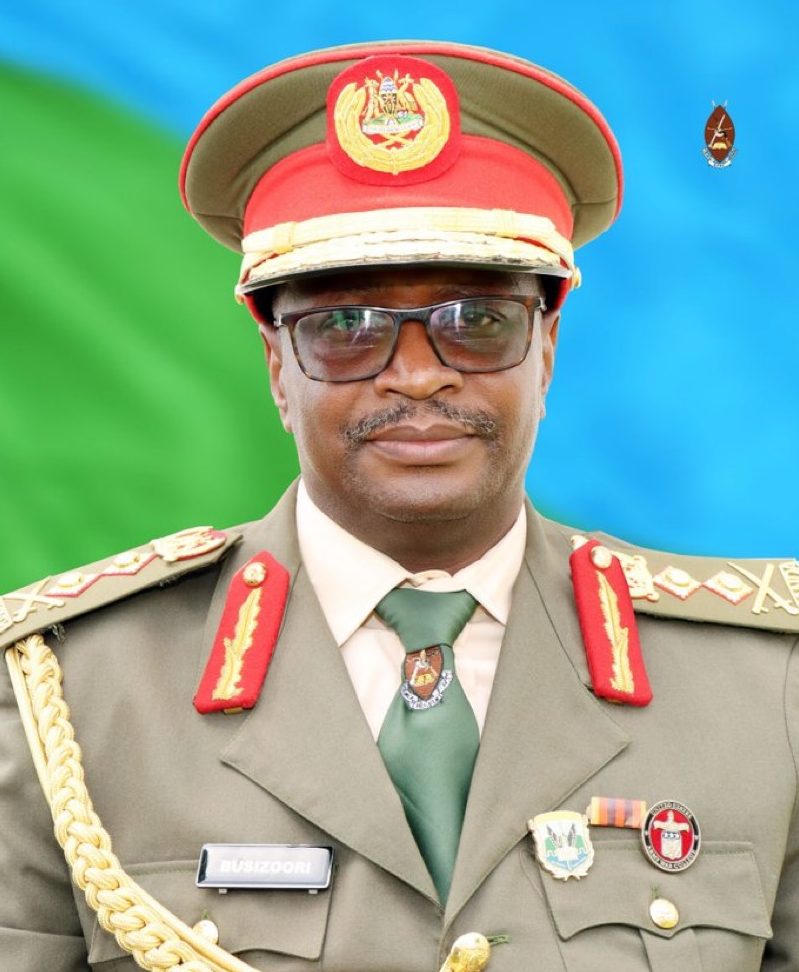
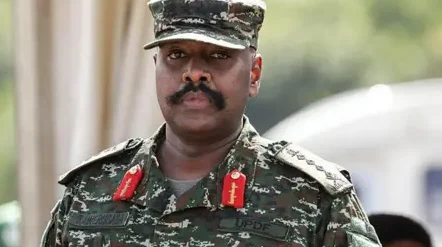
Uganda’s military command structure shifted significantly on Saturday when Gen. Muhoozi Kainerugaba, the country’s Chief of Defence Forces, announced a broad reshuffle of senior army officers that reshuffles divisional leadership across the Uganda People’s Defence Forces. At the centre of the changes is Maj. Gen. Felix Busizoori, who has been elevated to Deputy Commander of the Land Forces, placing him in one of the most consequential operational roles in the UPDF’s hierarchy.
Busizoori Steps Into a Top Command Position
Until this reshuffle, Maj. Gen. Busizoori held command of the UPDF’s 4 Infantry Division, headquartered in northern Uganda. His new appointment as Deputy Commander of the Land Forces puts him in the second-highest seat within one of the UPDF’s principal fighting components, a role that carries enormous weight given Uganda’s ongoing security responsibilities across a volatile region. The full details of the reshuffle were confirmed by Chimpreports, citing a statement from Col. Chris Magezi, the Acting Director of Defence Public Information.
“Maj General Felix Busizoori is appointed the Deputy Commander of the Land Forces,” Magezi stated, adding that all transfers and appointments take immediate effect. That kind of language signals urgency, a deliberate signal that this is not a routine rotation but a structural recalibration of who sits where in the chain of command.
Ssemwanga Moves to Reserve Forces as Awany Heads for Retirement
Maj. Gen. Joseph Ssemwanga, who previously held the Deputy Commander role that Busizoori now occupies, has not been sidelined. He moves across to become General Officer Commanding the Reserve Forces, taking over from Lt. Gen. Charles Otema Awany, who is scheduled to retire next week. It is a lateral shift that keeps an experienced general in the game while making room for Busizoori’s ascent.
The Reserve Forces command is not ceremonial. Uganda’s reserve structure plays a real logistical and support function, particularly as the UPDF maintains deployments both domestically and beyond its borders. Ssemwanga stepping into that role with Awany’s retirement imminent gives the transition a sense of continuity rather than disruption.
Divisional Commands Also Reshuffled
The changes ripple down the divisional tier as well. Maj. Gen. Wilberforce Sserunkuma, who was commanding the 3 Infantry Division, moves to take over the 4 Infantry Division that Busizoori vacated. That division is based in the north, a region that carries its own history of conflict and requires a seasoned hand at the wheel.
Meanwhile, Brig. Gen. Michael Hyeroba gets what is arguably the most demanding field promotion in this round of changes. Coming from a deputy command position at the 1 Infantry Division, he now steps up to lead the 3 Infantry Division outright. That division oversees eastern and northeastern Uganda, a strategically sensitive stretch of territory that borders countries where armed groups and cross-border threats remain live concerns. Jumping from deputy to divisional commander is a meaningful vote of confidence in Hyeroba’s abilities.
What This Reshuffle Tells Us About UPDF Leadership Strategy
Reshuffles in any military are rarely just about moving people around on a chart. They reflect doctrine, trust, and institutional direction. The speed of this reshuffle, announced with immediate effect on a Saturday, suggests these decisions had been in motion for some time behind closed doors. The progression of officers like Busizoori and Hyeroba also points to a UPDF leadership cadre that values operational experience gained at the divisional level before elevation to higher command.
Gen. Muhoozi, who assumed the role of Chief of Defence Forces, has been gradually placing his own stamp on the UPDF’s senior ranks. This reshuffle continues that pattern, rotating experienced hands into key positions while managing the natural attrition that comes with senior officers like Lt. Gen. Awany reaching the end of distinguished careers.
For the average Ugandan, the names and ranks may feel distant. But the people now commanding the 3 and 4 Infantry Divisions, and the officer now sitting as Deputy Commander of Land Forces, will have direct bearing on how the army responds to security situations in the north, east, and northeast of the country. These are not abstract appointments; they are operational decisions with ground-level consequences.
A Military in Motion
Uganda’s armed forces have rarely been static. Decades of internal and regional conflict have shaped a military culture that values flexibility and the capacity to adapt command structures to shifting realities. Whether this latest reshuffle is a response to a specific security assessment or simply a planned rotation of senior leadership, the effect is the same: new eyes in critical seats, and a signal that the UPDF’s top brass is keeping its command fresh.
As the dust settles on these appointments, all eyes will turn to how the newly configured leadership performs, particularly in the strategically complex north and northeast. Does a reshuffle of this scale signal a shift in Uganda’s internal security posture, or is it simply good military housekeeping? That is the question worth watching in the weeks ahead.