










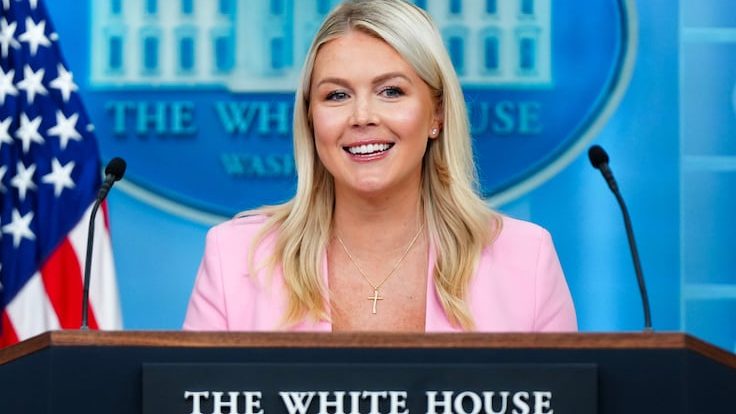
On August 12, 2026, the White House confirmed what Washington insiders had been quietly whispering about for weeks: Karoline Leavitt, the sharp and often combative face of the Trump administration’s communications operation, is stepping down from her role as press secretary. President Donald Trump, announcing the departure himself, said Leavitt is leaving to spend more time with her family and will transition into a new role as one of his top outside advisors.
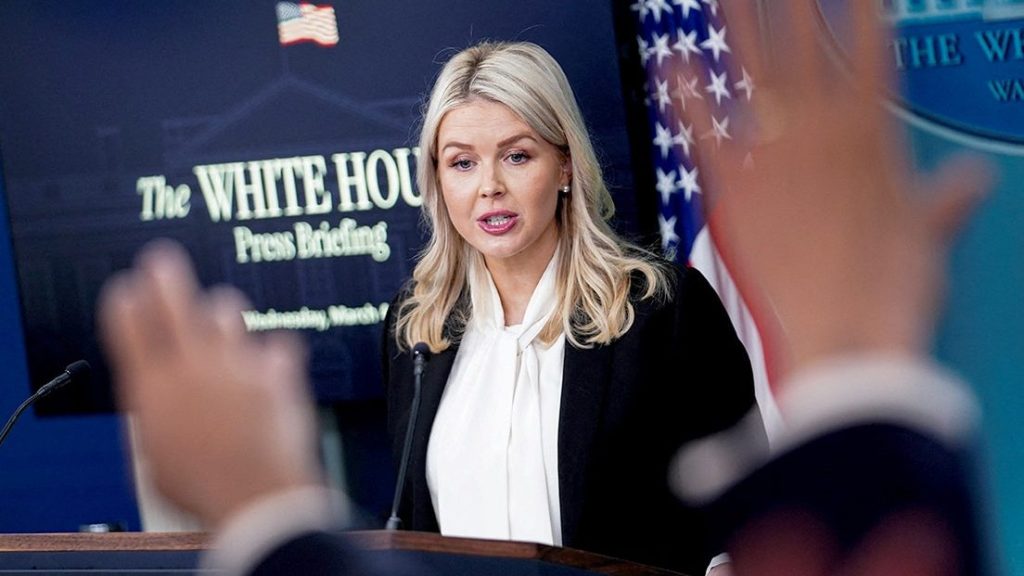
The End of an Era at the Briefing Room Podium
Leavitt’s exit marks a significant moment for an administration that has relied heavily on aggressive, loyalty-first messaging to drive its political agenda. As press secretary, she became one of the more visible figures in Trump’s orbit, regularly jousting with reporters and serving as the administration’s first line of rhetorical defense. Her departure, framed by Trump as a personal decision rooted in family priorities, still leaves a notable vacuum in a role that has always carried outsized symbolic weight.
Trump’s decision to keep Leavitt within his broader circle, naming her as a senior outside advisor, suggests the president values her political instincts and her ability to translate his message to the public. Outside advisory roles in Trump’s world have historically carried real influence, even without the formal briefing room access. Think less retirement, more lateral move.
The question of who fills the seat she leaves behind is already drawing speculation across political media. The press secretary role in any administration is high-stakes, but under Trump it carries an additional layer of pressure: you are not just spokesperson, you are defender, attack dog, and loyalist all wrapped into one press conference.
Family First, But the Timing Is Hard to Ignore
Stepping back from a high-profile government position to prioritize family is a choice that deserves to be taken at face value. Leavitt, relatively young and clearly ambitious, likely has a long political road ahead of her. An outside advisor role preserves her relationship with one of the most powerful political figures in the country without the grinding daily exposure of the briefing room.
Still, the timing of this announcement arriving on the same day as fresh economic data makes the news cycle feel particularly loaded. You can track the full unfolding of both stories through The Guardian’s live coverage of the day’s political developments, which captures the broader context in real time.
Inflation Numbers Land in the Middle of the Drama
While the Leavitt story dominated the political conversation, the economic data released on August 12 deserves its own serious read. Core inflation, which strips out volatile categories like food and energy to give a cleaner read of underlying price pressure, rose by 0.2% in July. That follows a period in June where core inflation was essentially flat month-over-month, making the July uptick notable even if it is not alarming on its own.
Gas prices provided a short-term reprieve for consumers, dropping 2.9% from June to July. That kind of decline tends to feel good at the pump and can soften broader consumer sentiment numbers in the near term. But the year-over-year comparison tells a harsher story: gas is up 25% compared to this same period in 2025. For households already stretched thin, that annualized figure is the number that actually hurts.
What the Numbers Mean for Everyday Americans
Monthly fluctuations in core inflation can feel abstract, but the accumulated weight of price increases over the past few years remains very real for working families. A 0.2% monthly rise in core inflation, if sustained over several months, signals that the Federal Reserve’s efforts to cool prices have not fully finished the job. The central bank will be watching this data closely as it weighs any future moves on interest rates.
For the Trump administration, economic data is also deeply political. Strong numbers become campaign material. Weak numbers become a vulnerability. A mixed picture, like the one emerging from July’s report, gives both supporters and critics something to argue about, which is often exactly how these things go in an election-adjacent political environment.
Two Stories, One Very Complicated Day
What the events of August 12 really illustrate is the relentless overlap of personnel drama and policy reality that defines modern American governance. A press secretary stepping down is a human story wrapped in political consequence. An inflation report is a set of numbers with real-world weight for millions of people trying to pay rent and fill gas tanks.
The Leavitt departure will dominate cable news chyrons by evening. The inflation data will be digested by economists, traders, and policy wonks throughout the day. Both matter, just in different ways and to different audiences. Leavitt herself, moving into an advisory role, will likely be watching both conversations very closely.
Her next chapter is unwritten. The administration’s communications strategy will need to be recalibrated. And the economy, as always, will keep doing what it does regardless of who is standing at the podium. So here is the question worth sitting with: in an era of political theater and economic anxiety running simultaneously, do you think the face behind the briefing room podium still has the power to shape how America understands its own government?