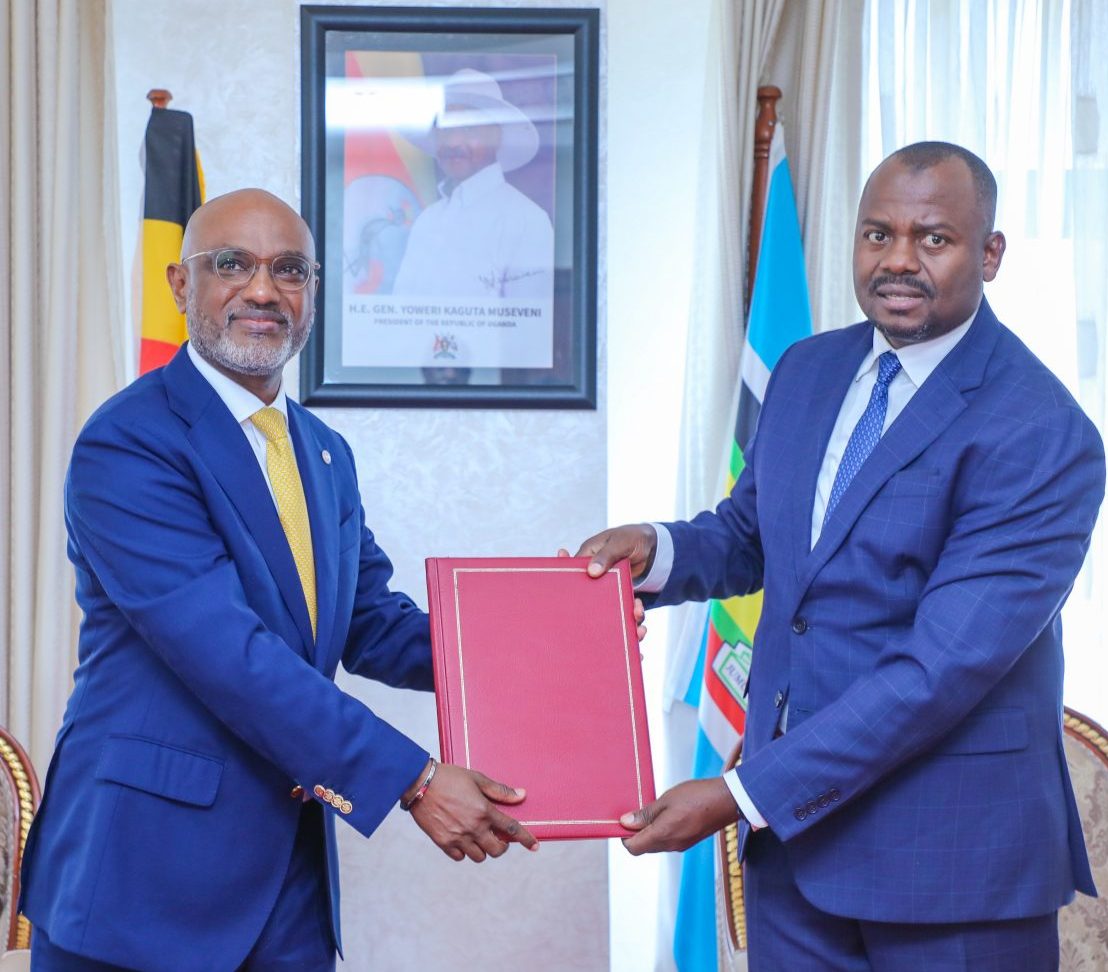
Uganda has a new Foreign Affairs Minister with an old-school sense of discipline and a very modern demand: results. Adonia Ayebare, a seasoned diplomat who spent decades climbing the ranks of Uganda’s foreign service, walked into the ministry’s Kampala headquarters on Wednesday and made one thing crystal clear, the era of consequence-free diplomacy is over.

In his first formal address to ministry officials, Ayebare set the tone for what promises to be a no-nonsense tenure at the helm of Uganda’s foreign policy machinery. Whether you arrived at your post through political connections or worked your way through the career ladder, the minister’s message was identical: you are accountable, and you will deliver.
A Diplomat Who Has Walked the Walk
Ayebare is not a stranger parachuting into a ministry he barely understands. He is, in his own words, a product of the very institution he now leads. He joined the foreign service as a Third Secretary and spent roughly three decades advancing through the ranks, most recently serving as Uganda’s Permanent Representative to the United Nations in New York. That background gives his words a particular weight. When he says the ministry can be fixed, he is not guessing. He knows its pressure points, its culture, and its potential.
“This ministry is very easy to fix. Very easy to fix. It has the best people in government,” he told officials gathered at the headquarters, according to Chimp Reports. The statement reads less like a compliment and more like a challenge. If the people are this good, the implication runs, then underperformance becomes even less defensible.
No More Meetings for the Sake of Meetings
Perhaps the sharpest critique Ayebare levelled at the existing culture within Uganda’s diplomatic missions abroad was the tendency to confuse activity with achievement. Investment conferences. Networking events. High-level meetings. All of it, in his view, means very little if investors never actually board a plane to Kampala.
“You cannot organise meetings and investment promotion that don’t bring investors,” he said bluntly. “It simply has to be results-based.”
This is a pointed observation about a problem that is hardly unique to Uganda. Across Africa, diplomatic missions frequently measure success by the quantity of engagements rather than the quality of outcomes. Trade numbers stagnate while photo opportunities multiply. Ayebare is signalling a clean break from that model, anchoring his ministry’s performance framework in economic and commercial diplomacy, the kind that moves capital, creates jobs, and strengthens bilateral trade ties.
Resource Constraints Are Not an Excuse
Ayebare was direct on the question of limited staffing and funding at overseas missions, drawing on his own experience at the UN in New York. Resource constraints, in his reading, do not excuse a mission from actively pursuing investment opportunities. The implication is straightforward: creativity and initiative must fill the gaps that budgets cannot.
This is a significant ask. Uganda’s foreign missions, like those of many developing nations, often operate on tight budgets with skeleton staff covering enormous geographic territories. But the minister’s point stands. A well-positioned diplomat with strong networks, even in a small office, can open doors that no conference budget can buy.
An Open Door, But Eyes Wide Open
Ayebare also promised a management style that breaks from the fortress-like leadership approach that can sometimes calcify inside government ministries. He encouraged officials to communicate directly with him, bring their problems forward, and expect a response. The open-door policy, he suggested, is not a courtesy, it is a structural requirement for building the kind of environment where capable people can actually do their jobs.
“I think what we need to do is really create a good atmosphere for people to do their work,” he said, framing the challenge not as a personnel problem but as a systemic one. The people are capable. The environment has not always let them prove it.
What Accountability Looks Like in Practice
The minister’s emphasis on accountability cuts both ways. While it places pressure on ambassadors and mission staff to show tangible results, it also implicitly commits the ministry itself to providing the tools, clarity, and support that officials need. Accountability without infrastructure is just blame-shifting. Ayebare appears to understand this, framing his reforms as a mutual contract between leadership and staff.
Whether that contract holds will depend on how consistently the minister follows through, particularly with political appointees who often arrive in diplomatic postings with powerful backers and little incentive to change their ways. Holding those individuals to the same standards as career diplomats will be the real test of whether this reset amounts to something durable or simply a strong first speech.
Why This Moment Matters Beyond Uganda
Uganda is not the only country grappling with the question of what modern diplomacy should look like. As the global competition for foreign direct investment intensifies, governments across the continent are being forced to rethink how their embassies and high commissions justify their existence. A mission that secures a major manufacturing deal or attracts a technology investment pays for itself many times over. One that files reports and attends receptions does not.
Ayebare’s framing of diplomatic performance as an economic function rather than a ceremonial one is a shift worth watching. If Uganda can build a model where missions are genuinely held accountable for investment outcomes, trade figures, and bilateral economic growth, it could offer a blueprint that other governments study closely.
The minister has announced his intentions with unusual clarity and confidence. Now comes the harder part: making the system actually work. Uganda’s ambassadors abroad have been put on notice. The question for the coming months is whether Ayebare has the institutional muscle, political will, and sustained focus to turn a bold first speech into a lasting transformation of how Uganda shows up in the world.
So here is the question worth sitting with: in a world where diplomatic activity is easy to quantify but diplomatic impact is harder to measure, how should governments design accountability frameworks that genuinely reward results rather than just rewarding presence?