










Twenty-five US states filed a lawsuit against the Trump administration on Monday, August 3, 2026, targeting a fresh batch of tariffs ranging from 10% to 12.5% on imports from 60 trading partners. The states brought their case before the US Court of International Trade, arguing that the levies are not a legitimate exercise of executive trade authority but rather a carefully constructed workaround designed to sidestep a Supreme Court ruling from earlier this year.
What the States Are Actually Asking For
The coalition is not simply lodging a protest. Their demands are concrete and consequential. They want the court to immediately halt the tariffs before they do any further economic damage. Beyond that, they are asking for a formal declaration that the charges are unlawful under existing law. Perhaps most notably, they want refunds for all duties that businesses have already paid under these rates. That last demand alone signals just how seriously the states view the financial injury being done to their economies right now.
The breadth of this legal action is striking. Twenty-five states acting in concert represents a significant block of the US economy, and the range of goods affected, crossing 60 separate trading relationships, means the ripple effects land on everything from manufacturing inputs to consumer goods on store shelves.
The Supreme Court Ruling at the Centre of It All
The crux of the legal argument hinges on a Supreme Court decision handed down in February of this year. The court struck down a prior set of import taxes, and the states contend that the new 10% to 12.5% tariffs are essentially the same policy dressed in different clothes. In their reading, the administration used the announcement of these new rates as a pretext to keep collecting duties that the highest court in the land had already ruled off-limits.
That framing, if accepted by the Court of International Trade, would be legally devastating for the administration’s position. It transforms the question from a technical dispute about trade authority into a more pointed allegation: that the executive branch engineered a mechanism to continue doing something it had been told it could not do.
As reported by The Guardian, the states are framing these tariffs explicitly as a replacement for the taxes struck down in February, a characterisation that, if upheld in court, would likely doom the new rates entirely.
Why the Court of International Trade Matters Here
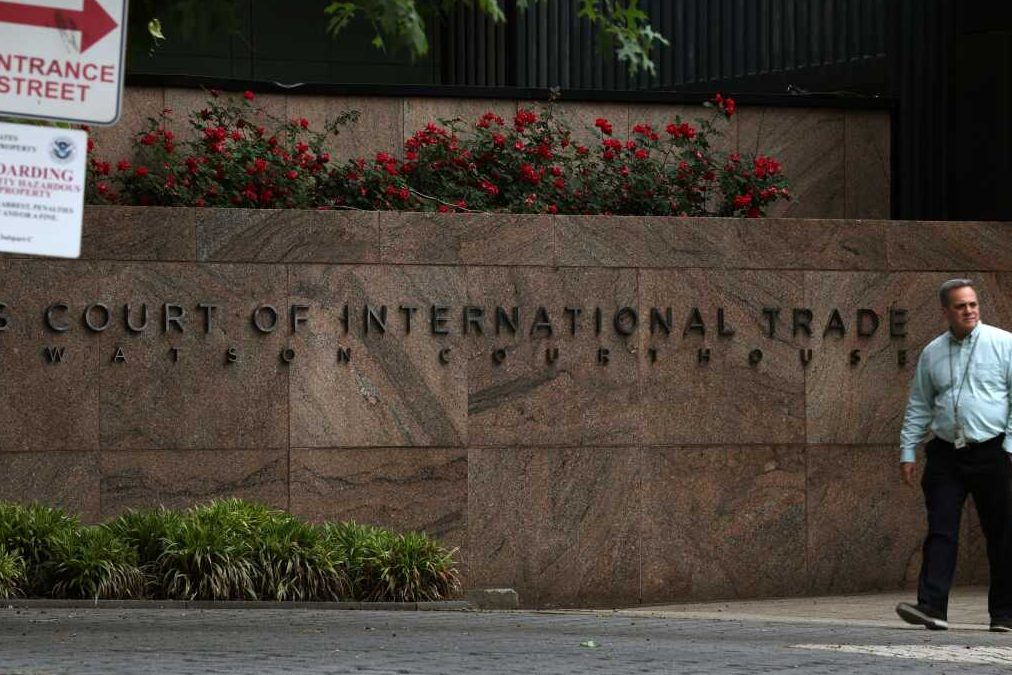
The US Court of International Trade is a specialised federal court based in New York with exclusive jurisdiction over civil actions involving international trade and customs law. It is not a court that tends to generate many headlines, but it carries enormous practical weight for businesses that import goods. A ruling from this court ordering a halt to tariff collection would have an immediate, tangible effect on supply chains across the country.
The states clearly chose this venue deliberately. It is the right court for this challenge, and it has the authority to grant exactly the kind of relief the coalition is seeking, including the injunction to pause the tariffs while the legal arguments are heard properly.
The Bigger Picture for US Trade Policy
This lawsuit lands at a volatile moment for American trade relationships. Tariffs have been one of the most consistently contested tools in the administration’s policy kit, and the legal challenges have kept pace with each new round of levies. The February Supreme Court ruling already signalled that there are constitutional and statutory limits to how broadly the executive branch can wield import taxes without congressional authorisation.
For businesses caught in the middle, the uncertainty is costly in itself. Every quarter spent waiting for legal resolution is a quarter of pricing decisions, supply chain adjustments, and contract negotiations made against an unstable backdrop. The 25-state coalition is, in part, representing those interests even if the named parties are state governments rather than individual companies.
The administration has not yet publicly detailed how it intends to defend the new tariff structure in court. But given the Supreme Court backdrop, constructing a legally distinct justification for these rates will require more than a technical repackaging. The states are betting the court will see through any such framing.
What Comes Next
The immediate question is whether the Court of International Trade will grant a temporary injunction to pause the tariffs while the case proceeds. That decision could come relatively quickly and would be a significant early signal of how judges view the states’ core argument. A halt at this stage would be a major blow to the administration and would effectively validate the states’ framing before the full merits are even argued.
Beyond the courtroom, this lawsuit puts additional political pressure on the administration at a time when trade tensions with multiple partners are already a point of friction. A loss here would not just be a legal setback, it would narrow the tools available for future tariff manoeuvres considerably.
With 25 states, 60 trading partners, and the ghost of a Supreme Court ruling hovering over every argument, this case has the ingredients to become one of the defining trade law moments of the decade. The question worth sitting with: if the courts keep rolling back these tariffs, what does that mean for the future of executive authority over US trade policy, and who, ultimately, gets to set the rules?