

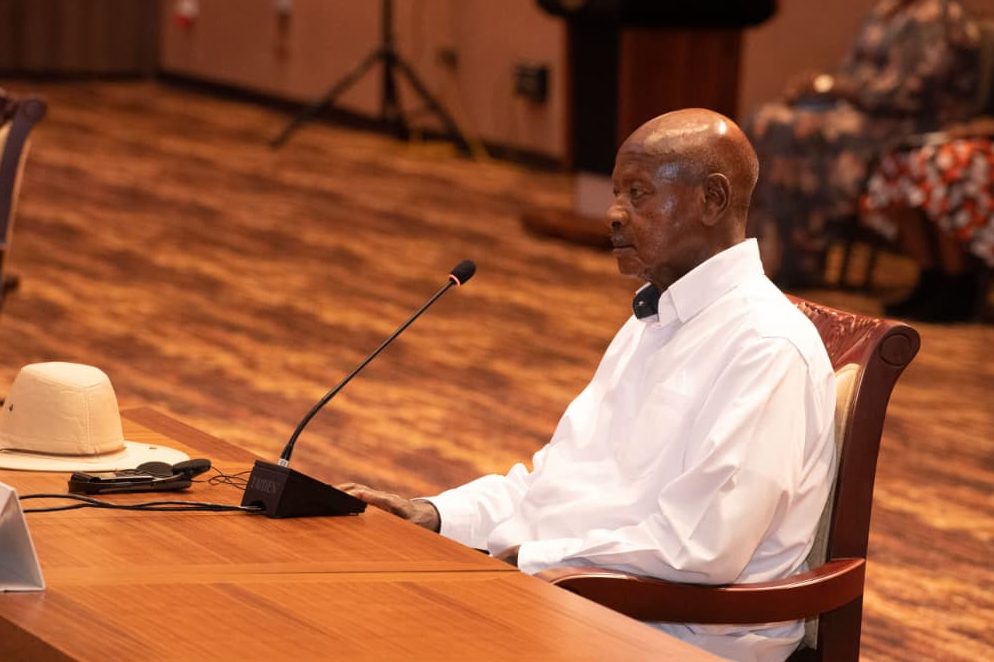


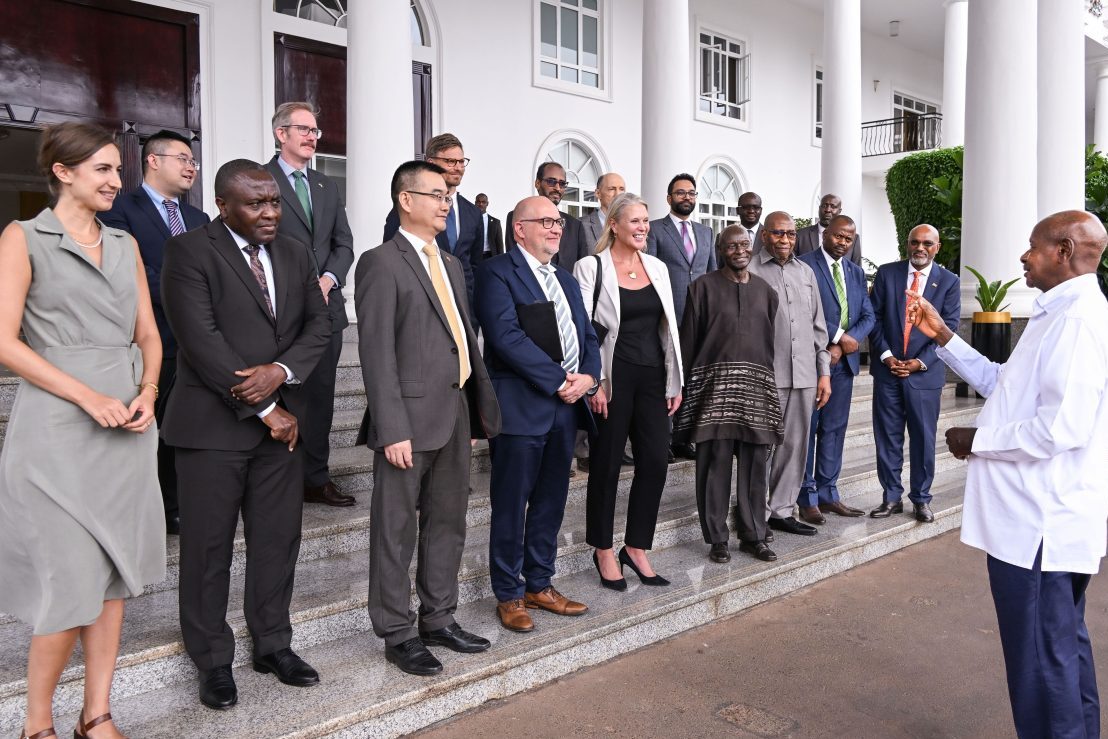
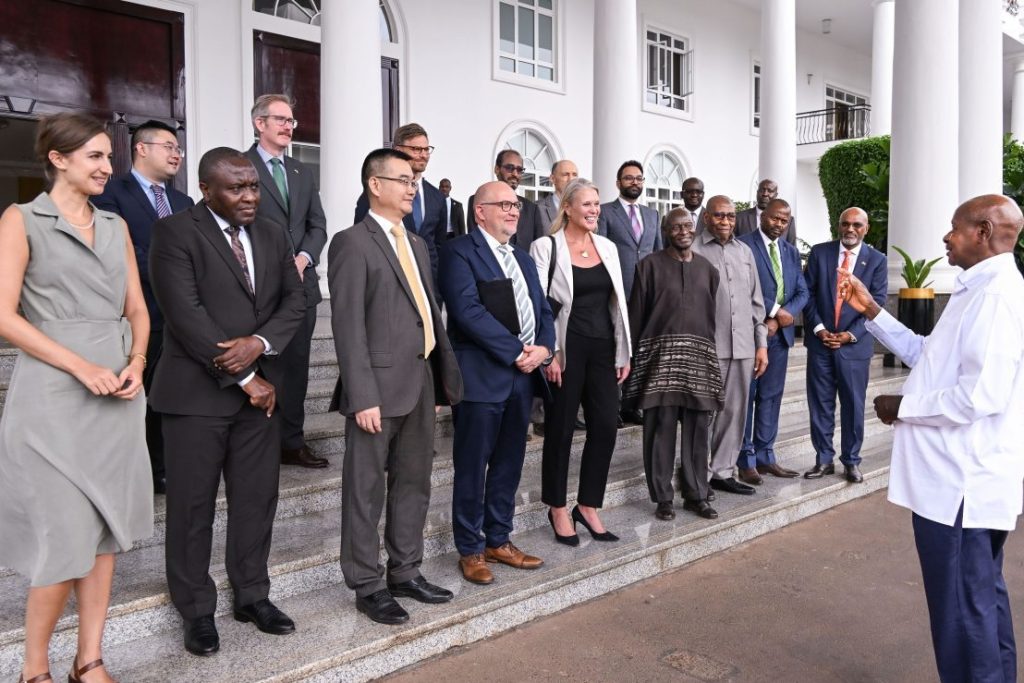
President Yoweri Museveni gathered representatives of United Nations Security Council member states at State House Entebbe on Monday, August 3, making a direct personal appeal for them to support Uganda’s candidate, veteran diplomat Olara Otunnu, in the race to succeed Secretary-General António Guterres. The high-stakes meeting came just days after Otunnu finished last in the first informal straw poll, a result that threatened to derail Uganda’s long-held ambition to place one of its own at the helm of the world’s most prominent international institution.
A Friendship That Goes Back to Makerere
Museveni did not present Otunnu as a stranger or a political appointment of convenience. He reached back decades, recalling how he had first crossed paths with Otunnu during their shared years at Makerere University, where Otunnu served as Guild President. That personal history gave his pitch an unusual warmth, the kind that no official government dossier can replicate. When a sitting head of state tells foreign envoys that he has known a man since university and still believes in him, it carries a different weight than a standard diplomatic briefing.
“He is really the type of person you will need in the UN system because he is very much aligned to it. I therefore hand over Olara Otunnu to you,” Museveni told the assembled diplomats, according to a detailed account of the Entebbe meeting. He went further, praising Otunnu’s fluency in both English and French and noting, with some relish, that he speaks both “without a tribal accent.” It was a carefully constructed endorsement, designed to position Otunnu not as a regional candidate but as a genuinely global one.
Uganda’s Argument: Security and Refuge
Museveni kept his pitch tightly focused on two pillars that he argued were beyond reasonable dispute. The first is Uganda’s track record in regional peacekeeping and security contributions. Uganda has deployed troops across conflict zones in the region for years, and that record, Museveni insisted, is not something any serious observer would question. The second is Uganda’s long-standing refugee policy, one of the most generous on the African continent, which grants refugees the right to work and move freely rather than confining them to camps.
“Uganda’s credentials in the UN are many, but the uncontested ones are two: our contribution to regional security, I don’t think anybody will say Uganda is not known for that, and our support for refugees. Our candidate comes from that background,” he said. It was a shrewd framing. Rather than getting into contested political terrain, Museveni anchored his country’s credibility to humanitarian and security achievements that are difficult to argue against on the world stage.
He did briefly gesture toward Uganda’s democratic record before quickly pulling back, acknowledging with unusual candor that others might see things differently. “Of course, we are also excelling in democracy, although others may have different views, which I will not insist upon,” he said. It was a rare moment of self-aware restraint from a president not widely known for such qualifications.
Otunnu’s Own Moment in the Room
After Museveni made his introduction, Otunnu took the floor to brief the diplomats himself. He also used the occasion to publicly thank the president for reaffirming Uganda’s commitment to the candidacy. That detail is more significant than it might appear. According to Otunnu, a number of Security Council member states had reportedly sought direct confirmation that Kampala was still fully behind his bid, especially after previous unsuccessful attempts at the same prize. Doubt about a candidate’s home government support can be lethal in U.N. political circles, where perception of momentum matters as much as actual votes.
The public nature of the Entebbe meeting served a dual purpose then: it reassured wavering diplomats that Uganda had not quietly distanced itself after the poor straw poll result, and it gave Otunnu a platform to reintroduce himself to an audience whose support he needs to win in confidential Security Council rounds still to come.
What the Straw Poll Result Really Means
Finishing last in a first informal straw poll is painful, but it is not always fatal. The U.N. secretary-general selection process involves multiple rounds of confidential voting within the Security Council, and early straw polls serve more as temperature checks than definitive verdicts. Candidates who survive early rounds and build alliances can shift significantly between ballots. History has shown that early front-runners do not always end up with the job.
Still, the political math is demanding. The Security Council’s five permanent members each hold veto power, meaning any single one of them can effectively end a candidacy. Uganda’s outreach at Entebbe was almost certainly aimed not just at the elected members of the Council but at the permanent five, whose positions in these early informal rounds carry outsized weight. Getting assurances, or at minimum neutrality, from those players is what turns a struggling candidacy into a viable one.
Otunnu’s Background and What Makes Him a Different Kind of Candidate
Olara Otunnu is not a newcomer to the international stage. He spent years inside the U.N. system, including a prominent role as the organization’s Special Representative for Children and Armed Conflict, a position that brought him into contact with some of the worst humanitarian crises of the late twentieth and early twenty-first centuries. That experience is the foundation of Museveni’s argument that Otunnu is not merely a national political figure being parachuted into global leadership, but someone who genuinely understands how the institution operates from the inside.
That distinction matters right now. The U.N. faces pressure from multiple directions simultaneously: conflicts that refuse resolution, a climate crisis demanding coordinated action, and an increasingly fractured geopolitical landscape that makes consensus among major powers harder to achieve than at almost any point since the Cold War. Against that backdrop, Museveni’s argument that the world needs someone “very much aligned” to the U.N. system is a coherent one, even if Otunnu’s candidacy still faces a steep climb.
Africa’s Broader Stake in the Race
Uganda’s push for Otunnu also connects to a wider conversation across the African continent about representation at the top levels of international governance. Africa contributes enormous peacekeeping capacity to U.N. missions and hosts some of the largest populations of people the organization serves, yet the continent has never produced a U.N. Secretary-General from sub-Saharan Africa. That argument has gained currency in diplomatic circles, and it gives Uganda’s campaign a regional moral dimension that extends beyond any single candidate’s personal resume.
Whether that argument translates into actual Security Council votes depends on factors far beyond Entebbe. But Monday’s meeting signaled clearly that Kampala is not treating the poor straw poll as the end of the story. The campaign is very much alive, and Museveni is personally invested in making it count.
With further rounds of confidential Security Council voting still ahead, the question worth sitting with is this: in a process where backroom relationships and quiet assurances often matter more than public speeches, will Museveni’s very public endorsement prove to be a strength for Otunnu’s campaign, or will it invite the kind of scrutiny that quiet diplomacy is specifically designed to avoid?