


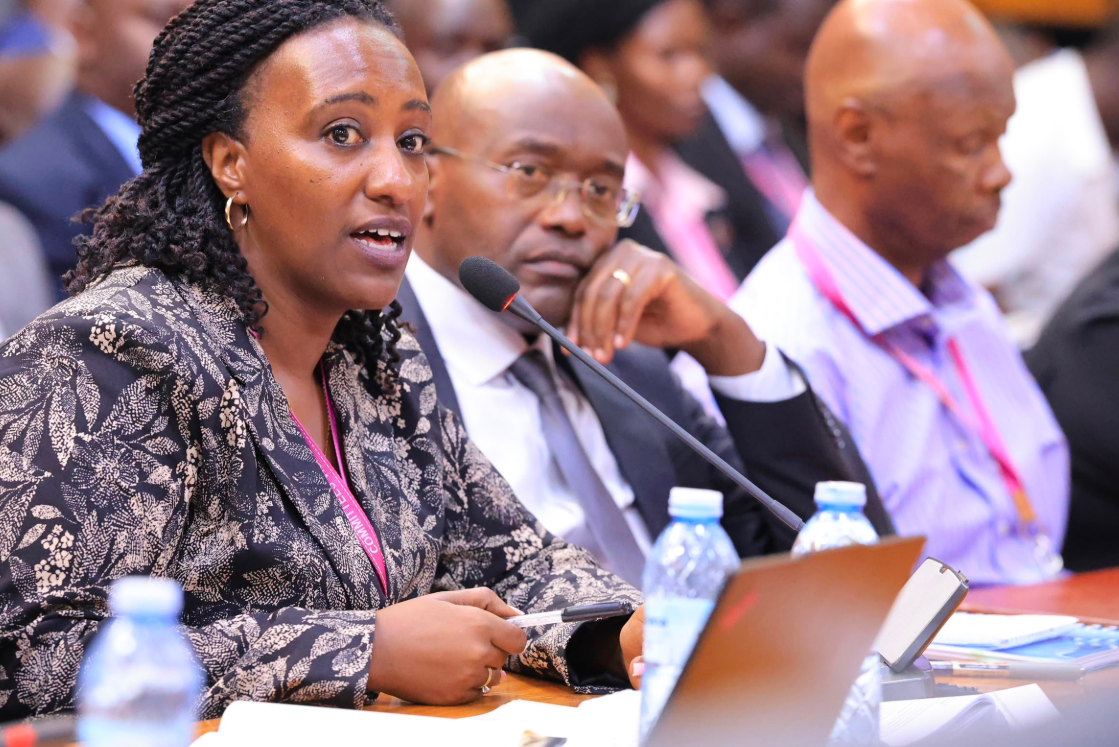
More than 400,000 Ugandans who paid for electricity connections are still waiting in the dark, and Parliament is no longer willing to let that slide quietly. Members of the Public Accounts Committee (Central) called Uganda Electricity Distribution Company Limited (UEDCL) officials to account this week, demanding answers over a growing backlog of customers who handed over their money but have yet to see a single wire installed at their properties.

A Backlog That Stretches Back to the UMEME Era
The core of the problem traces back to a transition that was supposed to be seamless. When UEDCL took over electricity distribution from the private concessionaire UMEME, it inherited not just infrastructure and staff, but also a queue of paying customers who had been waiting for connections under the previous operator.
According to the Committee Chairperson, Hon. Patrick Nsamba, the number of people who made payments to UMEME and still have not been connected runs to over 400,000. That figure is not a projection or an estimate pulled from thin air. It represents real households, real businesses, and real Ugandans who budgeted for power, paid the required fees, and received nothing in return.
For context, electricity access remains a significant development issue in Uganda, where grid connectivity rates still lag behind the country’s ambitions. Every unconnected customer in that queue is not just a statistic. They represent a home running on candles or kerosene, a small business operating without reliable power, and a family still waiting on a promise the state made and has not kept.
What UEDCL Said in Its Defence
The acting Managing Director of UEDCL, Joselyn Rwakakooko, did not deny the existence of the backlog. Instead, she pointed to two primary reasons for the delays. First, limited funding for the maintenance and upgrading of electricity substations that UEDCL inherited from the UMEME concession. Second, procurement delays in acquiring the electrical materials needed to carry out new connections.
On the surface, those explanations are not implausible. Infrastructure transitions of this scale rarely go smoothly, and procurement processes in public institutions across Africa are notoriously slow. But for the MPs sitting across the table, the explanations did not fully land. Funding shortfalls and procurement lags are institutional problems, yes, but they are also problems that come with solutions, and the committee wanted to know what UEDCL has been doing to find them.
As reported by NTV Uganda, the parliamentary scrutiny comes at a particularly sensitive time for the utility company, which is still working to establish its operational credibility after taking over from a long-running private concession.
The Bigger Question About the UMEME-to-UEDCL Handover
Uganda’s decision to end the UMEME concession and bring electricity distribution back under a public entity was a major policy shift. Proponents argued it would give the government greater control over service delivery and ensure that profits stayed within the country rather than flowing to private shareholders. Critics warned that public utilities in Uganda have a mixed track record and that the transition would require serious investment and capacity building.
The 400,000-customer backlog is, in many ways, an early test of which side of that argument holds up. If UEDCL can clear the backlog, secure funding for substations, and accelerate procurement, it will have demonstrated that the transition was worth the disruption. If the queue continues to grow, or even stagnates, it will become a political liability that opponents of the re-nationalisation model will point to for years.
Parliament’s Role and What Comes Next
The Public Accounts Committee is not a body that simply listens and nods. It has the authority to make recommendations, demand corrective action, and in some cases, refer matters for further investigation. The grilling of UEDCL officials signals that MPs are not prepared to treat this as an acceptable transitional hiccup.
What the committee will likely push for is a clear, time-bound plan to work through the backlog. That means UEDCL needs to present a realistic schedule for connecting the customers who have already paid, a funding proposal to address the substation maintenance gap, and a transparent procurement timeline that shows materials will arrive before the situation deteriorates further.
For the 400,000 Ugandans at the centre of this story, parliamentary pressure is welcome, but what they need is action. Accountability hearings matter. Follow-through matters more.
Why This Story Is About More Than Electricity
At its heart, this is a story about a contract between citizens and the state. People paid money, trusted the system, and waited. The system, in its various institutional forms, has not delivered. That kind of trust, once broken, is hard to rebuild.
Uganda’s electrification goals depend not just on infrastructure investment but on public confidence that when someone pays for a service, they will actually receive it. Every month that those 400,000 connections remain incomplete is a month that confidence erodes a little further.
UEDCL now has an opportunity to turn this around, and Parliament has made it clear that the clock is ticking. The acting MD and her team will need to do more than explain the delays. They will need to demonstrate, with urgency and transparency, that those 400,000 Ugandans are not just a line item on a report but a priority that demands immediate attention.
So here is the question worth sitting with: if a private company had left 400,000 paying customers unconnected for this long, what would the consequences have looked like? And should the answer be any different when the company in question is publicly owned?