











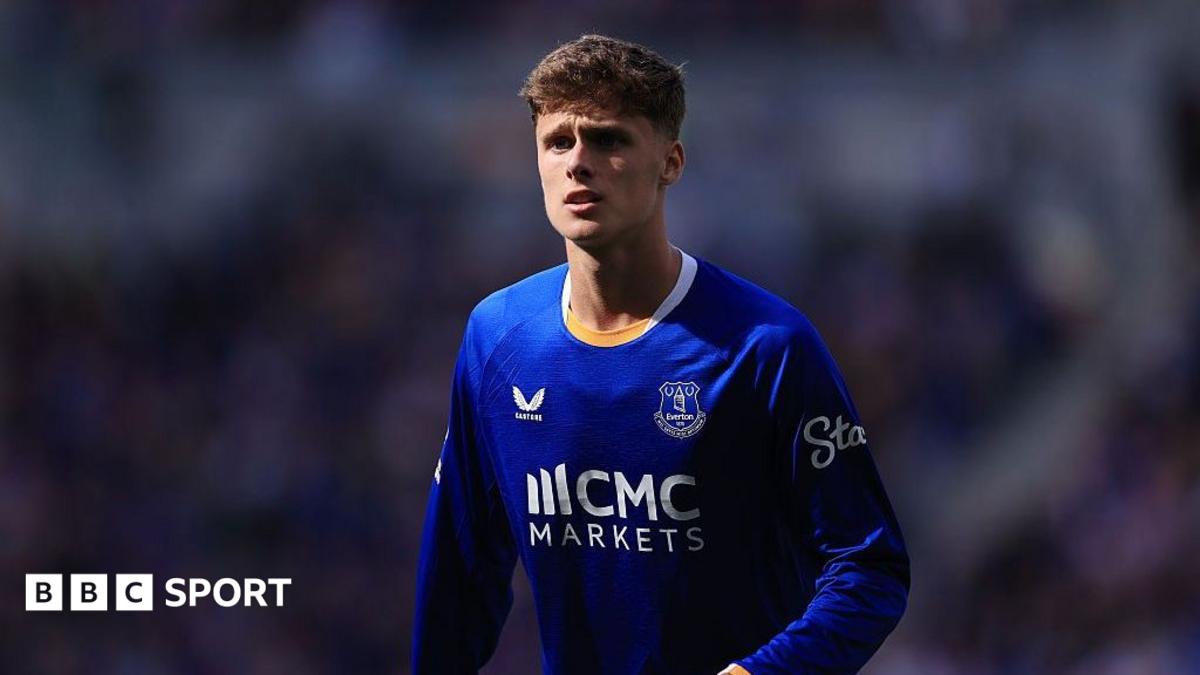
Nottingham Forest have made their boldest transfer statement of the summer window, tabling a bid worth £40 million, plus a sell-on clause, for Everton’s 19-year-old midfielder Harrison Armstrong, with the club hopeful of wrapping up one of the more surprising deals before the window slams shut.
The move, first reported by The Athletic and picked up by BBC Sport, has sent shockwaves through Merseyside, where Armstrong is not merely regarded as a promising prospect but as the centrepiece of Everton’s long-term vision. For many supporters, he is the player the club’s future is supposed to be built around.
Who Is Harrison Armstrong?
At just 19 years old, Armstrong has already carved out a reputation as one of the most technically accomplished young midfielders in English football. Elegant in possession, composed under pressure, and intelligent in his movement, he fits the profile of the modern box-to-box midfielder that every top club is desperately chasing. He has made 23 appearances for Everton’s first team, a significant number for a teenager, and only last week he started in the club’s 2-0 Premier League win over Crystal Palace, further cementing his status as a first-team regular rather than a fringe talent being eased in gently.
He also holds England under-19 international honours, which underscores the broader football world’s recognition of his ability. This is not a gamble on potential. Armstrong has already shown, at the top level, that he belongs.
Why Forest Are Pushing So Hard
Nottingham Forest’s interest reflects both ambition and pragmatism. The club has been among the more active sides in the transfer market in recent seasons, and the desire to add a midfielder of Armstrong’s calibre signals that they are thinking beyond mere survival. A player of his profile, still only 19 and with clear room to develop further, would represent a serious statement of intent.
The inclusion of a sell-on clause in the reported offer is a shrewd addition. It gives Everton a financial safety net should Armstrong go on to reach his ceiling at Forest or beyond, a concession designed to make the deal more palatable to a selling club that knows it may be letting go of something irreplaceable. Whether that sweetener is enough to move Everton remains the central question.
Everton’s Dilemma and Fan Fury
Here is where the story gets genuinely complicated. The Friedkin Group, the American ownership consortium that now controls Everton, face a decision that carries consequences far beyond a single transfer fee. Agreeing to sell Armstrong would almost certainly provoke a fierce backlash from a fanbase that has watched the club navigate financial turbulence and lean heavily on the promise of homegrown talent as a source of identity and hope.
Armstrong is not just a footballer to Everton supporters, he is a symbol of something the club has been trying to protect: youth, authenticity, and a future worth believing in. Selling him, regardless of the fee, risks communicating something deeply uncomfortable about the ownership’s priorities and the actual scale of their ambitions for the club.
At this stage, there is no indication that Everton intend to accept the offer. But the fact that the conversation is public, and that Forest’s interest is genuine rather than speculative, means the pressure on the Friedkin Group is very real. How they respond will be watched closely, not just for what it means for Armstrong’s career, but for what it says about the direction Everton are headed.
The Sell-On Clause: Smart Business or Admission of Doubt?
It is worth pausing on the mechanics of this bid. A sell-on clause is typically inserted when the buying club wants to reduce the upfront risk or when the selling club demands future participation in the player’s value. In this case, Forest attaching one to their offer suggests they are aware that £40 million might not be enough on its own to convince Everton, and they are right to think so.
But there is another reading. A sell-on clause can be interpreted as Forest acknowledging they may not be Armstrong’s final destination. That is not necessarily a criticism; many clubs at Forest’s level have used such arrangements intelligently, developing players and profiting when bigger clubs come calling. For Everton, though, the question becomes: why sell to a club that may simply be a stepping stone?
What This Deal Would Mean for Both Clubs
If Forest pull this off, it would rank among the more surprising pieces of business in this transfer window. Landing a player of Armstrong’s pedigree, age, and trajectory at £40 million, a fee that could look like a bargain in three years, would be a genuine coup for a club with serious aspirations.
For Everton, the calculus is grimmer. Losing Armstrong would strip the squad of its most exciting homegrown asset and send a message to supporters and rivals alike about what the club’s ownership is truly willing to protect. Financially, the injection would be welcome. Culturally and footballing-wise, the cost could be steep.
As the transfer window countdown intensifies, all eyes are on Merseyside. Everton have not moved to sell, and the fanbase is already vocal in their opposition. But football has a way of producing outcomes that feel unthinkable right up until the moment they happen.
So here is the question worth sitting with: if you were running Everton, would any amount of money be enough to justify selling the player your fans have pinned their hopes on, and what does your answer say about the kind of club you want to be?