
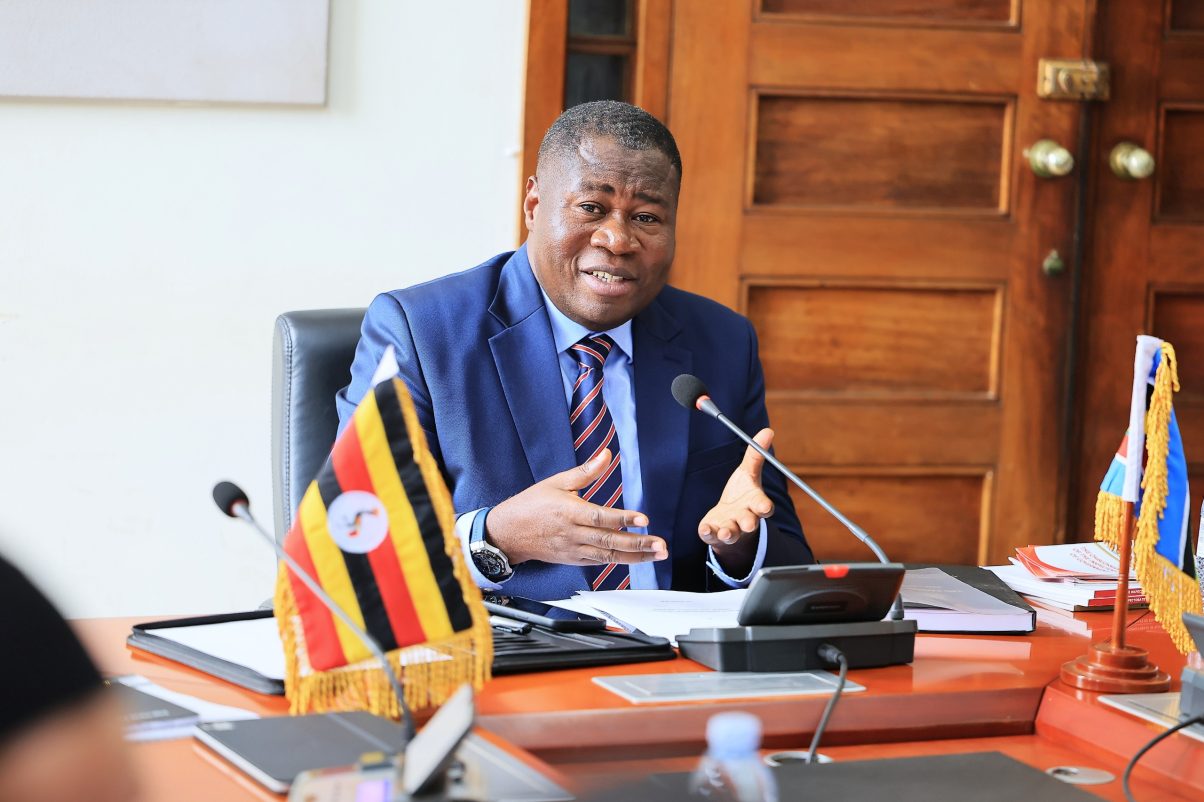
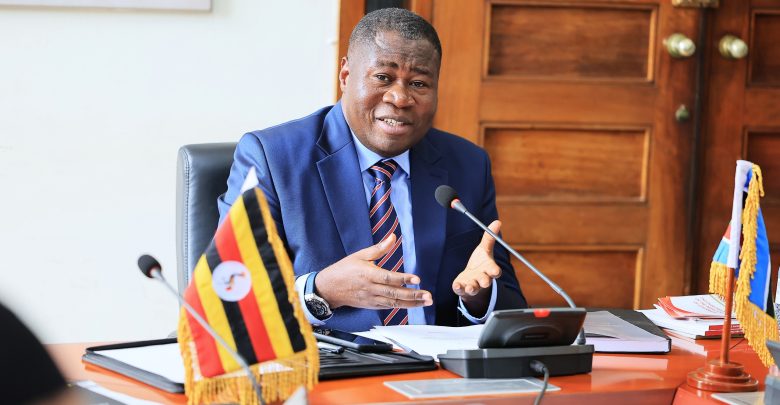
On Monday, October 12, 2026, Uganda’s Speaker of Parliament, Rt. Hon. Jacob Marksons Oboth-Oboth, did something that sounds straightforward but carries considerable weight in a political environment where oversight reports have a long history of gathering dust. He received the Inspectorate of Government’s 55th Bi-Annual Performance Report and immediately ordered it placed on the Order Paper for the very next sitting day, Tuesday, October 13, 2026.
The report covers the period from January to June 2026, and its arrival at Parliament was anything but routine. Lady Justice Aisha Naluzze Batala, the Inspector General of Government, did not send a junior officer with a folder. She walked through Parliament’s doors herself, accompanied by her Deputy, Mrs. Anne Twonomugisha Muhairwe, the Inspectorate’s senior management team, and was received in a meeting that also included all Parliamentary Committee chairpersons. The Speaker described the gathering as unprecedented, and for good reason: it signalled a deliberate, coordinated push to ensure that the findings inside that report actually translate into action.
Breaking a Pattern of Delays
The Speaker did not mince words when addressing the assembled officials. He acknowledged directly that previous IGG reports had been handled late by Parliament, and rather than deflecting blame, he drew a clear line in the sand. “The records I have show the previous IGG report had been handled late and we need to correct this immediately. I can’t be responsible for the past, but I have to start now,” he said, according to Chimpreports.
That kind of candour from a presiding officer is not something you hear every day. Most politicians reach for vague statements about systemic challenges or inherited problems. Oboth-Oboth chose a different approach: own the present, fix the future. Whether Parliament follows through will be the real measure of that promise, but the public declaration at least puts him on record.
The Speaker went further, directing that the report be referred to the relevant sectoral committee and urging committee chairpersons to treat the matter as a priority. With all of those chairpersons physically present in the room when he issued that instruction, there is no room to claim they never heard it.
Why Parliament’s Role Here Is Non-Negotiable
One of the more striking moments of the meeting came when Oboth-Oboth laid out the stakes in plain terms. An Inspectorate of Government that produces detailed reports on public sector performance, corruption, and maladministration is only as powerful as the institution that gives its findings teeth. Parliament is that institution.
“Without Parliament debating and giving effect to the Inspectorate’s findings, the institution would lose its relevance in the eyes of the public,” the Speaker warned. It is a surprisingly blunt admission of the symbiotic relationship between these two arms of governance. The IGG can investigate, document, and report until its offices are full of paper. Without Parliament picking up that work, interrogating the findings, summoning officials, and legislating where necessary, the exercise becomes performative.
Lady Justice Naluzze herself raised this exact concern while presenting the report, which tells you the Inspectorate is not naive about its own limitations. Running an oversight body that depends on political will to have any real impact is a precarious position, and it appears the IGG leadership walked into Parliament that Monday with a very clear message: we need you to show up for this.
What the 55th Report Represents
A bi-annual report covering January to June 2026 captures six months of government performance data, anti-corruption assessments, and findings that have real consequences for public service delivery across Uganda. The Inspectorate of Government has a constitutional mandate to promote and foster strict adherence to the rule of law and principles of natural justice in administration, and to eliminate and foster the elimination of corruption, abuse of authority, and public office.
Each report in this series builds on the last. By the time you reach the 55th edition, there is a substantial body of documented findings, recommendations, and, frankly, unresolved issues. That accumulated weight is part of what made this particular handover moment so significant. The Speaker is not just dealing with one report; he is dealing with a pattern, and he appears to understand that.
Committee Chairpersons Now Have a Public Commitment to Honour
Having every Parliamentary Committee chairperson in the room when the Speaker issued his directive was a deliberate move. These are the people who will determine whether the report gets serious scrutiny or polite acknowledgment followed by inaction. By putting them front and centre at this meeting, Oboth-Oboth essentially turned the accountability spotlight onto Parliament itself. The public now knows who was in that room. The committee chairs know it too.
There is also something worth noting about the optics here. Anti-corruption oversight bodies across the continent frequently produce excellent, thoroughly researched reports that simply do not translate into outcomes. Uganda’s IGG is not unique in this challenge, and the problem is rarely about the quality of the investigation. It is almost always about what happens, or does not happen, after the report lands on a desk. Getting it onto the Order Paper within 24 hours of receipt is, at minimum, a meaningful departure from the pattern the Speaker himself acknowledged.
The Bigger Question for Ugandan Governance
Parliamentary oversight of anti-corruption bodies is one of the least glamorous but most consequential functions a legislature can perform. It requires patience, technical competence, political courage, and a willingness to pursue findings even when they implicate people with influence. Uganda’s Parliament has not always distinguished itself in this regard, and the Speaker knows it.
What happens next in committee will tell us far more than Monday’s meeting did. Will the relevant committee hold meaningful hearings? Will officials named in adverse findings be summoned and required to respond? Will recommendations that have appeared in previous reports but never been acted upon finally receive the attention they deserve?
For now, the signal from the top of Parliament is clear enough. The IGG report is on the table. The committee chairs were in the room. The Speaker has made his position public. The next move belongs to the committees, and after that, to the Ugandan public watching whether this moment of apparent seriousness produces anything more durable than a good headline.
So here is the question worth sitting with: if Parliament’s own Speaker is publicly admitting that previous oversight reports were mishandled, what does it take for that admission to become a permanent change in how Uganda holds its public institutions to account, rather than just a promising moment that quietly fades?