


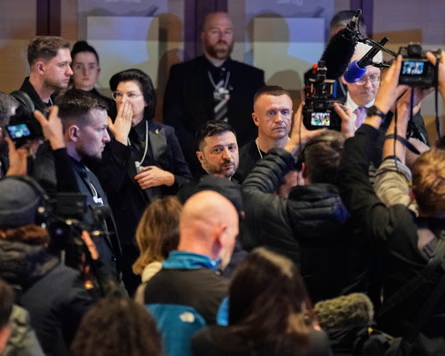
Ukrainian President Volodymyr Zelenskyy went public on Monday with a warning that should have cut through even the loudest noise of America’s midterm campaign season: his country is running critically low on Patriot interceptor missiles, and a single signature from Washington has been missing for nearly a month.
In a post to social media, Zelenskyy named names. He said Ukraine had been waiting on Pete Hegseth, who serves as Donald Trump’s defense secretary, to authorize the release of new missile supplies for the Patriot and NASAMS air defense systems. “We have been waiting for nearly a month for Mr. Hegseth to sign off on missiles for Patriots and NASAMS,” Zelenskyy wrote, adding that he had instructed his team to raise the matter again with the American side while simultaneously pursuing conversations with other countries.
A War Fought on Two Fronts: Battlefields and Bureaucracy
There is something grimly absurd about a nation defending itself against aerial bombardment while its allies debate paperwork. Patriot missile systems are not decorative. They are the backbone of Ukraine’s ability to intercept incoming threats, and when interceptor stocks run low, the math becomes brutal: more missiles in, fewer civilians and infrastructure assets protected.
Zelenskyy’s decision to go public rather than keep this strictly in diplomatic back-channels signals real urgency. Leaders do not air grievances of this kind on social media without calculating the cost. It is a message aimed as much at American public opinion as it is at the Pentagon, and it lands at a moment when the White House is deeply preoccupied with a domestic political battle of its own.
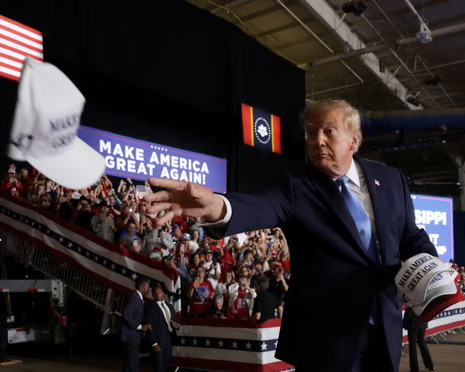
As reporting on the midterm campaign blitz makes clear, the Trump administration is running hot on the domestic political calendar right now, with rallies, controversies, and the mechanics of congressional races consuming enormous bandwidth in Washington.
What Hegseth’s Delay Actually Means on the Ground
To understand why a delayed signature matters so much, consider the supply chain behind modern air defense. Patriot interceptor missiles are manufactured in the United States and require formal authorization before they can be transferred to a foreign military partner. A month-long hold does not just delay a shipment. It creates a gap in defensive coverage that adversaries can, and do, exploit.
NASAMS, the Norwegian Advanced Surface-to-Air Missile System also mentioned by Zelenskyy, faces similar authorization requirements. Both systems have been central to Ukraine’s layered air defense strategy. Letting either run dry is not an acceptable operational risk for a country absorbing sustained aerial attacks.
Zelenskyy’s phrasing, noting that his team would raise the issue “once again,” implies this is not the first time the request has been escalated. The addition of “conversations with other countries are also ongoing” reads as a quiet but pointed message: Ukraine is looking at alternatives if Washington continues to stall.
The Midterm Distraction and Its Real-World Consequences
American midterm elections have always had a way of pulling political oxygen away from foreign policy. Congressional seats, gubernatorial races, and the partisan theater that surrounds them tend to dominate the conversation inside the Beltway in ways that can leave allies feeling sidelined and adversaries feeling emboldened.
This cycle is no different, and in some ways it is sharper. The campaign trail is generating its own significant controversies, from rally rhetoric to accusations of inflammatory language targeting various communities, all of which crowd out the kind of sustained policy attention that a war in Europe demands.
For Ukraine, the timing is particularly uncomfortable. The country needs the United States to walk and chew gum simultaneously, to manage domestic political noise while keeping the machinery of military support running without a month-long pause over a bureaucratic sign-off.
What Zelenskyy’s Public Move Tells Us About the Relationship
When an ally calls out a specific official by name on a matter of national security, it is a significant diplomatic moment. Zelenskyy did not say “the United States has delayed.” He said Hegseth specifically had not signed. That level of directness is unusual, and it tells you something about the state of communication between Kyiv and Washington.
It also tells you something about Zelenskyy’s calculus. He has spent years mastering the art of the public appeal, understanding that American political leaders often respond faster to visible pressure than to private diplomatic nudges. Whether that calculation pays off this time remains to be seen.
The Broader Picture for US Foreign Policy Credibility
America’s role as a reliable security partner depends not just on grand declarations of support but on the unglamorous mechanics of actually delivering what has been promised, on time and without unnecessary friction. When a documented, publicly stated delay of nearly a month over a routine authorization process becomes the headline from Kyiv, it raises legitimate questions about how the current administration is managing the ongoing commitment to Ukraine.
Allies across Europe and beyond are watching. The question of whether Washington can be counted on in a crunch is never abstract for countries living with complicated neighborhood dynamics. Every delay, every missed signature, every public airing of a grievance that should have been resolved quietly becomes data points in a larger calculation about American reliability.
Zelenskyy has been clear. His country needs the missiles. The authorization has not come. And while political campaigns roll on stateside, the consequences of that gap are entirely real for the people those defense systems are meant to protect.
The question worth sitting with: when a wartime ally has to resort to social media to get a defense secretary’s attention, what does that say about the health of the alliance, and who ultimately pays the price when the paperwork takes a month too long?