







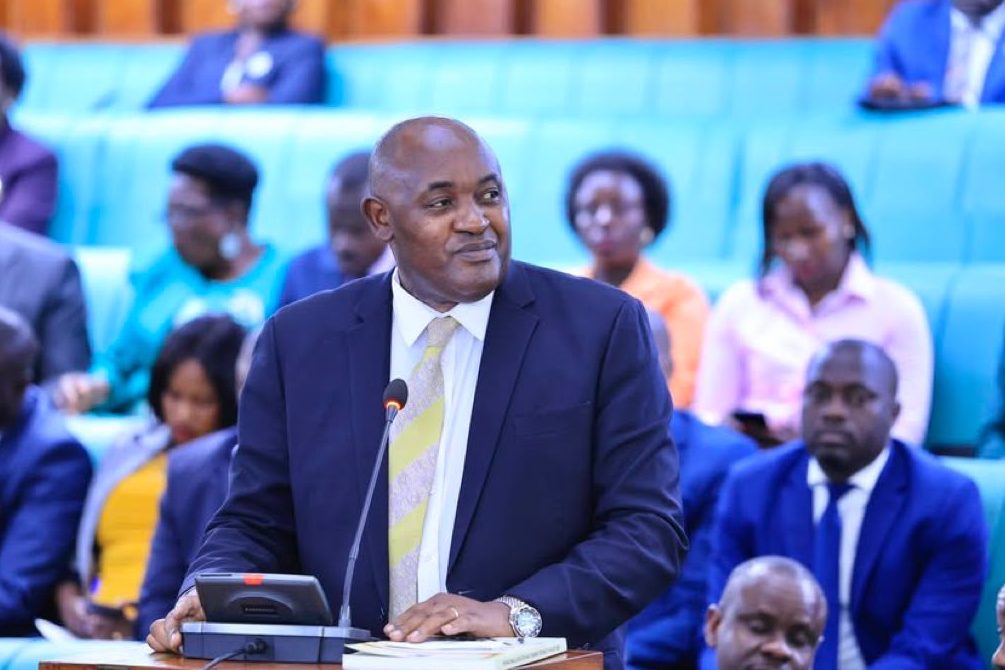
Uganda’s medical interns scored a hard-fought victory this week after Cabinet walked back its controversial decision to suspend their monthly facilitation allowances, with Health Minister Dr. Chris Baryomunsi confirming the reversal before Parliament in Kampala on Tuesday. The announcement brings an end to what had become a deeply unsettling period for young doctors mid-training, one that raised serious questions about government commitment to the healthcare workforce pipeline.
What Cabinet Actually Decided
The restored package pegs the gross monthly allowance at Shs1,268,929. After tax deductions, interns take home approximately Shs1 million per month. It is a figure that may not make anyone wealthy, but in the context of an internship that forms the bedrock of practical medical training in Uganda, it is far better than zero.
Baryomunsi, addressing Parliament directly, confirmed the numbers: “Going forward, the current cohort of medical interns will be paid the same amount, Shs1,268,929, which is subject to tax resulting in a net pay of Shs1 million.” That clarity, delivered from the floor of Parliament, carried the weight of an official commitment rather than a bureaucratic footnote.
According to reports on the Cabinet reversal, one of the more contentious elements of the original policy, the two-tier system distinguishing between government-sponsored and privately-sponsored interns, has also been scrapped for the current cohort. Everyone in this batch gets the same deal. That particular distinction had drawn sharp criticism, as it effectively punished privately-sponsored students for a funding pathway that was entirely beyond their control.
The Two Demands That Drove the Standoff
Deputy Speaker Thomas Tayebwa, who played a visible role in articulating intern grievances to government, framed the outcome around two core demands that had been placed on the table.
The first was straightforward: pay the interns. That has now been addressed. “They reversed the decision, the interns are going to be paid,” Tayebwa confirmed, leaving little room for ambiguity.
The second demand was arguably more consequential for how medical education actually functions. Interns had pushed for the right to graduate before beginning their internship, rather than being pulled into placements while their academic process remained incomplete. That demand, Tayebwa confirmed, has also been resolved. For anyone who has watched the peculiar administrative limbo that medical students can find themselves trapped in, qualified enough to work, but not yet formally certified, this resolution matters beyond the financial dimension.
Why This Policy U-Turn Carries Real Weight
Uganda’s healthcare system leans heavily on interns to fill gaps across public facilities, particularly in understaffed regional and district hospitals. When the suspension of allowances was first announced, the concern was not only about intern welfare in isolation. It touched on a broader, more uncomfortable truth: that the country’s hospitals depend on the labour of trainees who, under the suspended policy, would have been expected to work without meaningful compensation.
The optics of asking young medical professionals to serve without pay, often in demanding, under-resourced environments, were never going to hold up under scrutiny. The reversal, while welcome, is as much a recognition of that structural reality as it is a response to intern advocacy.
The Question Nobody Has Fully Answered Yet
Here is where the celebration gets complicated. The restored allowance and the resolution of graduation sequencing both apply to the current cohort of interns. Opposition lawmakers in Parliament were quick to flag this limitation, pressing for clarity on what happens to future batches of interns once this cohort moves through the system.
It is a legitimate concern. Policy decisions anchored to a single cohort, without a durable framework for those who follow, tend to create fresh standoffs down the line. The government has resolved an immediate crisis, but the structural question of how Uganda funds, supports, and integrates medical interns into its health system remains only partially answered.
For future medical students watching this unfold, the message is mixed. Yes, the government reversed course under pressure. But the fact that a reversal was needed at all points to gaps in how intern welfare is planned, budgeted for, and communicated well ahead of deployment.
What Comes Next for Uganda’s Health Sector
The medical internship debate does not exist in a vacuum. It sits inside a much larger conversation about health workforce development, public sector pay structures, and how Uganda intends to retain trained medical professionals who might otherwise look abroad for more stable opportunities. Restoring a Shs1 million monthly allowance is a start. Building a transparent, predictable, and adequately funded framework for every cohort that follows is the harder work still ahead.
For now, the interns in the current batch can focus on what they trained to do: practise medicine, gain clinical experience, and lay the groundwork for careers in a sector their country genuinely needs them in. That, at least, is progress worth acknowledging.
The bigger question worth sitting with: if it took a public standoff, Parliamentary pressure, and Cabinet-level intervention to restore a basic training allowance, what does that say about how medical interns are valued in Uganda’s health system, and what needs to change so the next cohort never has to fight the same battle?