











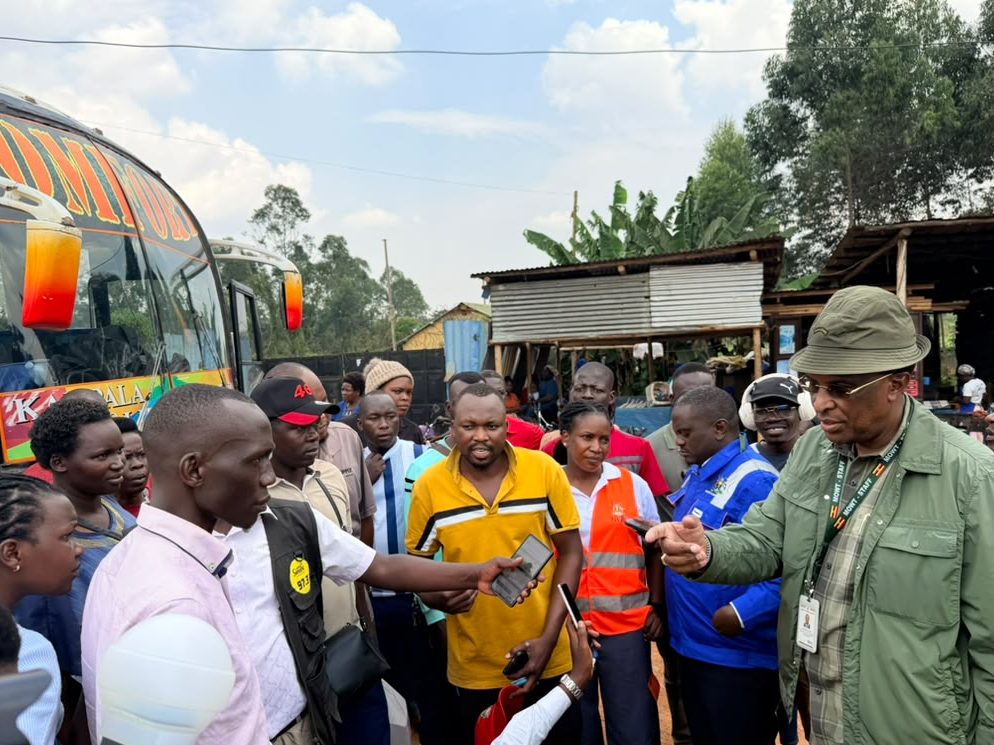
Uganda’s government has moved decisively against the culture of recklessness that has made the country’s highways among the most dangerous in East Africa, rolling out a firm enforcement campaign targeting buses and heavy commercial trucks across the nation’s road network in August 2026. The directive, which carries the weight of official policy behind it, signals a hard pivot from years of warnings that never quite made it past the roadside.

A Crisis That Has Been Brewing for Years
Anyone who has travelled Uganda’s major arterial routes knows the feeling. A speeding intercity bus overtaking on a blind corner. A truck loaded far beyond its limits, swaying on a potholed stretch of tarmac at midnight. These are not isolated incidents, they are features of a transport culture that has, for too long, treated safety guidelines as polite suggestions rather than legal obligations.
The consequences have been devastating. Road crashes remain one of the leading causes of injury and death in Uganda, with buses and heavy trucks disproportionately represented in the most fatal collisions. Pedestrians, cyclists, and passengers alike bear the cost, often with their lives. According to the latest enforcement push reported by Chimpreports, authorities are no longer content to issue statements after tragedies. The approach now is prevention through pressure.
What the Crackdown Actually Involves
This is not a weekend blitz that fades by Monday morning. The government’s intensified campaign targets several of the most persistent problems in Uganda’s commercial transport sector. Speeding remains the single biggest killer, and enforcement officers are focusing heavily on buses that routinely exceed safe limits on long-distance routes, particularly night journeys between Kampala and upcountry destinations.
Overloading is the second major target. Trucks carrying goods beyond their certified capacity not only damage road surfaces but become extraordinarily difficult to control in emergency braking situations. The physics are unforgiving. A fully loaded cement truck that should be carrying 20 tonnes but is hauling 30 does not stop the same way, and every extra kilometre per hour multiplies the danger exponentially.
Roadworthiness checks are also being tightened. Vehicles with faulty brakes, bald tyres, broken lights, or compromised steering have no business on public roads, yet they circulate freely in the absence of consistent enforcement. The current campaign is putting vehicle inspections front and centre, with officers empowered to pull commercial vehicles off the road on the spot if they fail basic safety checks.
Drivers and Operators in the Spotlight
The crackdown does not stop at the vehicle. The human element, specifically driver behaviour and employer accountability, sits at the heart of this initiative. Operators who push drivers to meet aggressive schedules, creating conditions where speeding becomes a survival strategy for workers paid per trip, are now under scrutiny too. A driver exhausted after 18 hours on the road is not a disciplinary problem alone, the employer who created those conditions shares responsibility.
There is also the question of licensing. Unlicensed or inadequately trained drivers operating heavy commercial vehicles is a problem the enforcement teams are actively targeting. Getting a bus or truck licence in Uganda has not always been as rigorous a process as the weight of those vehicles demands, and that gap is being closed, at least in theory.
Why This Moment Feels Different
Uganda has launched road safety campaigns before. Posters go up. News conferences are held. For a few weeks, motorists notice more police at checkpoints. Then the pressure eases, the old habits return, and the crash statistics climb again. The concern among transport safety advocates is that this iteration follows the same arc.
But there are a few reasons to believe this crackdown has more staying power. The political pressure around road safety has been building steadily, with public anger over high-profile bus crashes generating the kind of momentum that forces sustained government action rather than cosmetic responses. There is also a growing recognition within Uganda’s transport sector itself that the status quo is economically unsustainable. Insurance costs, vehicle write-offs, and reputational damage to transport companies add up fast when accidents become routine.
The Regional Context
Uganda is not alone in this fight. Across East Africa, governments have been grappling with how to modernise transport safety frameworks that were designed for a fraction of the current traffic volume. Kenya’s periodic crackdowns on matatus and long-haul trucks have produced mixed results. Tanzania has invested in digital speed limiters. Rwanda has built a reputation for relatively strict enforcement that, while imperfect, has produced measurable results.
The pressure of regional comparison matters. As East African Community integration deepens, vehicles cross borders more freely, and so do safety standards, or the lack of them. Uganda cracking down on its domestic operators is partly a signal to the region that it takes road safety seriously enough to enforce rather than just legislate.
What Commuters and Cargo Clients Should Expect
In the short term, travellers on long-distance routes may notice slower journey times as buses comply with speed limits and submit to more frequent inspections. That is not a bug, it is the point. Cargo operators moving goods by truck may face delays at checkpoints and higher costs if vehicles require compliance upgrades before they are cleared to operate.
None of this is comfortable for an industry that runs on tight margins. But the alternative, a road network where a family boarding a night bus to visit relatives has roughly even odds of arriving safely, is a cost that society has been paying in full for far too long.
Uganda’s roads belong to everyone who uses them: the schoolchildren walking to class at dawn, the market traders loading lorries at 4am, the long-haul driver trying to make one more run before sunrise. Getting safety right on those roads is not a bureaucratic exercise. It is a question of how much any life is worth, and whether the answer is reflected in what gets enforced.
So here is the question worth sitting with: if Uganda’s government commits to this crackdown beyond the headline cycle and actually sustains it through 2027, what would the country’s road death statistics look like in five years? And more urgently, what will it take for you to demand your transport operator prove their vehicle is safe before you board?