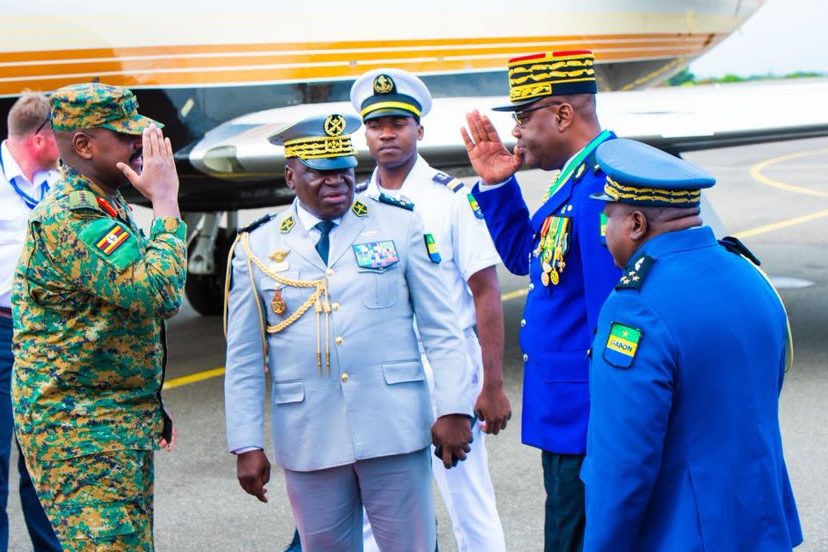
On Sunday, August 17, Uganda’s Chief of Defence Forces, Gen. Muhoozi Kainerugaba, stepped off a plane in Libreville to join Gabon’s 66th independence anniversary celebrations. On the surface, it reads like routine diplomatic protocol. Look closer, and it is anything but routine.
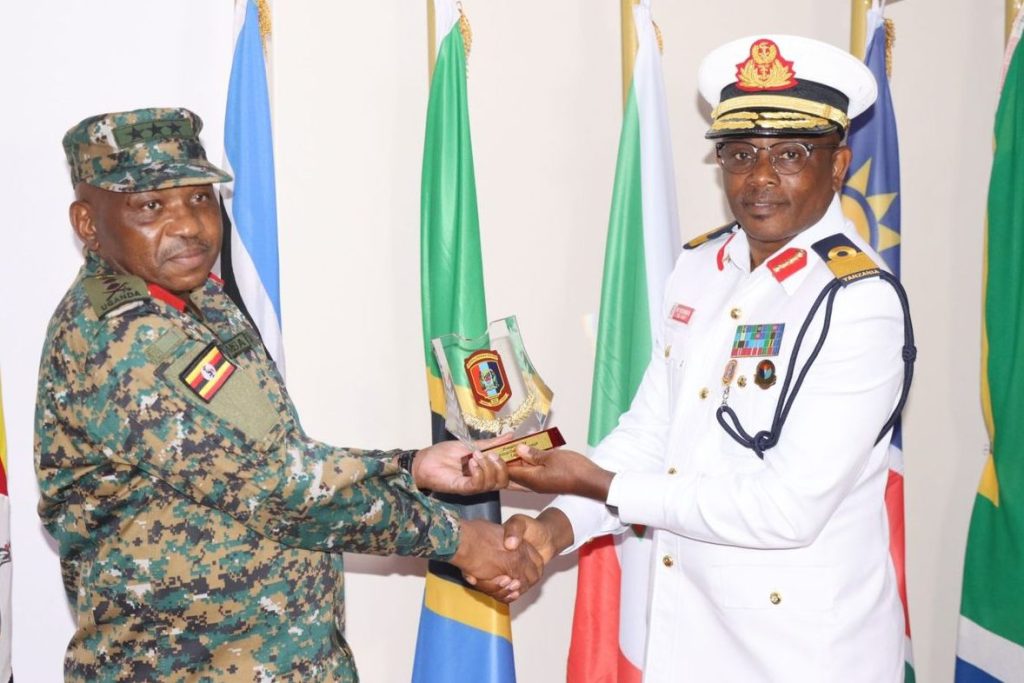
Kainerugaba leads a senior Ugandan delegation invited personally by Gabonese President Brice Clotaire Oligui Nguema, who also serves as commander-in-chief of Gabon’s defence and security forces. The invitation carries weight. These are not ceremonial guests filling seats at a parade. They are key figures in a bilateral relationship that has been quietly gaining momentum over the past two years.
Who Made the Trip
The Ugandan delegation that touched down in Libreville is worth examining beyond just its leader. According to reports on the visit, the group includes State Minister for Agriculture Desire Muhooza, Maj. Gen. Henry Masiko who heads the Joint Staff Political Commissariat, and Brig. Gen. Wycliff Keita, the Joint Staff Training and Doctrine chief. That is a mix of agricultural policy, military doctrine, and political affairs all under one roof, which tells you this trip is structured to cover real ground across multiple sectors.
On the Gabonese side, the reception at the airport was handled at a suitably senior level. Gabon’s Defence Minister Brig. Gen. Brigitte Onkanowa and the Chief of General Staff of the Gabonese Armed Forces, Gen. Jean-Bédel Bouka, were present to receive the delegation, according to Uganda’s Defence Press Unit. When a country sends its defence minister and top military officer to meet arriving guests at an airport, the signal is unmistakable: this relationship matters.
Independence Day as Diplomatic Backdrop
Gabon marks its independence from France on August 17 each year, having gained full sovereignty in 1960. The 66th anniversary is a significant milestone, and inviting friendly nations to participate is standard practice for countries wanting to project stability and cultivate goodwill. What makes Uganda’s presence notable is not the attendance itself, but the specific calibre of officials sent and the stated intent to use the occasion for substantive talks.
Ugandan defence officials confirmed that Kainerugaba’s schedule would include discussions on military cooperation and regional security on the sidelines of the main celebrations. That framing, business alongside ceremony, is very deliberate. It keeps the optics warm while ensuring the trip delivers concrete outcomes beyond handshakes and photographs.
A Relationship That Has Been Building Steadily
The Uganda-Gabon connection is not a sudden discovery. President Oligui Nguema visited Uganda in August 2024 for substantive talks with President Yoweri Museveni. The agenda that time covered trade, defence, tourism, and health cooperation. Those are not vague aspirations; they represent specific sectors where both governments identified potential for collaboration.
Then, in May 2026, Oligui Nguema returned to Kampala for Museveni’s inauguration following Uganda’s general elections. Attending a head of state’s inauguration is a meaningful gesture in diplomatic terms. It signals alignment, solidarity, and a commitment to the relationship that goes beyond transactional interest. By the time Kainerugaba boarded his flight to Libreville this weekend, the two countries had already established a pattern of high-level engagement that few would have predicted even three years ago.
What Regional Security Means in This Context
Central and East Africa sit at the intersection of several overlapping security pressures. Armed groups continue to operate across parts of the region, resource competition creates friction along borders, and the question of external influence, both from within the continent and beyond it, shapes how governments think about alliances. Uganda, with its battle-tested military and regional experience, brings credibility to any security conversation. Gabon, strategically positioned in Central Africa and managing its own post-transition political environment, has clear reasons to cultivate strong defence partnerships with countries that have operational depth.
Discussions on the sidelines of independence celebrations may sound informal, but they often produce the most candid exchanges between military counterparts. Away from formal negotiating tables and diplomatic formalities, generals and senior officers tend to speak more directly about what they actually need and what they can offer. That is where real cooperation frameworks get sketched out, even if the signing happens later in more official settings.
The Broader Continental Picture
Africa’s diplomatic map is being redrawn with increasing speed. Countries across the continent are reassessing old partnerships and building new ones, often prioritising South-South cooperation over inherited Western-aligned frameworks. Uganda’s outreach to Gabon fits within that broader pattern. Kampala has been active on multiple diplomatic fronts, and positioning Uganda as a credible security partner for Central African nations is a strategic play that extends well beyond any single visit.
For Gabon, the calculus is similarly clear. Building relationships with neighbours and regional powers that understand the continent’s specific realities, rather than relying solely on external partners with different priorities, is a natural evolution for any government focused on long-term stability.
More Than Ceremony
There is a tendency to dismiss diplomatic visits tied to national celebrations as largely symbolic. The flags, the parades, the formal dinners. Easy to photograph, harder to measure in terms of impact. But the Uganda-Gabon engagement deserves a different read. The consistency of contact between the two governments, the seniority of officials involved, and the explicit inclusion of military cooperation discussions all suggest something more durable is taking shape.
Kainerugaba’s presence in Libreville on August 17 is not just a courteous response to an invitation. It is another brick in a wall that both Kampala and Libreville have been building with some intention. Where that wall ultimately leads, whether to formal defence agreements, joint training programmes, or deeper economic integration, is the question worth watching.
As Uganda and Gabon continue to find common ground across security, agriculture, trade, and diplomacy, what do you think Africa’s growing web of South-South partnerships means for the continent’s long-term stability and independence from external influence? Share your thoughts below.