


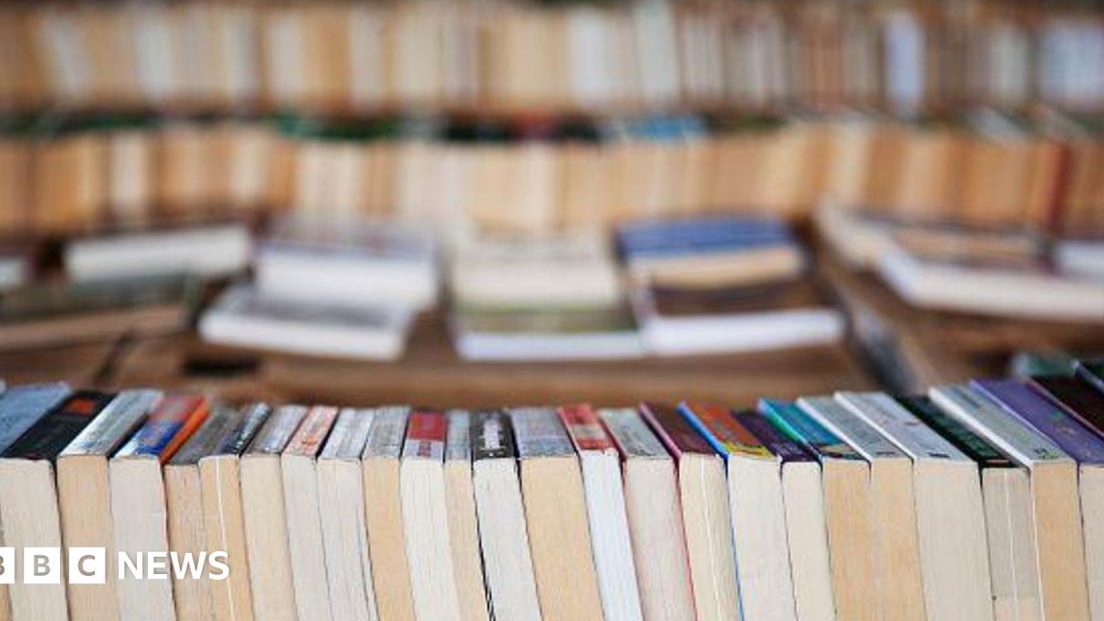
For three decades, Stuart Manley has known the rhythms of the secondhand book trade as well as he knows the shelves of Barter Books in Northumberland. A good week means two or three thousand titles sold, steady and predictable. Then, in recent months, a single order from a Canadian company arrived and matched that entire week’s worth of sales in one transaction. Manley’s verdict: he has never seen anything like it in thirty years of business.
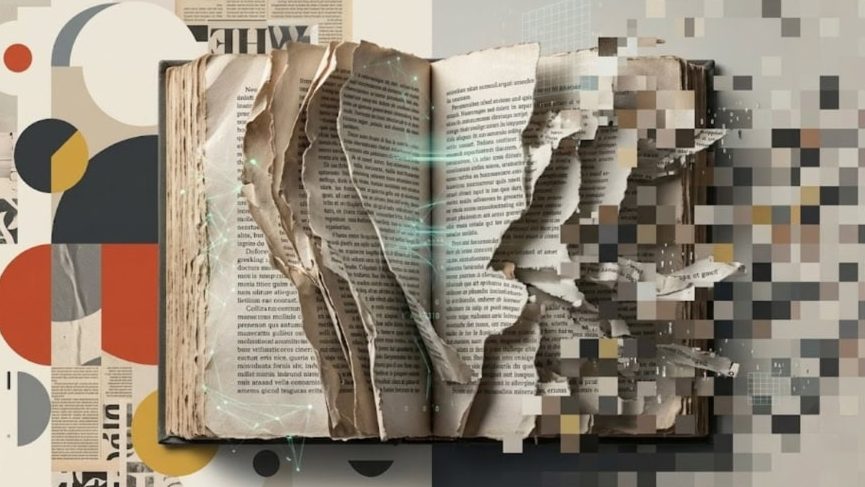
He is not an anomaly. From Europe to North America to Asia, independent booksellers are describing the same phenomenon, colossal, one-off purchases that dwarf their usual volumes, with the books vanishing into distant warehouses whose purpose remains, officially, unclear. The secondhand book market is booming in the strangest possible way, and the most credible explanation is one that would have sounded like science fiction just a few years ago. Artificial intelligence is eating your old paperbacks.
A Court Ruling That Opened the Floodgates
The story has a specific turning point. In 2025, a US federal judge delivered a ruling that sent ripples across the publishing industry, the technology sector, and, it now appears, the global secondhand book trade. Judge William Alsup ruled that AI firm Anthropic had not violated copyright law when it used authors’ books to train its AI software. The case had been brought by three authors who argued their work was being used without permission or payment. Alsup disagreed, describing Anthropic’s use of the material as “exceedingly transformative” and therefore protected under existing US copyright law.
That ruling mattered enormously. It effectively gave AI companies legal cover to use purchased physical books as training material, at least under US law. Buying a book, after all, is legal. Training a model on content derived from a legally purchased copy, the judge concluded, passes the transformative use test. The secondhand market, with its vast inventory of titles long out of print, suddenly looked less like a nostalgic corner of retail and more like an untapped data mine.
Why Old Books? Why Not Just the Internet?
It is a fair question. The internet contains an almost incomprehensible volume of text. But quality, structure, and diversity of language matter enormously when training large language models. Books, particularly older ones, offer something that social media feeds and clickbait articles do not: sustained, coherent, carefully edited prose across an extraordinary range of subjects, styles, and periods.
A novel from the 1960s carries grammatical patterns, cultural references, and vocabulary that a 2024 Reddit thread simply cannot replicate. For an AI model trying to understand the full spectrum of how humans write and communicate, a warehouse full of used books is not a quirky backup plan. It is a serious and sophisticated strategy.
The secondhand market also offers scale without the friction of licensing negotiations. Rights holders for out-of-print titles can be impossible to trace. Negotiating with thousands of publishers and estates would take years. But walking into a charity shop, or placing a bulk order with an independent bookseller, bypasses all of that. The books are bought legally. What happens next, as Judge Alsup ruled, is a separate question entirely.
Booksellers Caught in the Middle
For the sellers, the experience is genuinely disorienting. Most independent booksellers operate on thin margins, sustained by passion for the trade as much as by profit. A sudden mega-order sounds like good news, and in immediate financial terms it is. But the knowledge that your carefully curated stock of literary fiction or obscure technical manuals may be heading into an AI training pipeline rather than a reader’s hands sits uneasily with many in the trade.
Manley’s situation, as reported by the BBC, captures the ambiguity perfectly. There is no law being broken. There is no deception about the transaction itself. The buyer pays, the seller ships, the books travel to a warehouse in another country. What happens after that is simply unknown to the person who spent years acquiring and cataloguing those titles.
Reports from booksellers across multiple countries suggest this is not a localised quirk but a coordinated, global procurement effort. The destinations are warehouses, not bookshops or libraries. The buyers are companies, not individuals. And the orders are structured at a scale that no ordinary reader, however dedicated, could account for.
The Legal Landscape Is Still Shifting
It would be a mistake to treat the Alsup ruling as the final word. Copyright law varies dramatically between countries, and the legal battle over AI training data is still very much alive in multiple jurisdictions. Authors’ guilds, publishers, and individual writers have been vocal in arguing that the transformative use doctrine is being stretched far beyond its original intent.
The broader debate cuts to a fundamental question about creative labour. If a novelist spends three years writing a book, and that book ends up training a system that can then generate similar prose at scale, who benefits? The AI company certainly does. The novelist, who received a royalty decades ago when the book was first sold, gets nothing from its second life as training material.
Some in the publishing world argue that the secondhand loophole needs legislative attention. Others believe the courts will eventually draw a clearer line. For now, the legal grey zone is wide enough to drive a fleet of delivery vans through, which is, more or less, what appears to be happening.
What This Means for the Book Trade and for Readers
There is an irony threading through all of this. The used bookshop, long romanticised as a refuge from the digital world, a place of physical objects and slow browsing and serendipitous discovery, is now being quietly absorbed into the same technological machine that many book lovers see as a threat to reading culture.
For now, the boom is real. Sales are up, coffers are fuller, and some smaller booksellers are enjoying a windfall they could not have predicted. Whether that windfall comes with longer-term consequences for the trade, for authors, or for the nature of AI itself is a question nobody has fully answered yet.
What is certain is that the relationship between human creativity and machine intelligence is being renegotiated in real time, one boxed-up secondhand novel at a time. The next great AI model may well have been trained, in part, on a crime thriller someone donated to a charity shop in Northumberland.
So here is the question worth sitting with: if the books you donate, sell, or discard end up shaping the next generation of artificial intelligence, should you have any say in how they are used, or does the moment you part with them mean you have already said all you need to say?