











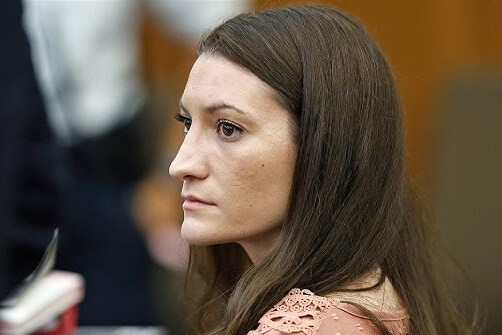
After weeks of testimony that has forced a nation to wrestle with the darkest edges of mental illness and maternal suffering, the Lindsay Clancy murder trial reached a pivotal moment on Wednesday when the prosecution’s final witness told the court that he does not believe she was hearing voices when she strangled her three young children in their Massachusetts home in January 2023. Closing arguments are now set to begin Thursday, with jury deliberations to follow shortly after.
Who Is Gregory Saathoff and Why His Words Matter
The final witness was no ordinary expert. Gregory Saathoff, an FBI psychiatrist, brought the weight of federal law enforcement experience to the stand. But his testimony came with a striking admission: he has treated only two women diagnosed with postpartum psychosis in his entire career, both of them in cases that stretch back decades. For a defense that has hinged its entire strategy on the argument that Clancy was in the grip of a severe postpartum psychiatric episode, that disclosure cut deep.
Saathoff’s position, as outlined in his testimony, was clear. He does not believe Clancy was experiencing an auditory hallucination, specifically a voice commanding or guiding her, at the time she took the lives of her children, Cora, Dawson, and baby Callan. His view aligns with the prosecution’s central argument: that Clancy, despite whatever mental health struggles she carried, understood the nature and wrongfulness of what she was doing. In legal terms, that distinction is everything.
The Core Battle: Sanity, Psychosis, and the Law
The defense has spent this trial building a portrait of a woman destroyed by postpartum psychosis, a severe and relatively rare condition that can cause delusions, hallucinations, and a complete break from reality. If jurors accept that Clancy was in a psychotic state and genuinely could not distinguish right from wrong, Massachusetts law allows for a verdict of not guilty by reason of insanity.
That is a high bar. Courts across the United States have historically treated the insanity defense with skepticism, and juries tend to follow. The prosecution has argued that Clancy’s actions that night, including her own subsequent suicide attempt, reflect a level of awareness and intent that is incompatible with the kind of total psychotic break the defense describes.
As reported by The Guardian, Saathoff’s testimony serves as the capstone of the prosecution’s case, and it arrives at exactly the right moment to leave a lasting impression before jurors begin deliberating.
What the Defense Has Argued Throughout the Trial
From the outset, Clancy’s legal team has framed this case as a tragedy born of catastrophic medical failure. They have pointed to her documented history of postpartum mental health struggles following the birth of her children and argued that she was not the same person who entered that home as the one who committed those acts. The defense has leaned on psychiatric experts who testified that postpartum psychosis can produce a reality so distorted that a mother may genuinely believe she is protecting her children rather than harming them.
It is a heartbreaking argument. And in certain clinical circles, it is not without scientific grounding. Postpartum psychosis, though affecting roughly one to two in every thousand new mothers, is recognized as a genuine psychiatric emergency. In extreme cases, it has been linked to acts of violence that the person later has no memory of or understanding of.
The Limits of Expert Testimony in Courtrooms
Here is the uncomfortable truth about psychiatric testimony in criminal trials: two qualified experts can look at the same set of facts, the same patient history, the same documented behaviors, and reach completely opposite conclusions. Saathoff’s limited direct experience with postpartum psychosis patients does not disqualify his opinion legally, but it does give the defense ammunition to chip away at his credibility during cross-examination.
What the jury will ultimately have to do is decide which version of Lindsay Clancy they believe. Was she a woman so consumed by psychiatric illness that criminal responsibility cannot attach? Or was she, despite her pain, a person who made a devastating and deliberate choice? Those are not just legal questions. They are moral ones, and no courtroom is perfectly equipped to answer them.
A Nation Watching, A Verdict Approaching
The Clancy case has attracted intense public attention since the night of the killings. It has reopened long-running conversations about how American society treats maternal mental health, whether the medical system failed her, and whether the criminal justice system is the right arena for adjudicating tragedies rooted in illness.
None of that context will be in the jury room. Twelve people will sit with the evidence, the testimony, the law as explained to them by the judge, and the memory of three children who did not survive that night. They will try to find a verdict that makes sense of something that resists easy sense-making.
Closing arguments begin Thursday. The jury will then carry the full weight of this case into deliberations. Whatever they decide, the questions this trial has raised about postpartum mental health, about the insanity defense, and about what justice looks like when grief and law collide, will not be resolved when the foreman reads the verdict.
Where do you draw the line between illness and accountability, and who gets to decide when someone has crossed it?