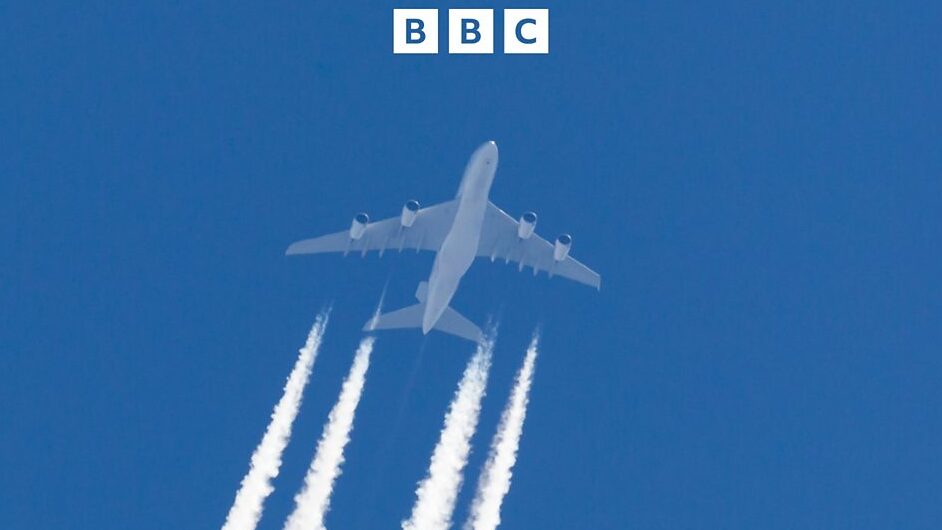
Look up the next time a plane flies overhead. That long white streak dissolving slowly into the blue isn’t just water vapour. It’s a slow-burning contribution to atmospheric warming, and according to growing scientific understanding, it may be a bigger piece of the climate puzzle than most passengers ever consider when booking a flight.
What Are Vapour Trails, Exactly?
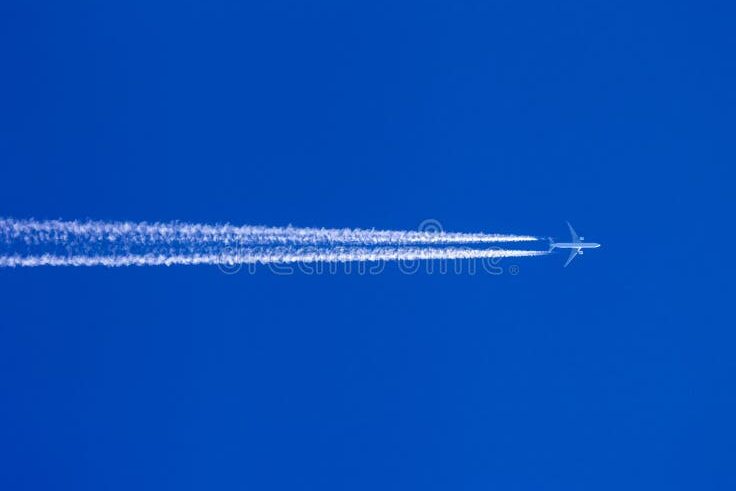
Contrails, the shorthand term for condensation trails, form when hot exhaust gases from aircraft engines meet the cold, low-pressure air of the upper atmosphere. The moisture in the exhaust freezes almost instantly, creating ice crystals that catch the light and scatter across the sky like chalk lines on a blackboard. Under the right atmospheric conditions, these trails can persist for hours, spreading out into thin, wispy cirrus-like clouds that blanket wide stretches of sky.
That persistence is the problem. Short-lived contrails dissipate quickly and have minimal effect. But when humidity levels are high at cruising altitude, trails linger and spread. And as recent discussions on the science of aviation’s environmental footprint have highlighted, those spreading ice clouds trap outgoing heat from the Earth’s surface, acting much like a blanket pulled over the atmosphere at night.
Warming You Don’t See on the Departure Board
The carbon dioxide that aircraft emit gets most of the attention in debates about aviation and climate change. It deserves scrutiny, of course. But contrail warming is a different kind of threat because it operates on a much shorter timescale. CO2 lingers in the atmosphere for centuries. Contrail-induced warming, by contrast, acts quickly, heating the atmosphere within hours of a flight, then dissipating. That speed makes it harder to model and, arguably, easier to overlook in policy discussions.
Research in this area has suggested that the warming effect of contrails, taken collectively across global aviation, could rival or even exceed the warming impact of all the CO2 that aircraft have ever emitted. The numbers vary depending on methodology, but the scientific direction of travel is clear: these white lines are not cosmetic. They are a legitimate climate variable.
Why Night Flights Could Be Part of the Answer
Here is where things get genuinely interesting. Not all contrails are created equal in terms of their warming effect. During the day, contrails both trap heat and reflect incoming sunlight, partially offsetting each other. At night, however, there is no sunlight to reflect. The warming effect operates unchecked. This asymmetry has led some researchers to propose that rerouting flights to avoid high-humidity altitude zones, or scheduling fewer flights during nighttime hours, could reduce the warming impact without requiring any change to fuel technology at all.
It sounds almost too simple. Change a few flight paths. Adjust some schedules. But the logistics are genuinely complex. Aviation routing is tightly choreographed around fuel efficiency, airspace management, and commercial demand. Asking airlines to fly slightly longer routes, burning more fuel to avoid contrail-forming altitudes, creates its own emissions trade-off that has to be modelled carefully before any policy can be sensibly drafted.
The Industry at a Crossroads
Aviation has spent recent years navigating serious scrutiny over its environmental record. Sustainable aviation fuel, electric aircraft, hydrogen propulsion, these are the conversations dominating boardrooms and policy forums. Contrails, by comparison, have received less airtime. But that is changing. Regulatory bodies in Europe and elsewhere have begun paying closer attention to non-CO2 warming effects, and some airlines have quietly begun trialling contrail avoidance routing on select routes.
The data coming out of those trials is still limited. But the principle, that a relatively low-cost operational change could have a meaningful climate benefit, is one that the industry would be unwise to ignore. Flying is not going away. Global air travel demand is projected to keep growing through the 2030s and beyond. Managing every dimension of aviation’s environmental footprint, including the ones you can see written across the sky, is no longer optional.
What Passengers Can Do Right Now
The honest answer is: not much directly. Choosing to fly less, supporting airlines with credible environmental programmes, and paying attention to offset schemes that address non-CO2 warming are all meaningful actions at the margin. But the structural changes needed here sit with regulators, airlines, and air traffic management bodies. This is a systemic problem requiring systemic solutions, not just individual consumer choices dressed up as climate action.
That said, awareness matters. The more passengers understand that the white lines above them are not just picturesque, the more pressure builds on the industry to take the science seriously. Flight-shaming, as a cultural moment, came and went. What needs to replace it is something more nuanced: a genuine reckoning with every mechanism by which aviation shapes the atmosphere, vapour trails included.
Looking Up with New Eyes
There is something quietly unsettling about realising that one of aviation’s most visible signatures, those elegant white stripes that children point at from garden lawns, carries a warming cost that rarely makes it into the conversation. The industry has spent decades refining engines, reducing noise, cutting fuel burn. The sky-writing problem has sat in the background, half-understood, under-regulated, and strangely beautiful in a way that perhaps made it easier to ignore.
That era is ending. As climate commitments tighten and satellite monitoring of atmospheric conditions improves, the pressure to account for contrail warming will only grow. The next decade of aviation innovation will have to be as much about when and where planes fly as it is about what they burn to get there.
So the next time you spot those white trails dissolving slowly overhead, ask yourself: what are we actually willing to change about how we fly, and how fast are we prepared to do it?