












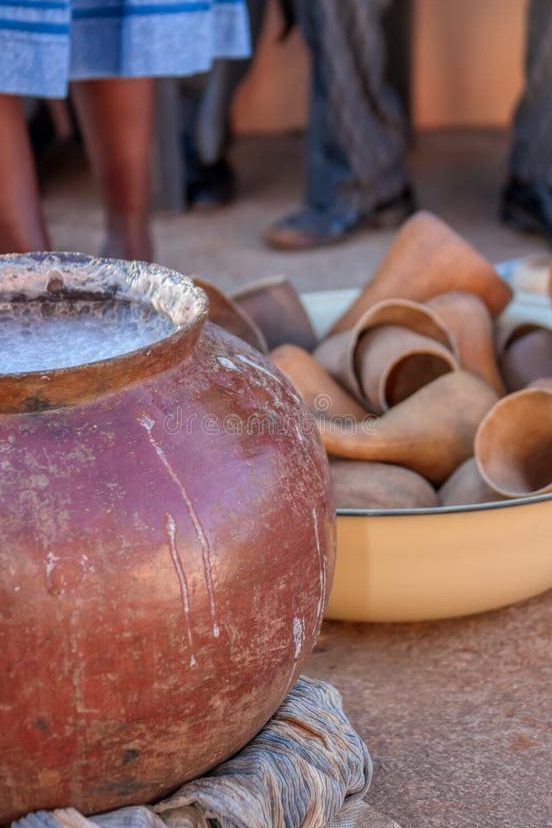
There are objects in every culture that carry more than their material weight. A ring, a cloth, a gourd. In many Ugandan households, particularly in Buganda, the ekibbo, a traditional clay pot used for storing and preparing specific household items, was not simply a domestic tool. It was a vessel wrapped in rules, whispered warnings, and a code of conduct so strict that breaking it was believed to bring genuine calamity upon a family. This is the story that NTV Uganda’s Nazzikuno segment has brought back into public conversation, reviving a debate about why the ekibbo was once one of the most restricted objects a household could contain.
A Pot That Was Never Just a Pot
To understand the ekibbo’s significance, you have to step out of a modern kitchen mindset. Contemporary Ugandan life, for many, is shaped by gas cookers, plastic containers, and supermarket shelves. But for generations before this, clay pots were the architecture of domestic life. They stored water, fermented beverages, preserved foods, and in some contexts, held medicinal or ritual substances.
The ekibbo specifically occupied a place of deep cultural sensitivity within the home. Its use was governed by strict gender protocols, age-related restrictions, and rules about who could touch it, when, and under what circumstances. These were not suggestions passed down casually. They were enforced social norms, and violating them was considered a serious breach, one that could reportedly attract illness, misfortune, or broken relationships within a family unit.
What made the ekibbo particularly charged was not any supernatural property the pot itself possessed, but rather what it represented: the boundary between the sacred and the everyday, the private and the communal, the permissible and the forbidden. In many traditional Ganda households, this boundary was not abstract. It was physical, tangible, and sitting right there in the home.
The Rules That Governed the Ekibbo
Accounts passed down through oral tradition describe a network of restrictions around the ekibbo that modern Ugandans may find startling. Men, in many households, were not permitted to handle it. Young unmarried women, depending on the family and clan, faced their own set of prohibitions. Even approaching the pot without prior knowledge of its protocols could result in social consequences within a household.
Elders in various communities have recalled being taught from a very young age to keep their distance from the ekibbo unless specifically instructed otherwise. The lesson was never framed as superstition. It was framed as respect, as cultural literacy, as knowing your place within a household’s ecosystem of shared life.
This layered system of restriction was, in many ways, a form of social technology. It organised roles within a home, maintained hierarchies that the community considered important, and created rituals around everyday objects that kept cultural knowledge alive and transferable across generations.
What Happened When the Rules Were Broken
The consequences believed to follow a violation of ekibbo protocol varied by clan and region. In some traditions, the household was thought to face ill health. In others, the violation could trigger conflict between spouses or between a family and its extended clan. In the most severe interpretations, a broken ekibbo taboo required ritual cleansing before domestic life could return to normal.
These consequences, whether one reads them literally or symbolically, served a clear social function. They made people careful. They created a culture of attentiveness around shared domestic space. And they ensured that knowledge about the pot, its history, its purpose, and its rules, was passed from one generation to the next with urgency and seriousness.
A Fading Knowledge in a Changing Uganda
Uganda today is a country of enormous cultural complexity, where old traditions and modern life constantly negotiate space with each other. Urbanisation, formal education, religious practice, and global media have all reshaped how younger Ugandans relate to ancestral customs. For many city dwellers under forty, the ekibbo is a relic of a grandmother’s kitchen, something glimpsed during village visits rather than a daily reality.
This cultural distance is not inherently a problem. Societies evolve, and not every tradition needs to survive intact to remain meaningful. But the risk, as cultural historians and ethnographers across Africa have long observed, is that specific knowledge dies quietly. The ekibbo’s rules did not exist in isolation. They were part of a wider web of Ganda domestic culture, of gendered roles, of clan identity, of spiritual awareness. When the pot disappears from the home, the conversations around it disappear too.
Programmes that revive these discussions, even in the form of television segments and social media debate, serve a real archival function. They create a record. They spark the kind of intergenerational conversation that keeps cultural memory alive, even in altered form.
Why This Conversation Matters Right Now
There is something timely about revisiting the ekibbo in 2026. Across the African continent, there is a growing movement to document, preserve, and reinterpret traditional knowledge before the last living carriers of that knowledge are gone. Uganda is no exception. Community radio programmes, digital archives, and cultural festivals have all taken on new urgency as custodians of oral history age and younger generations ask questions their parents never thought to ask.
The ekibbo is a small but telling example of how much cultural information can be packed into a single object. A pot is not just fired clay. It is a record of how a community organised itself, what it valued, what it feared, and how it taught its children to live. Losing that record is a quieter form of loss than losing a language, but it is a loss nonetheless.
Understanding why something was feared is often more instructive than simply knowing that it was. The fear around the ekibbo was never irrational. It was structured, purposeful, and socially productive in its time. Examining it now, with curiosity rather than dismissal, reveals something important about how deeply Ugandan communities once thought about the objects they shared and the spaces they inhabited together.
So here is the question worth sitting with: as Uganda moves deeper into the twenty-first century, what responsibility do younger generations carry to understand, not necessarily to practice, but to genuinely understand the cultural logic behind traditions like the ekibbo? And what does it cost a society, quietly and over time, when that understanding is lost for good?